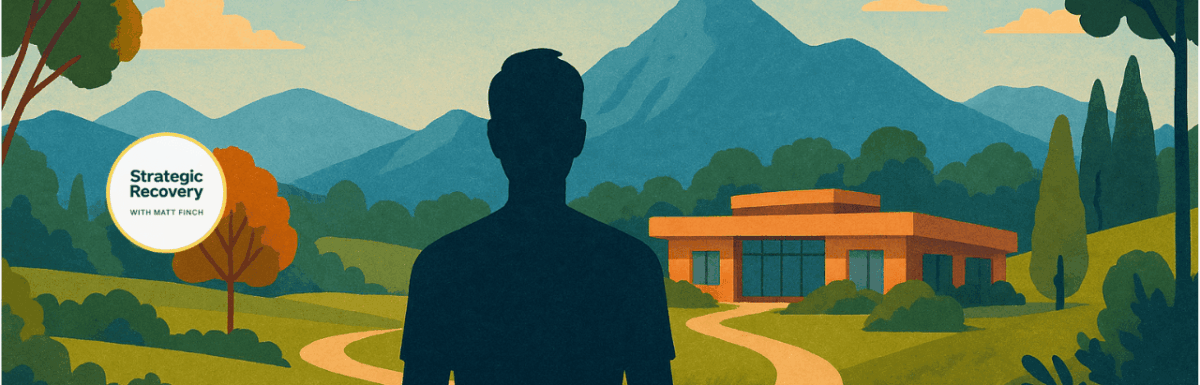
Not another rehab — a sanctuary that heals the root causes of addiction.
Imagine a place where recovery isn’t about surviving another relapse, but about truly coming alive.
For decades, we’ve asked people to heal inside sterile buildings, under fluorescent lights, eating processed food, with little more than a 30-day crash course and a handshake at discharge. The result? Revolving doors, broken families, and billions wasted.
We can do better. Radically better.
The Super Recovery Center is a reimagined blueprint for healing addiction in all its forms — alcohol, drugs, sex, gambling, technology, and beyond. It’s more than a rehab: it’s a sanctuary built in nature, grounded in neuroscience, structured by Strategic Recovery’s™ Five Phases and Five Pillars, and designed to be fundable, measurable, and scalable.
In the pages ahead, you’ll see why the current system fails (with hard data), how modern brain science reframes addiction, what the ideal facility looks like (from gardens to clinical care), a clear comparison of old versus new, the tangible benefits patients will feel, six vivid case studies, and a roadmap for investors, philanthropists, and partners to help bring this to life.
1) Why America Needs a New Model — Right Now
Addiction is no longer a side issue. It’s a full-scale national emergency.
- Addiction is common and rising. In 2023, 48.5 million Americans (17.1%) had a substance use disorder. That’s nearly 1 in 5 adults — almost every family in the country is affected. (SAMHSA)
- Relapse is the rule, not the exception. Current rehabs operate like short-term boot camps. The average program lasts 28–30 days, but relapse rates remain 40–60%, even though science confirms addiction is a chronic condition requiring long-term care. (NIDA)
- We invest in punishment instead of healing. U.S. taxpayers spend tens of billions annually to lock people up, averaging $31k–$47k per inmate per year. That’s money wasted on caging human suffering — money that could fund treatment that actually restores lives. (Vera Institute of Justice)
- The proof is already out there. When Portugal decriminalized personal possession in 2001 and redirected funds into health and treatment, overdose deaths and HIV transmissions plummeted, while treatment engagement soared. (Drug Policy Alliance)
The real problem: We detox without repairing the brain. We ignore trauma, sleep, nutrition, and environment. We discharge people back into the same triggers that broke them. We criminalize what is fundamentally a health crisis.
The result? Revolving doors, broken families, wasted billions, and shattered hope.
But with the right model — one that heals the brain, rebuilds the body, restores purpose, and supports people long after discharge — relapse would no longer be inevitable. Recovery would become not just possible, but probable.
2) Addiction, Explained (Without the Jargon)
Addiction isn’t about “bad choices” or weak willpower. It’s what happens when the brain’s learning and stress circuits get rewired for survival around the substance or behavior.
Here’s how it works in plain English:
- Dopamine hijack: Every drink, hit, pill, or spin of the slot machine floods dopamine. Over time, the brain learns: this isn’t optional, this is survival.
- Habit loop takeover: The brain’s “go get it” wiring (cue → craving → behavior → relief) becomes automatic, like brushing your teeth — only far more powerful.
- Mood reset (allostasis): The brain lowers its baseline energy and mood to balance out constant stimulation. People don’t use to feel good anymore — they use to feel normal.
- Stress system on fire: The body’s stress circuits (amygdala, HPA axis, anti-reward chemicals like CRF and dynorphin) crank up anxiety, depression, insomnia, and pain — especially during Post-Acute Withdrawal Syndrome (PAWS).
- Body + brain, one system: Nutrient depletion, inflammation, gut-brain imbalance, sleep debt, and disrupted circadian rhythms all pile on — magnifying cravings and emotional instability.
Translation: If the biochemistry stays broken, the mind struggles. If the environment stays toxic, relapse lurks at every turn.
That’s why real recovery has to address the whole human: mind, body, spirit, and environment.
Even the National Institute on Drug Abuse emphasizes it: addiction is a chronic, treatable medical condition — not a moral failure. (National Institute on Drug Abuse)
3) The Core Framework: Strategic Recovery™
Every great journey needs a map — and recovery is no different.
At the Super Recovery Center, the path to healing is guided by Strategic Recovery’s™ Five Phases (the journey itself) and powered daily by the Five Pillars (the engine that keeps progress moving).
Together, they turn recovery from a guessing game into a step-by-step system that actually works.
The Five Phases of Strategic Recovery™ (The Journey)
- Detox & Stabilization
Compassionate, science-backed relief from acute withdrawal. Sleep restored, suffering reduced, safety established. - Repair & Rebalance
Nutrient repletion, labs-guided protocols, circadian rhythm repair, energy restoration. PAWS prevention built in from the start. - Repattern the Mind
Trauma healed through EMDR, somatic therapies, and mindset mastery. Cognitive restructuring and spiritual grounding replace destructive loops. - Rebuild Life
Skills for living: healthy relationships, financial stability, career or vocation, and community. Recovery Capital — physical, psychological, social, environmental, and spiritual — strengthened every week. - Transcend & Thrive
The highest phase: identity expansion, service, meaning, joy. The shift from “I’m not using” to “I’m fully alive.”
The Five Pillars of Strategic Recovery™ (The Engine)
These are the daily practices that fuel every phase — the habits and structures that make healing sustainable:
- Biochemical Repair – Restoring the brain and body with targeted nutrition, sleep, detox support, light exposure, and movement.
- Psychological Repatterning – Transforming thoughts, beliefs, and identity through trauma healing and mindset tools like CBT and ACT.
- Social Support – Coaches, peers, and family systems that build accountability and belonging.
- Environmental Design – Immersion in nature, safe housing, and trigger-proofing daily life.
- Spiritual Growth – Awakening purpose, practicing values, and reconnecting to awe and meaning.
These five pillars are not optional extras. They are the engine of transformation. Each day they work together, and each phase builds upon them, so progress compounds instead of unraveling.
Bottom line: The Five Phases show the path forward. The Five Pillars provide the daily fuel. Together, they make lasting recovery not only possible, but predictable.
4) The Super Recovery Center: Full Blueprint
If you walked onto the campus of the Super Recovery Center, here’s what you’d experience.
A. Site & Environment (Nature as Co-Therapist)
The very first medicine is the environment.
Instead of traffic noise and sterile hallways, you’re greeted by sunshine, birdsong, and the smell of fresh earth. The center is set in a sunny climate—nestled in mountains, along a coast, or within lush forests—with year-round access to the outdoors.
The living campus is alive with organic gardens, orchards, and rows of medicinal herbs. Winding trails lead to ponds, waterfalls, and barefoot lawns designed for grounding. Sunrise and sunset viewing decks encourage daily rituals of reflection and calm.
And everywhere, animals bring comfort and connection: horses for equine therapy, dogs and cats for companionship, chickens and cows for grounding presence, birds for gentle background song.
This isn’t an “amenity.” It’s neuroscience: research shows that time in nature and connection with animals reduces stress, eases depression, and restores resilience. (Standford News)
B. Buildings & Recovery Tech (Biology-First Design)
Step inside, and you’ll notice the architecture itself promotes healing. Every building is designed to restore biology, not fight against it.
- Blackout sleep suites cooled to 60–65°F, with organic bedding, optional grounding sheets, silent HVAC, and blue-light-free evenings. Sleep deprivation no longer sabotages recovery.
- Thermal & light therapies woven throughout: infrared saunas, steam rooms, cold plunges, natural spring-fed pools and hot tubs, and red/near-infrared light rooms. These help regulate mood, stress, and inflammation.
- Mind-quiet spaces: meditation halls, a sound-healing studio, and optional low-EMF rooms—including shungite-lined quiet zones for those highly sensitive to energy or tech.
- Biophilia everywhere: essential-oil diffusers, indoor green walls, and windows that open to views of trees, gardens, and water.
- Recreation for joy and embodiment: an 18-hole disc golf course, horseback riding arena, yoga and qigong pavilions, creative arts and music studios, hiking trails, indoor courts, and fully equipped gyms.
Every design choice whispers: You are safe. You are healing. You belong here.
C. Clinical & Integrative Medicine (Root-Cause Repair)
The clinical program isn’t about slapping a diagnosis on you. It’s about uncovering root causes and repairing them at every level.
- Comprehensive assessment: lab work for micronutrients, hormones, inflammation, and genetics; sleep studies; trauma index; Recovery Capital baseline.
- Detox done right: individualized and physician-guided. When needed, evidence-based medications are paired with comfort protocols like gabapentin or clonidine, vitamin C, amino acids, and NAD+ IV therapy. No suffering-for-the-sake-of-suffering.
- IV & nutrient therapies: Myers’ Cocktails, glutathione, amino blends, B-complex injections, and carefully monitored peptide therapies.
- Food as medicine: anti-inflammatory, nutrient-dense meals prepared farm-to-table. Hydration stations, electrolyte support, caffeine tapering, and gut-brain restoration protocols.
- Therapy matrix: trauma resolution (EMDR, somatic work, IFS), mindset tools (CBT/ACT), mindfulness-based relapse prevention, and family/couples work.
- Embodiment & energy therapies: daily yoga, breathwork, kettlebells, zone-2 cardio, nature immersions, and thermal cycling (heat/cold) to strengthen resilience.
- Spiritual care: optional meditation, prayer, nature ceremonies, and service projects. Non-dogmatic, always invitational.
- Recovery Capital engine: advanced software tracks measurable gains in the five domains (Physical, Psychological, Social, Environmental, Spiritual) so clients can see their progress stack up in real time.
D. Staffing (Love + Science)
The people make the place.
The Super Recovery Center brings together addiction medicine physicians, psychiatrists, trauma-informed therapists, functional nutritionists, herbalists, recovery coaches with lived experience, personal trainers, yoga/qigong teachers, art/music/equine therapists, and breathwork facilitators.
Every staff member is trained in the Five Pillars of Strategic Recovery™ and uses data-driven notes and progress systems to keep care both personal and precise.
Above all: they are chosen for their compassion and wisdom. Clients are never numbers here — they are sacred humans rebuilding their lives.
E. Levels of Care & Timeframe
Recovery isn’t “one and done.” It’s a journey with layers, supported every step of the way.
- Phase 1: Detox & Stabilization (4–14 days) → restore safety, sleep, and hope.
- Phase 2: In-Residence Repair (30–180 days, personalized pace) → rebuild the brain, body, and self with structure and support.
- Phase 3–5: Step-down care (60–180 days) → transition to IOP, OP, or Virtual Alumni Pods, with yearlong alumni mentorship and family coaching.
No one leaves without a long-tail safety net. The center becomes a home base for life, not just 30 days.
Bottom line: The Super Recovery Center is not a luxury resort. It’s a blueprint for real healing—a place where science, nature, and compassion merge to create the most effective recovery experience possible.
5) Old Model vs. New Model: The Upgrade at a Glance
Most people know the old rehab model because they’ve lived it — or watched someone they love walk through it. It looks something like this:
The Old Rehab System
- 28–30 days, one-size-fits-all curriculum → no matter your history, your biology, or your needs, you get the same treatment.
- Detox, then discharge → survive withdrawal, then you’re sent back into the same triggers.
- Processed food & poor sleep hygiene → meals from a cafeteria tray, lights buzzing, rooms too hot or cold.
- Group-only therapy, little trauma care → feelings processed in a circle, but deep wounds left untouched.
- Minimal post-care → a phone number, a pamphlet, maybe an AA referral. After that, “good luck.”
- Success is defined narrowly → if you’re abstinent on day 30, the program calls it a win — even if relapse comes on day 31.
No wonder relapse is the rule, not the exception.
The Super Recovery Center Model
- Personalized timelines (30–180+ days) → treatment adapts to your pace, not the other way around.
- Five-Phase journey → Detox → Repair → Repattern → Rebuild → Transcend. Healing isn’t rushed; it’s layered, strategic, and whole.
- Farm-to-table nutrition + sleep engineering → food heals, sleep restores, biology rebalances. Your body becomes your ally again.
- Integrated therapies → trauma-informed, somatic, skill-based, and spiritual practices all interwoven for mind-body repair.
- Long-tail support → alumni ecosystems, mentorship, family coaching, virtual pods. No one gets dropped at the finish line.
- Success is redefined → not just abstinence at discharge, but measurable Recovery Capital — thriving at 6, 12, 24 months and beyond.
Bottom line:
The old model manages crises.
The Super Recovery Center builds lives.
6) The Benefits Patients Actually Feel
Recovery isn’t measured by theory — it’s measured by how you feel day by day. At the Super Recovery Center, the journey moves from fragile hope to durable thriving.
Weeks 1–2 — Stabilize & Soothe
The first medicine is comfort. Patients finally sleep through the night in cool, quiet rooms. Anxiety and pain begin to soften. Cravings lose their sharp edge. For the first time in months—or years—there’s a flicker of hope: “Maybe I can do this.” And they feel something most have longed for but rarely known: physically safe, emotionally held.
Weeks 3–6 — Repair & Rewire
The body starts to recharge. Energy returns in the mornings instead of dread. Mood begins to lift, panic subsides, brain fog clears. Concentration strengthens. Progress isn’t abstract—it’s visible in lab results, daily logs, and how patients feel in their own skin. Confidence blooms: “I’m getting stronger. I can see the change.”
Weeks 7–12 — Identity & Life Rebuild
Healing shifts from survival to self-discovery. Coping skills start to feel natural. Boundaries are practiced, and healthier relationships form. Patients begin to wake up with purpose—projects, service, or passions that replace the void. The question shifts from “How do I stay sober?” to “What do I want to create?”
Months 4–12 — Transcend & Thrive
Recovery takes root. Cravings become rare and manageable. Service, community, and meaning are the new defaults. Relapse resistance is no longer fragile—it’s built into the very fabric of life through Recovery Capital and supportive ecosystems. Patients no longer measure life by what they’ve given up, but by the freedom they’ve gained.
Bottom line:
At the Super Recovery Center, patients don’t just leave without substances—they leave with sleep, energy, clarity, purpose, resilience, and joy.
7) How It Works: The Patient Journey
At the Super Recovery Center, healing isn’t random — it’s designed as a step-by-step journey that takes patients from crisis to confidence, from despair to thriving.
1. Arrival & Welcome
From the moment patients arrive, they’re greeted not with clipboards and cold waiting rooms, but with a nature walk, grounding breathwork, and a hot, nourishing meal. A full assessment follows — medical, nutritional, psychological, spiritual — and a sleep restoration plan is initiated that very night. Safety and rest come first.
2. Comfort-First Detox
No “white-knuckling” here. Detox protocols are individually matched under physician oversight. IV nutrient drips, comfort medications, and a soothing environment ensure patients feel supported, not punished, as their bodies transition. Relief comes quickly, hope begins to rise.
3. Precision Repair Plan
With detox stabilized, labs guide a personalized blueprint. Nutrients, meals, light exposure, sleep, exercise, and optional peptide or IV therapies are woven into a plan designed to restore energy, clarity, and resilience at the biochemical level.
4. Daily Rhythm
Each day follows a rhythm that balances structure with renewal:
- Morning: sunlight, light movement, grounding rituals, and a nourishing breakfast.
- Midday: skill-building, therapy sessions, trauma healing, and community groups.
- Afternoon: nature immersions, creative arts, or recreational labs.
- Evening: sauna, cold plunge, meditation, reading, and winding down.
Every day ends with peace — not chaos.
5. Family & Systems Work
Healing isn’t only individual. Families are invited to repair bonds, practice boundaries, and learn how to create a supportive home environment. Patients don’t return to the same old patterns — they bring their loved ones into the healing journey.
6. Recovery Capital Build
Progress isn’t vague. Patients track measurable gains each week across the five domains of Recovery Capital: physical, psychological, social, environmental, and spiritual. Milestones are celebrated, setbacks course-corrected in real time.
7. Step-Down & Alumni Pods
As patients grow stronger, responsibility increases. Step-down care transitions them to outpatient programs, alumni pods, and digital community support. Quarterly on-site refreshers provide ongoing momentum. They leave not with “good luck,” but with a lifelong safety net.
Bottom line: At the Super Recovery Center, the journey is predictable, compassionate, and complete. Patients don’t just detox — they stabilize, repair, repattern, rebuild, and transcend.
8) Potential Case Studies: From Intake to Thriving
Every patient is unique. But here’s what real transformations might look like at the Super Recovery Center:
Case 1 — Ava, 29 (Fentanyl + Anxiety)
Ava arrives trembling after multiple failed detoxes. She hasn’t eaten properly in weeks, panic attacks shake her daily, and nightmares rob her of sleep.
She’s welcomed into a comfort-first detox: NAD+ and amino infusions calm her body, anti-inflammatory meals nourish her, EMDR helps release her medical trauma, and evening cold plunges reset her sleep cycle.
By week 2, cravings ease. By week 4, her panic drops. By week 5, she’s painting again. At week 6, she begins family repair sessions with her parents.
After 120 days in-residence, plus 12 weeks of IOP and support from an alumni pod, Ava is thriving: part-time work, “urge surfing” skills in place, joy restored, paintbrush back in hand.
Case 2 — Marco, 42 (Alcohol + Work Stress + Insomnia)
Marco shows up with high blood pressure, stuck in binge cycles, surviving on 4–5 broken hours of sleep. His career feels like it’s crumbling, his marriage is distant.
With physician-supervised tapering, thiamine/magnesium support, circadian rehab, CBT-I, and couples sessions, his life begins to stabilize.
By week 3, Marco is sleeping 7+ hours a night. By week 6, his blood pressure is back in the normal range. He’s running again, lifting weights, and rekindling intimacy with his partner.
After 60 days in-residence and 90 days outpatient, Marco celebrates a year alcohol-free — weekends spent trail running, mentoring alumni, and finally at peace in his own body.
Case 3 — Priya, 34 (Compulsive Sexual Behavior + Trauma)
Priya arrives in shame, trapped in secret cycles and isolation. Trauma memories surface with every trigger.
She begins somatic therapy and IFS parts work, combined with boundary training, a women’s process group, spiritual mentorship, and digital hygiene planning.
By week 2, she’s mapped her triggers. By week 7, she sets her first healthy dating boundary. Her shame begins to lift.
After 90 days in-residence and 12 weeks IOP, Priya leaves with stable intimacy, strong community, and a new purpose project she launches to help others.
Case 4 — James, 55 (Gambling + ADHD + Depression)
James walks in weighed down by debt, a fractured marriage, poor sleep, and reliance on stimulants.
He undergoes an ADHD evaluation, nutritional repair for dopamine balance, CBT for distorted thinking, financial skills training, and couples repair work.
By week 4, James has a debt-repayment plan and an accountability partner. By week 5, he’s consistent at the gym. By week 6, his ADHD medication is optimized.
After 75 days in-residence and 16 weeks outpatient, James no longer gambles, graduates marriage counseling, and rebuilds savings — with confidence and stability he hasn’t felt in decades.
Case 5 — Lena, 31 (Post-Partum Benzo Dependence + Panic)
Lena arrives terrified of tapering off benzodiazepines. She’s sleeping just three hours a night, drowning in guilt, and struggling to parent.
With a slow, physician-supervised taper, CBT-I, lactation-informed nutrition, yoga nidra, and a family daytime help plan, she begins to stabilize.
By week 4, Lena gets her first full night’s sleep. By week 6, panic attacks are rare.
After 120 days with home-transition support, her mood is stable, her parenting is present, and her resilience feels natural, not forced.
Case 6 — Omar, 47 (Chronic Pain + Long-term Opioids)
Omar enters hopeless, rating his pain a constant 7/10. Years of opioid dependence left him depressed and isolated.
He begins a multimodal pain plan: PT, myofascial release, red light therapy, anti-inflammatory diet, ACT therapy, and a physician-managed opioid rotation/taper.
By week 8, his pain drops to 4/10. By week 10, he walks the disc golf course — something he thought he’d never do again.
After 150 days in-residence with step-down care, Omar discontinues opioids entirely. One year later, he’s coaching youth sports, working part-time, and living with function — and hope — restored.
Bottom line: At the Super Recovery Center, case studies like these wouldn’t be exceptions. They would be the new normal: people moving from exhaustion and despair into strength, joy, and purpose.
9) Policy & Access: The Bigger Vision
Healing individuals is powerful. But healing systems is transformative.
The Super Recovery Center is not just a facility — it’s a prototype for policy reform.
- Decriminalize personal use & redirect funds. Portugal proved that treating drug use as a health issue saves lives and money. We can build the American upgrade: richer integrative medicine, advanced data tracking, and far more comprehensive care. (Drug Policy Alliance)
- Public–private partnerships. This movement doesn’t belong to one sector. Imagine philanthropists, impact investors, and state agencies combining resources. Once the flagship validates outcomes, the model can scale regionally and nationally.
- Radical transparency. No vague promises — every outcome published: Recovery Capital scores, return-to-work rates, family satisfaction, ER visits reduced, overdose deaths prevented, relapse rates at 6, 12, and 24 months. The Super Recovery Center would set the gold standard for accountability.
This isn’t theory. It’s policy in action — proof that a system built on healing, not punishment, can transform a nation.
10) Why Now
We stand at a crossroads. Delay means more funerals, more broken families, more wasted billions. But action now could change everything.
- The fentanyl era is unlike anything in history. Synthetic opioids mixed with stimulants are driving record overdose deaths — the highest America has ever seen.
- Post-pandemic strain is fueling self-medication. Anxiety, depression, and isolation have exploded, pushing more people toward substances and behaviors that numb pain.
- Technology is finally ready. Precision labs, wearable trackers, data dashboards, and nutrient psychiatry give us tools past generations could only dream of.
- Culture is hungry for holism. Never before have people been so open to integrative medicine, trauma healing, and spirituality as legitimate paths to health.
The moment is perfect. We have the crisis, the science, the cultural readiness, and the technology. All that’s missing is the flagship.
The Super Recovery Center can become that flagship — a model that sets the new national standard for addiction treatment and proves that America is ready to evolve.
11) Your Move: Let’s Build This
If this vision sparks something in you, don’t ignore it. Movements begin when people say yes to possibility.
I’m seeking conversations with:
- Philanthropists & impact investors ready to seed a flagship center.
- Healthcare leaders & systems open to pioneering partnerships.
- Policy makers & foundations aligned with treatment-first approaches.
- Mission-driven builders in operations, clinical care, architecture, agriculture, and technology.
Email or text me today (619-952-6011) to schedule a meeting. Let’s explore strategy, budget ranges, site options, and pilot metrics. (You can also reach me through the Contact page on the Strategic Recovery site.)
Together, we can move this from blueprint to groundbreaking.
References (Credibility & Context)
- U.S. prevalence: 48.5M people with substance use disorder in 2023. (SAMHSA, NSDUH)
- Relapse rates: 40–60%, comparable to other chronic illnesses. (NIDA)
- Incarceration costs: $31k–$47k per person per year, depending on jurisdiction. (Vera Institute of Justice)
- Portugal’s example: Overdose and HIV deaths fell, treatment engagement soared after decriminalization + health investment. (Drug Policy Alliance; Transform)
- Nature therapy: Exposure reduces depression, boosts mood, and builds resilience. (Stanford; Mind UK)
Final Word
The Super Recovery Center is not a fantasy. Every single element exists somewhere in the world today — advanced detox, nutrient psychiatry, trauma therapy, nature immersion, alumni networks.
The revolution is integration.
Put it all under one roof. Place it in nature. Ground it in both love and science.
And watch people remember who they are.
This isn’t just about recovery. It’s about restoring families, reviving communities, and rewriting what America believes is possible.
If you feel it’s time… you’re right.
Reach out. Let’s build the prototype and change the story for millions.

Leave a Reply