(How Hypoglycemia Drives Cravings, Anxiety, and Relapse)
Addiction is often framed as a problem of craving pleasure or avoiding pain. But for many people, addiction is actually a response to biological instability.
At the center of this instability is one of the most overlooked drivers of cravings, anxiety, emotional volatility, and relapse:
🩸 Low blood sugar — clinically known as hypoglycemia.
Blood sugar doesn’t just fuel the body.
It regulates the nervous system, stabilizes mood, and determines whether the brain feels safe, calm, and resourced — or threatened and desperate.
When blood sugar drops too low, the nervous system doesn’t interpret it as “hunger.”
It interprets it as danger.
This article explores the low blood sugar–addiction connection — how hypoglycemia forms, why it drives compulsive behaviors, how it becomes self-reinforcing, and how to stabilize blood sugar naturally in recovery without turning food or supplements into another addiction.
By the end, you’ll understand not just what low blood sugar does — but how to support metabolic stability in a way that restores calm, clarity, and self-control from the inside out.
What Is Blood Sugar — And Why It Matters for Recovery 🧠🩸
Blood sugar (glucose) is the brain’s primary power source.
I like to think of it as brain fuel — because that’s exactly what it is.
More on glucose:
Blood sugar stability doesn’t create pleasure.
It creates safety.

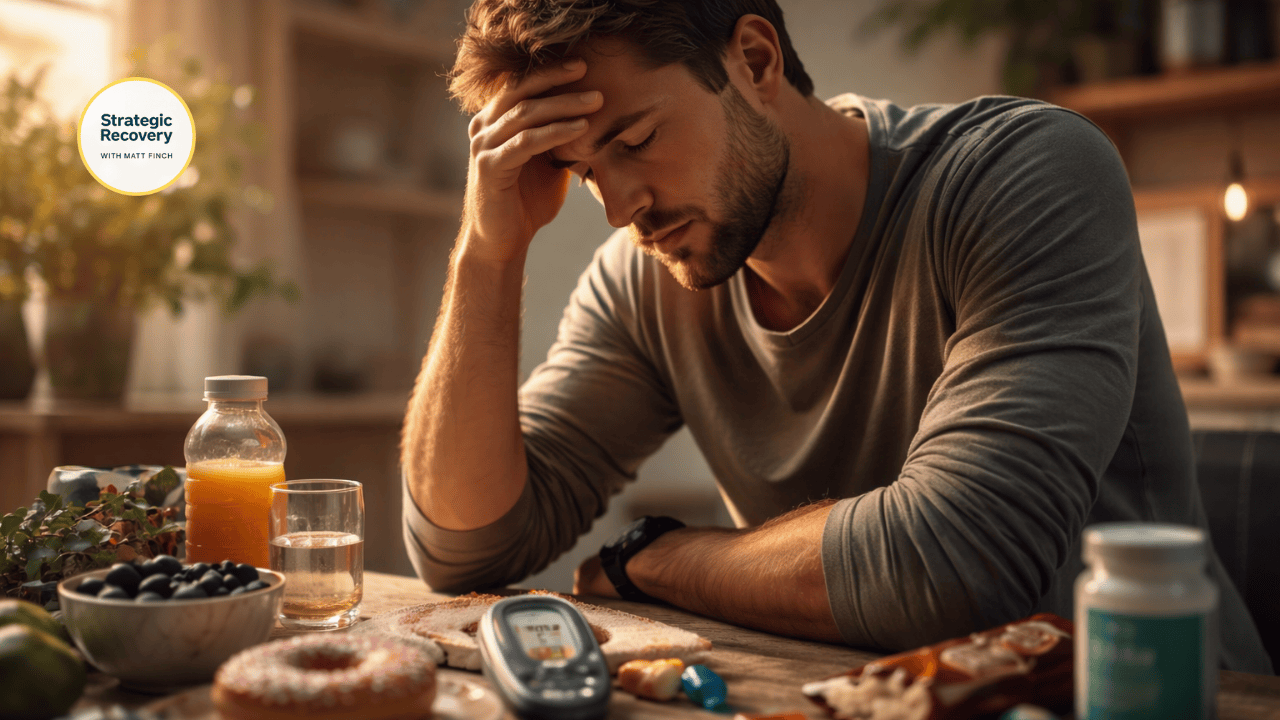
What Happens When Blood Sugar Drops? ⚠️
When blood sugar falls too low, the body reacts immediately.
Here’s what happens in your nervous system…
To prevent loss of consciousness, the nervous system releases emergency hormones:
This creates symptoms that are often misunderstood as psychological problems.
In reality, they are signs of acute biological threat signaling.
This is prime territory for addiction — because the nervous system will reach for the fastest form of relief it has learned.
The Low Blood Sugar–Addiction Loop 🔁
Hypoglycemia and addiction form a powerful feedback loop.
There are three primary entry points.
Low blood sugar → Craving relief
Some individuals experience chronic blood sugar instability due to:
When blood sugar drops, the brain demands fast fuel.
The nervous system learns:
“I need something immediately — or I’m not okay.”

Relief → Blood sugar crash
Quick fixes spike blood sugar rapidly — then crash it again.
This leads to:
Over time, the nervous system becomes dependent on rapid relief.
The system isn’t weak.
It’s responding to instability.
Crash → Stronger cravings
After the spike, blood sugar falls — and the nervous system reads the drop as danger. So the next craving isn’t casual. It’s urgent.
This typically creates:
Bigger swings train the brain to demand bigger relief.
What starts as comfort becomes conditioning.
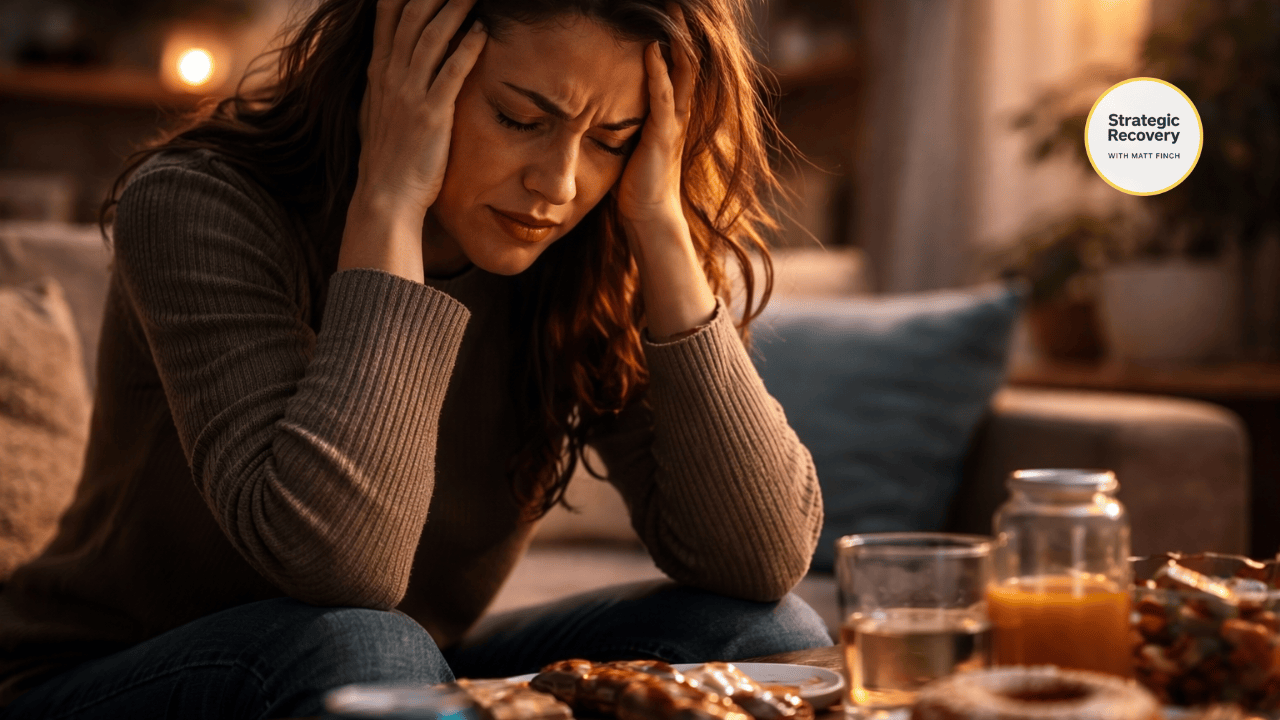
Why Low Blood Sugar Feels Like Anxiety 🧠
Hypoglycemia activates the sympathetic nervous system — the fight-or-flight response.
Alcohol, Blood Sugar & the Illusion of Calm 🍷
Alcohol temporarily raises blood sugar — then causes a delayed crash.
This explains why:
Many people drink not to feel good — but to stop feeling bad.
That’s a blood sugar story.

Root Causes of Chronic Blood Sugar Instability 🌱
Low blood sugar rarely exists alone.
According to my mentor, Dr. Charles Gant, poor nutrition, toxins, stress, and genetic predisposition are the four root causes of addiction.
More context is added below.
Can You “Supplement” Blood Sugar Stability? 🤔
(Yes — But Food Comes First)
Blood sugar is not something to hack aggressively.
The Strategic Recovery™ principle is simple:
👉 Stabilize — don’t spike.
Below are supportive tools — not quick fixes.
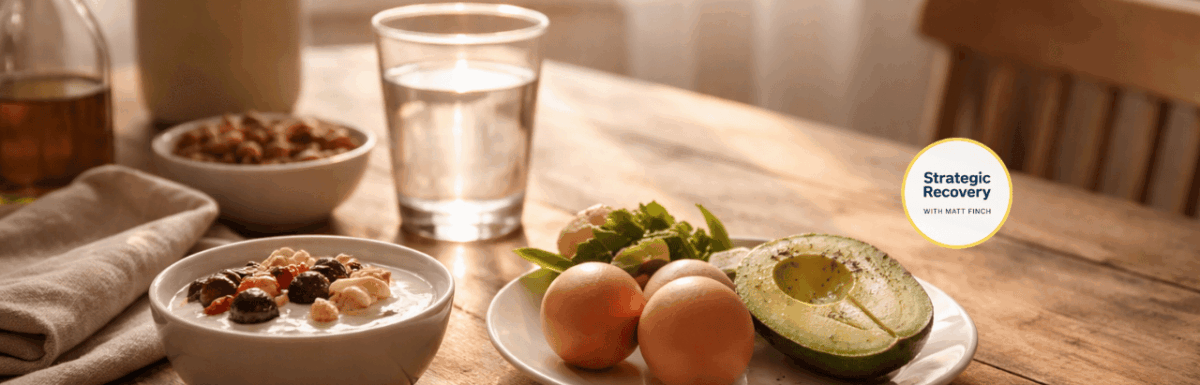
Protein: The Foundation
Protein stabilizes blood sugar by:

Balanced Meals
A stabilizing meal includes:


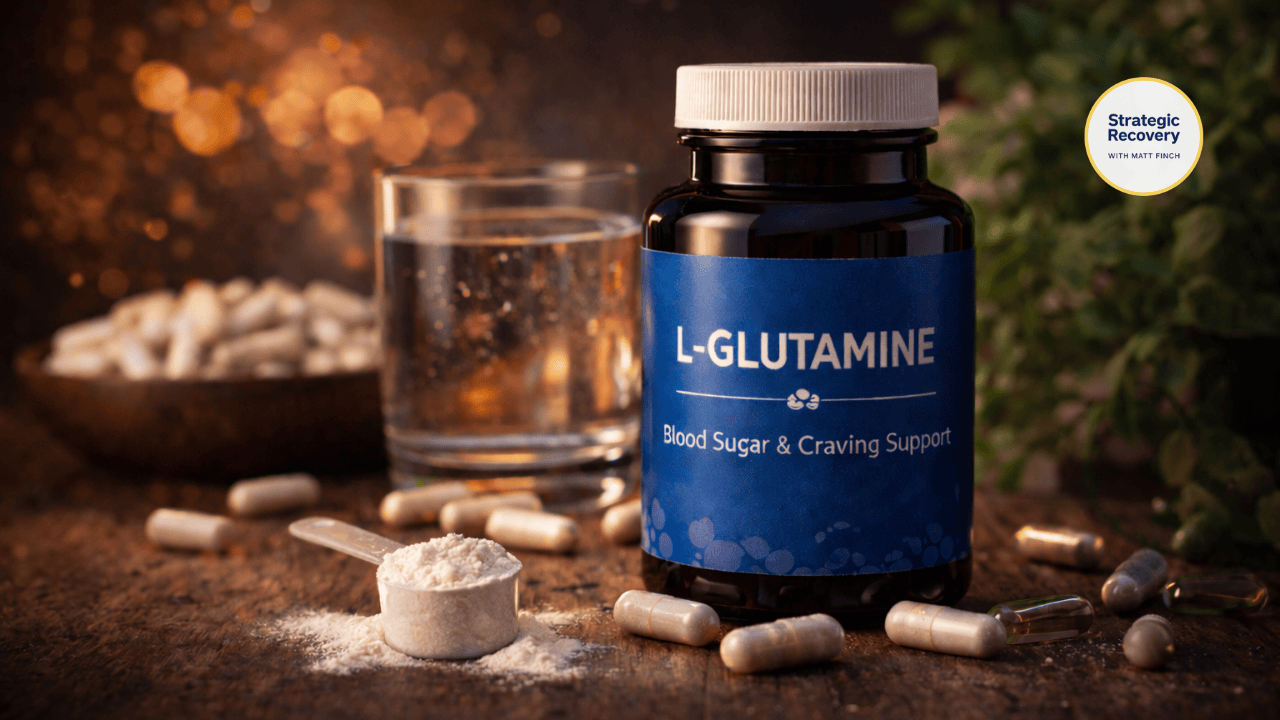
L-Glutamine: Emergency Stability Without the Spike
L-Glutamine is a conditionally essential amino acid with a unique role in blood sugar regulation and craving reduction. It helps by:
For many people in recovery, L-Glutamine doesn’t feel like stimulation. It feels like relief without chaos.
Avoid “Emergency Fuel” Patterns
Using sugar, caffeine, or alcohol as emergency relief trains instability. The goal is:

Why Willpower Fails When Blood Sugar Is Low 🧠⚡
I lost the battles of willpower versus low blood sugar countless times and relapsed often.
Now that I understand the biochemistry, it makes perfect sense.
This is not a moral failure. It’s biology.
You cannot “think your way” out of hypoglycemia.
Stability restores choice.
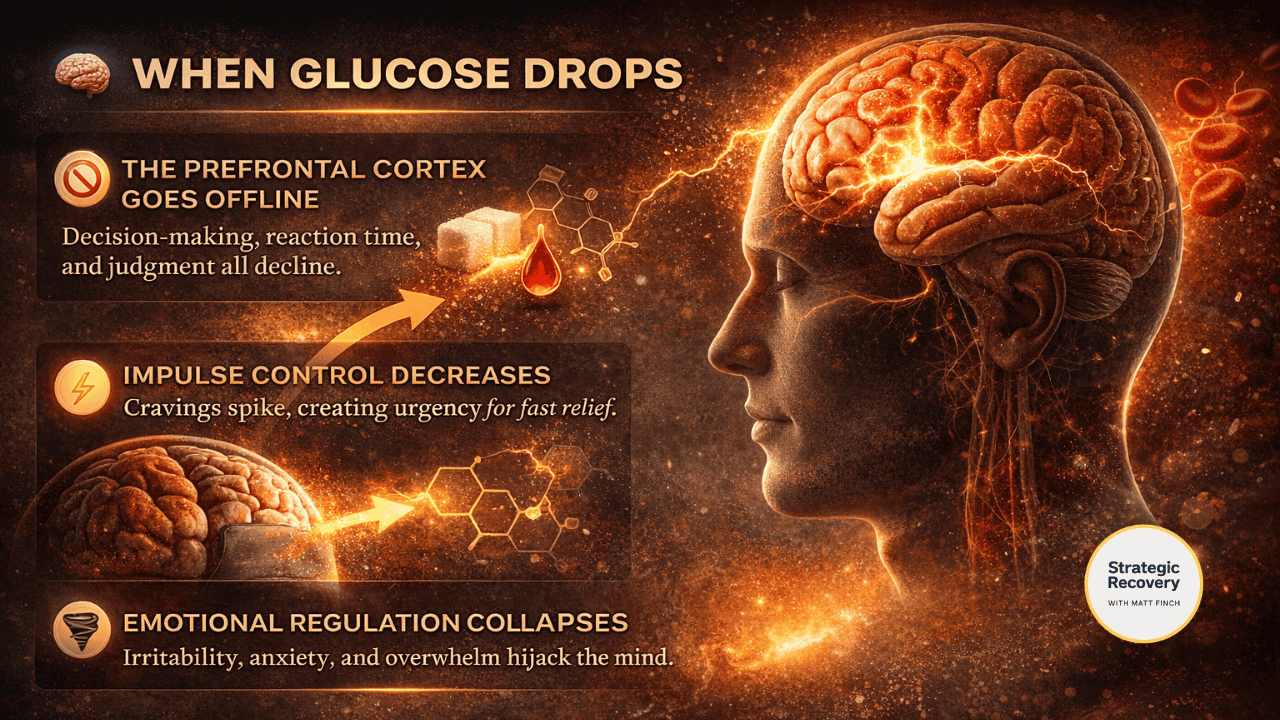
🧬 Strategic Recovery™ Blood Sugar Stabilization Framework
5-Phase Blood Sugar Rebalancing
Cravings diminish when the body feels safe.

🧠 Low Blood Sugar Self-Assessment
Is Your Blood Sugar Low?
Answer yes or no:
This is not a diagnosis — it’s a signal.
Key Takeaways 🔑
Here are the primary concepts from this article. Print this out or take a screen shot and review it daily for 30 days if that sounds useful.
Once the loop is known well in your conscious mind, the trap loses it’s grip.
The Core Concepts
When the body feels safe, cravings lose their grip.
Disclaimer
This article is for educational purposes only and is not medical advice. Always consult a qualified healthcare professional before starting any new supplement, especially if you have existing medical conditions or take prescription medications.




Leave a Reply