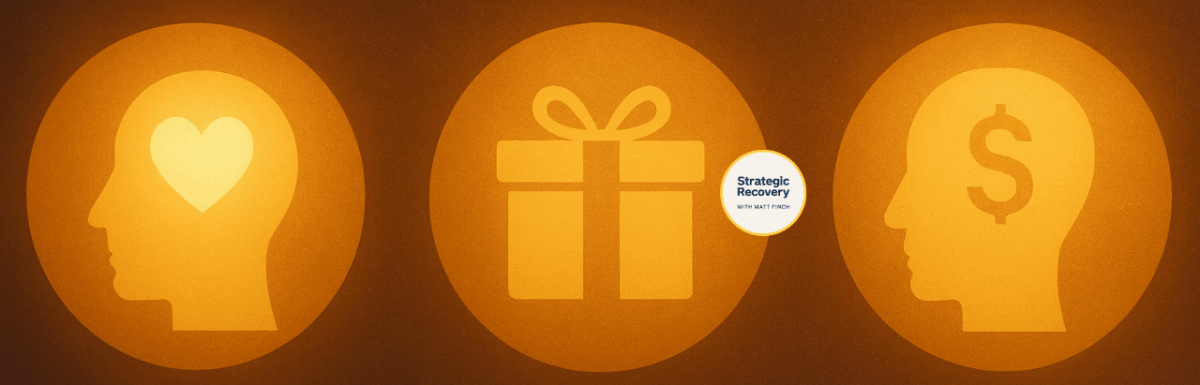
Now Playing: Episode #26 — The Incentive Code: The Most Effective Addiction Treatment No One Talks About
This page hosts the full Strategic Recovery Podcast audio episode (45:11 duration) on one of the most quietly powerful ideas in modern addiction treatment: Contingency Management — or what I call Incentive-Structured Recovery. We explore how intrinsic and extrinsic incentives reshape the brain, why rewards work better than shame, and how you can redesign your own incentive system so recovery stops feeling like punishment and starts feeling deeply rewarding.
✨ If you’ve ever felt like you “know better” but still relapse, this episode shows you why willpower isn’t the problem — and how learning the Incentive Code can make your healing not just possible, but magnetic.
Strategic Recovery Field Notes 🔑
Strategic Recovery with Matt Finch — Episode 26 Field Notes
In this episode, I crack open one of the most overlooked and misunderstood tools in all of addiction treatment: Contingency Management — or what I like to call Incentive-Structured Recovery. We’ll look at how incentives quietly shape every decision you make, why traditional rehab almost never talks about them, and how you can use the Incentive Code to reshape your own recovery starting today.
These notes are here to help you recap the key ideas, remember the science, and translate the episode into practical shifts in your daily life. Feel free to use this as a journaling companion, a teaching tool, or a map for your own incentive-based recovery plan. ✍️
🧭 Quick Navigation
Field Guide · Episode 26 · Incentive-Structured Recovery
- 🧨 Part I — My “Aha Moment” in the Pandemic
- 🎯 Part 2 — What IS Contingency Management?
- 🌡️ Part 3 — Why This Made Perfect Sense to Me Instantly
- 🔥 Part 4 — The Incentive System: Why It’s More Powerful Than Willpower
- 🧠 Part 5-6 — Why the Industry Ignores Incentives (Even Though They Work)
- 🏆 Part 7 — Why Incentives Work (The Neuroscience)
- 🧩 Part 8 — Real Stories From CM Programs
- ✨ Part 9 — The Strategic Recovery™ Incentive Method
- 🔥 Part 10 — How You Can Use Incentive-Based Recovery TODAY
- 🧭 Part 11 — The Final Insight: The Brain Follows the Reward
- 💛 Closing Message
🧨 Part 1 — My “Aha Moment” in the Pandemic
During the COVID lockdowns, I stumbled on a New York Times article about a treatment I’d barely heard of: Contingency Management. It claimed to be one of the most effective behavioral approaches ever studied for stimulant addiction — in a world where we still don’t have FDA-approved meds for meth or cocaine.
As I read about people earning small rewards for clean tests and treatment milestones, I had a full-body recognition moment. This wasn’t weird or gimmicky — it was exactly what I’d been doing with my private coaching clients for years through surprise care packages, milestone celebrations, and thoughtful rewards.
The outcomes I was seeing — 80–90% success rates in a field where relapse is considered “normal” — suddenly made sense. I wasn’t just “being nice.” I was unknowingly working with the brain’s incentive circuitry. That was the moment the concept of The Incentive Code was born.
🎯 Part 2 — What IS Contingency Management?
Contingency Management (CM) is built on one simple law of behavior: behavior that gets rewarded gets repeated. Behavior that gets ignored or punished tends to fade. This isn’t bribery — it’s basic behavioral science and dopamine neuroscience.
In CM, people receive small rewards when they:
- show up to treatment,
- hit specific milestones,
- or provide clean urine tests for targeted substances.
Rewards might be $5 or $10 gift cards, vouchers, points, or small bonuses for streaks. The amounts are modest — but the brain doesn’t need huge payouts to learn. It just needs a consistent signal that says: “This new behavior matters. Remember this. Do it again.”
Study after study has shown that CM is one of the most effective behavioral treatments we’ve ever tested for stimulant use disorders. NIH recommends it. SAMHSA endorses it. NIDA’s director, Dr. Nora Volkow, supports it. Yet, as we’ll see, most of the treatment world still acts like it doesn’t exist.
🌡️ Part 3 — Why This Made Perfect Sense to Me Instantly
When I learned about CM, I realized I’d built my entire coaching approach around incentives long before I knew there was a technical term for it. Especially extrinsic incentives — the external boosts that help people stay engaged early on when their dopamine is tanked and their internal motivation is fragile.
Picture a client in week two of being alcohol-free. They open their mailbox and find a package they weren’t expecting, with my name on it. Inside: a box of Spring Dragon Longevity Tea, a fresh journal, a pen, and a note saying how proud I am of them.
A week later, they hit another milestone and get a handwritten card plus BrainMD L-Theanine gummies. The gifts themselves are modest — but the emotional impact is huge: surprise, being seen, being celebrated, feeling worthy of good things.
Every single client loved this aspect of our work together. I wasn’t “spoiling” them; I was partnering with their nervous system. CM just gave me the language and science for something I already knew in my gut: people in early recovery need reasons to keep going, not just lectures.
🔥 Part 4 — The Incentive System: Why It’s More Powerful Than Willpower
Addiction hijacks the brain’s incentive circuitry. It wires the substance or behavior to feel like maximum reward — relief, escape, confidence, certainty — while recovery gets linked to boredom, pain, loss, and emotional exposure.
Your brain isn’t resisting recovery because you’re broken or weak. It’s resisting because the incentive equation is distorted. On a subconscious level, it still believes: “Using = relief. Sobriety = threat.”
We don’t fix that by yelling “just stop.” We fix it by changing what’s rewarding. As Charles Duhigg says, “Every habit is powered by its reward.” Recovery efforts fail when we try to rip away the old reward without offering anything new.
The core of the Incentive Code is this: you don’t just take away the treat — you upgrade the treat. You build a life and a daily rhythm where healing feels more rewarding, more meaningful, and more energizing than relapse ever did.
🧠 Part 5-6 — Why the Industry Ignores Incentives (Even Though They Work)
If CM is so effective, why don’t most rehabs use it? The reasons have very little to do with science and a lot to do with culture, money, and ego.
- Many providers think it’s “immoral” or “bribery.”
- They believe people should recover “for the right reasons.”
- They’re still operating on 1950s dogma about willpower and shame.
- Insurance doesn’t reimburse well for simple reward systems.
- They’re afraid of public criticism: “You’re paying addicts to behave.”
- Corporate rehabs want to sell more inpatient beds, not cheaper tools that work.
- Most programs undervalue reward and overvalue discipline.
Underneath all of it is a fundamental misunderstanding of behavior change. We’re not bribing people to be “good.” We’re activating the part of their brain that actually wants to heal — the part that’s been buried under trauma, depletion, and survival mode.
🏆 Part 7 — Why Incentives Work (The Neuroscience)
When you consistently reward healthy behavior, several powerful things happen in the brain:
- Dopamine spikes — in a healthy way. Not like the flood of drugs, but just enough to say, “Yes, remember this. Do it again.”
- The prefrontal cortex strengthens. This is your decision-making center, and it loves rewards and positive feedback.
- Old associations weaken. The brain slowly stops expecting pleasure from the old behavior and starts expecting it from the new one.
- New pathways form faster. Especially when rewards are emotional, surprising, frequent, and personally meaningful.
This is the same mechanism behind habit trackers, fitness challenges, bonus structures, video game levels, loyalty programs, and parenting sticker charts. We use incentives everywhere in life — except, bizarrely, in the one area where behavior change is hardest: addiction recovery. The neuroscience says it’s time to change that.
🧩 Part 8 — Real Stories From CM Programs
In real CM programs, rewards are small but meaningful: $5 or $10 gift cards, points, bus passes, grocery support, or vouchers people can redeem for everyday needs. Clients often use them for food, haircuts, shoes, phone bills, or a simple day out with their kids.
One man in the article I read held up his $10 gift card and said, “This is the first time I’ve felt like someone believed in me.” That line has stayed with me ever since.
The real power of the reward isn’t the money. It’s what it symbolizes: hope, momentum, belonging, progress, and a future worth investing in. Incentives become a language that says, “You matter. Your effort is seen. Keep going.”
✨ Part 9 — The Strategic Recovery™ Incentive Method
I distilled everything I love about CM and combined it with holistic, whole-person recovery into what I call the Strategic Recovery™ Incentive Method. It moves in three main steps:
Step 1 — Remove the Old Incentive
We weaken the link between drug = reward by repairing the brain and nervous system: nutrient protocols, sleep restoration, nervous system regulation, pain–pleasure balancing, trauma-aware emotional work, and community support.
Step 2 — Add Powerful New Incentives
We introduce both extrinsic rewards (gifts, milestones, celebrations, coaching, accountability) and intrinsic rewards (pride, peace, clarity, spiritual moments, identity growth, feeling alive again). External incentives jump-start the process; internal incentives sustain it.
Step 3 — Make Recovery More Rewarding Than Relapse
The goal is not just to remove the old habit — it’s to make the new path so nourishing, energizing, and meaningful that relapse feels flat, boring, and too expensive. When recovery genuinely feels better in your body, your emotions, and your spirit, you don’t have to white-knuckle it. The path starts to pull you forward.
🔥 Part 10 — How You Can Use Incentive-Based Recovery TODAY
You don’t have to be in a formal CM program to start working with the Incentive Code. Here are practical ways to bring this into your life right now:
- Gamify your sobriety. Track days, streaks, and milestones. Celebrate every win.
- Create a reward menu. List healthy rewards you’ll give yourself at key milestones: massage, books, tea, nature walks, creative tools, self-care nights.
- Ask for support. Invite trusted people to send encouraging texts, notes, or small milestone gifts.
- Swap dopamine sources. When cravings hit, redirect into cold plunges, movement, breathwork, sunlight, journaling, or spiritual practice.
- Make relapse emotionally expensive. Write a letter to your future self, record a message from your lowest moment, or make a “pain list” that reminds you what’s truly at stake.
- Make recovery emotionally exciting. Build rituals, ceremonies, adventures, and projects that make your new life feel vivid and worth waking up for.
The more you anchor recovery to actual rewards — internal and external — the less you have to rely on raw willpower. Your nervous system starts to lean toward freedom on its own.
🧭 Part 11 — The Final Insight: The Brain Follows the Reward
Here’s the core truth of this entire episode: if recovery feels like punishment, your brain will resist it. If it feels like deprivation, your system will keep reaching for what used to feel good — even if it’s destroying you.
But when recovery starts to feel rewarding — when it’s associated with dignity, peace, creativity, connection, energy, and possibility — your brain naturally begins to choose it. Not because you’re forcing it… but because the reward has shifted.
Addiction recovery isn’t primarily a battle of willpower. It’s a reward redesign. Not discipline, but dopamine. Not shame, but strategy. That’s the heart of the Incentive Code and the soul of Strategic Recovery™.
💛 Closing Message
You don’t need more self-control, more lectures, or more shame-based systems that tell you to “try harder.” What you truly need are better incentives — a brain that wants recovery, not one that’s just trying to survive it.
When you rebuild your reward system and flip your internal incentive map, recovery stops being an endless uphill battle. It becomes your natural direction. Your life begins to organize itself around freedom instead of addiction.
I believe in you. I celebrate your wins — even the tiny ones nobody else sees. And I’m committed to helping you build incentive structures that make your healing inevitable.
I’m Matt Finch. This is Strategic Recovery. And this was Episode 26 — The Incentive Code: The Most Effective Addiction Treatment No One Talks About.
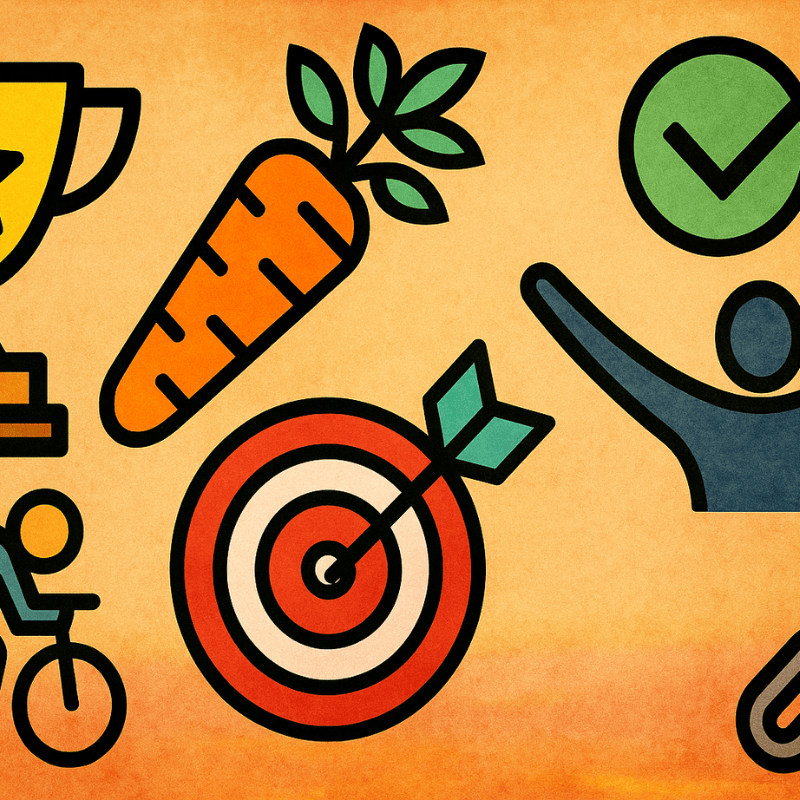
🥕🎯 Why Addiction Recovery Is All About Incentives
Go deeper into The Incentive Code with the full article on incentive-based recovery — plus a free download of the Strategic Recovery Incentives Flip Chart™ worksheet.
Map your current reward loops, design new intrinsic + extrinsic incentives, and build a daily system that makes sobriety feel magnetic instead of miserable.
Frequently Asked Questions 💡
These FAQs expand on Episode 26 — The Incentive Code — and explain how Contingency Management and incentive-structured recovery actually work in real life, why they’re so effective, and how you can use these tools without shame or stigma.
-
No. Bribery is paying someone to do something harmful or dishonest. Contingency Management rewards people for healthy, life-supportive behaviors that help them rebuild their lives. It’s the same principle as rewarding a kid for good grades — not manipulation, but reinforcement.
The brain doesn’t change because we lecture it. It changes because we pair new behaviors with meaningful rewards.
-
Addiction rewires the brain’s incentive system so the substance or behavior is linked to maximum reward and recovery is linked to fear, loss, or boredom.
CM works because it speaks the brain’s actual language — dopamine plus reinforcement. You don’t win a hijacked reward system with “try harder” energy. You win it by making recovery more rewarding than relapse.
-
Most programs use small but meaningful rewards: $5–$20 gift cards, grocery vouchers, phone credits, bus passes, self-care items, or points that build toward bigger rewards.
It’s not about the dollar amount — it’s about being seen, celebrated, and reinforced each time you show up clean, keep a streak going, or hit a milestone.
-
No. CM rewards create small, healthy dopamine spikes — nothing like the massive, chaotic blasts from drugs or compulsive behaviors.
The goal isn’t lifelong bribery. The goal is temporary scaffolding that helps you stabilize, heal your nervous system, and build enough momentum that your intrinsic motivation and new identity take over.
-
Research shows CM is the most effective behavioral treatment we’ve ever tested for stimulant use disorders. That’s why it gets so much attention in that space.
But the underlying principle — incentives drive behavior — applies to every addiction: alcohol, opioids, gambling, porn, food, gaming, shopping, nicotine, you name it. Wherever there’s a reward loop, incentives can be redesigned.
-
CM is designed as a short-to-medium-term bridge, not a permanent lifestyle. Extrinsic rewards keep you engaged long enough for your brain and life to change.
Over time, the real payoff becomes how you feel in your body, your relationships, your sense of purpose, and your self-respect. The trajectory is: extrinsic → intrinsic → identity.
-
Start simple:
- Pick one behavior: no drinking today, take supplements, journal, walk, etc.
- Pair it with a small reward you enjoy and can afford.
- Track streaks on a calendar or app.
- Celebrate milestones at Day 3, 7, 14, 30, and beyond.
You’re basically running a personal Contingency Management program — speaking to your own brain in the language of clear rewards and visible progress.
-
I’d argue it’s one of the most ethical and humane approaches we have. Instead of shaming, punishing, or moralizing, CM says:
“I see your effort. I believe in your capacity to change. And I’m going to reinforce every healthy step you take.”
That’s dignity. That’s compassion. That’s how real people change.
-
There’s no shaming, and no “you’re back to zero forever.” You simply don’t earn the reward for that particular milestone, and then you keep going.
CM treats relapse as data, not a moral verdict. That reduces all-or-nothing thinking and makes it easier to get back on track after a slip.
-
Yes. When you repeatedly pair healthy choices with rewards, celebration, and tangible progress, you start to see yourself differently:
“I’m someone who follows through.” “I’m someone who can stay sober.” “I’m someone who deserves good things.”
That’s the heart of the Incentive Code: using rewards not just to change behavior in the moment, but to build a new
identity that naturally chooses recovery.
🙏 Thank you for being part of the Strategic Recovery community.
👉 Click Here and Right Click to Save As to Download>>
🎧 Available on your favorite platform:


Leave a Reply