
“Addiction is not the choice to use; it’s the inability to stop.” — Gabor Maté, MD
Most people think there’s only one “right” way to recover. Reality check: there are many. And when you understand the three master pathways—plus how to build your Recovery Capital—you can design the plan that actually fits your life.
This guide gives you:
- A simple framework: Clinical, Community/Peer (Non-Clinical), and Self-Directed pathways
- A practical Recovery Menu (Detox → Withdrawal Relief → Craving Reduction → Recovery & Healing → Relapse Prevention → Transcendence)
- Concrete examples for alcohol, prescription/illicit drugs, pornography/sex, gambling, gaming, and more
- A fast way to choose your next steps—without overwhelm
Let’s go. 🚀
🧭 A Fresh, Working Definition of Addiction
“Any behavior that provides temporary relief or pleasure, yet causes harm and we can’t give it up.” — Maté, The Myth of Normal
Three hallmarks:
- Short-term relief/pleasure → craving
- Long-term harm to self/others
- Inability to stop (despite intentions)
This definition covers substances (alcohol, opioids, stimulants, benzos, cannabis) and behaviors (porn, gambling, gaming, shopping, food).
🧱 The Strategic Recovery™ Menu (6 Categories)
Think of recovery like building a house. You don’t start with the roof. Use or skip categories as needed—customize to your addiction type and severity.
- Safe, Comfortable Detox 🛟
- Alcohol/benzos/opioids: medical supervision may be essential.
- Stimulants/cannabis: usually supportive, symptom-targeted care.
- Behaviors (porn/gambling): no medical detox; focus on stabilization & sleep.
- Withdrawal Symptom Relief 😵💫
- Alcohol/benzos: physician-guided protocols; sleep support.
- Opioids: comfort meds, buprenorphine, clonidine, hydration, hot/cold therapy.
- Behaviors: normalize dopamine/circadian rhythm; nutrition, exercise, sunlight.
- Craving Reduction 🧲
- Recovery & Healing 🛠️
- Therapy: CBT, ACT, MI, IFS, trauma-informed care; couples/family when appropriate.
- Somatic & holistic: breathwork, meditation, yoga, acupuncture, HRV training.
- Biochemical repair: protein, omega-3s, B-complex (methylated if needed), magnesium, vitamin D, minerals, probiotics/prebiotics.
- Spiritual growth: prayer, service, nature time, gratitude practices.
- Relapse Prevention 🛡️
- Identify triggers → plans (HALT, people/places/things, digital boundaries).
- Build coping stacks: 60-second resets, 5-minute mobility, 10-minute walk, call/text a buddy, tea/ARD ritual.
- Environment design: remove cues, add friction, automate supports.
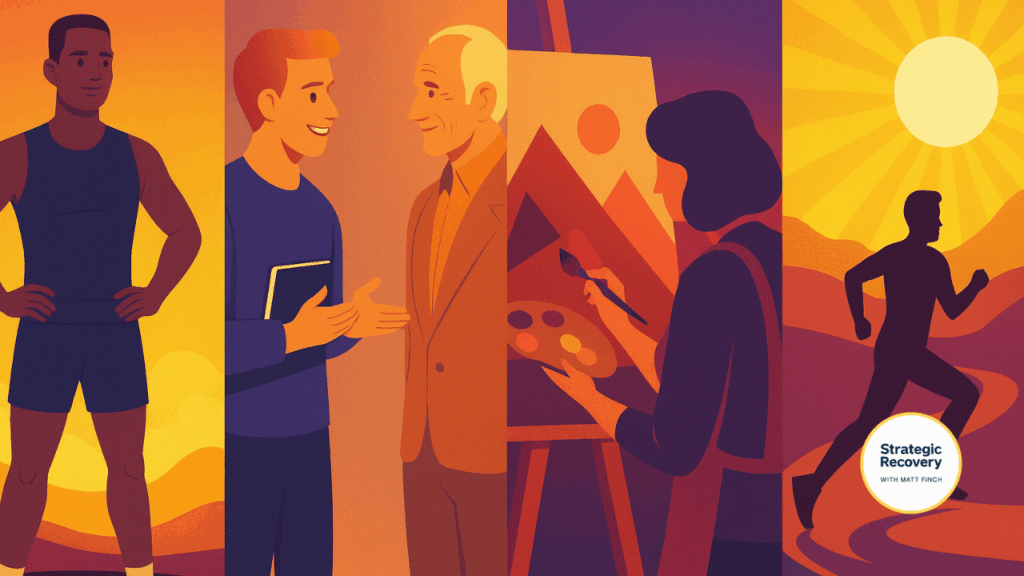
- Transcendence 🌅
- Purpose & contribution, mentorship, creative projects, fitness milestones.
- From “not using” → becoming (identity shift + service).
🧩 The 3 Master Pathways (Choose One—or Blend Them)
1) 🏥 Clinical Pathways (Professional Care)
Who it fits: Moderate–severe substance use; high medical/psychiatric risk; repeated failed attempts.
Options (examples):
- Levels of Care (ASAM):
- Withdrawal management (inpatient/outpatient)
- Residential treatment
- Partial Hospitalization (PHP) / Intensive Outpatient (IOP) / Outpatient
- Medications (examples, by domain):
- Alcohol: naltrexone (oral/extended-release), acamprosate, disulfiram
- Opioids: buprenorphine, methadone, naltrexone; comfort meds (clonidine/lofexidine, anti-nausea, sleep)
- Nicotine: NRT, varenicline, bupropion
- Psychotherapies: CBT, ACT, MI, IFS, trauma-specific (EMDR, CPT), family therapy
Behavioral addictions in Clinical track:
- Porn/gambling/gaming: psychiatric eval for co-occurring depression/anxiety/ADHD; CBT/ACT/IFS; digital hygiene; meds only when indicated for comorbidities.
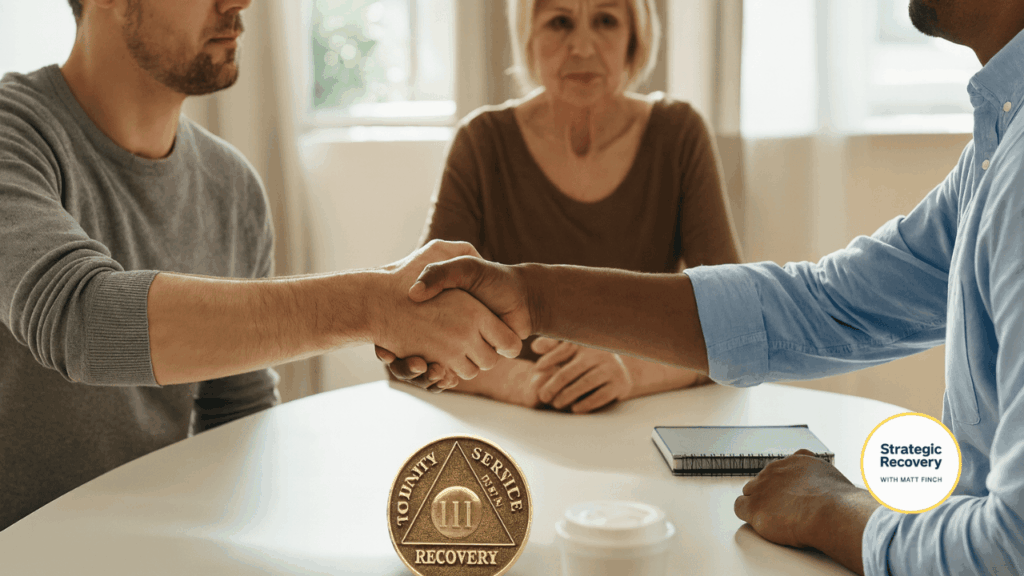
2) 🤝 Community & Peer Pathways (Non-Clinical)
Who it fits: Mild–moderate severity; those who thrive with connection, accountability, lived-experience mentors.
Options (examples):
- Mutual-help: AA/NA/CA/HA; SMART Recovery; LifeRing; Women for Sobriety; Celebrate Recovery; Refuge Recovery/Dharma Recovery
- Recovery residences: Sober living, structured houses
- Recovery community centers/cafés; faith & culture-based groups
- Education & employment supports: collegiate recovery, recovery-friendly workplaces, job training
Behavioral addictions:
- 12-Step subsets (SA/S-Anon, SAA), secular groups, accountability partnerships, device filters, community challenges.
3) 🧭 Self-Directed Pathways (Natural/Self-Managed)
Who it fits: Lower medical risk, strong self-efficacy, or people augmenting Clinical/Peer paths.
Core elements:
- Customized routines: sleep, nutrition, training, sunlight, cold/heat, supplements
- Skills: urge surfing, “one-more-rep” decisions, implementation intentions
- Identity work: “I’m the kind of person who…” scripts; values-based goals
- Solo plus selective supports (coach/mentor, periodic check-ins)
Real-world examples:
- Alcohol → pharmacist-guided supplements, ARD rituals, strength training + SMART meetings.
- Opioids → medically supported taper → strength + sauna + coaching.
- Porn/gambling → 90-day dopamine reset + device friction + breathwork + men’s group.
🧮 Recovery Capital: The Multiplier
“Recovery capital is the internal & external assets that help start and sustain recovery.” — Granfield & Cloud
High severity + low capital → you’ll likely need more structure & support (higher level of care, housing, intensive community).
Lower severity + higher capital → lighter touch may work (outpatient + peer + self-directed).
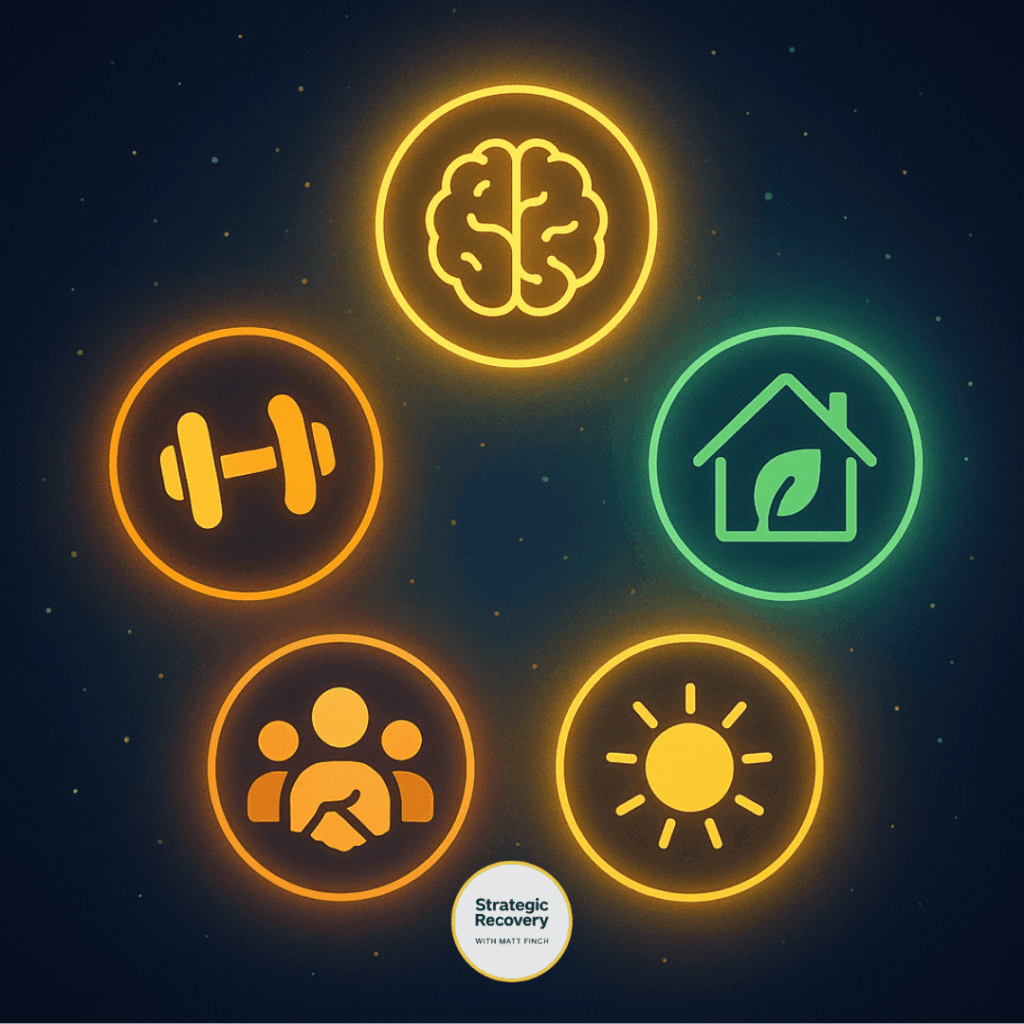
Build it across 5 domains (Strategic Recovery™):
- Physical (sleep, labs, nutrition, movement)
- Psychological (therapy skills, mindset, tools)
- Social (people, groups, mentors)
- Environmental (home, digital, schedule design)
- Spiritual (meaning, values, practices)
🧪 Quick Selector: “Which Pathway Now?”
- Safety concerns? (seizure risk, benzo/alcohol withdrawal, suicidal ideation) → Clinical first.
- Tried alone & keep slipping? → Add Community/Peer for accountability.
- Stable but stuck? → Layer in Self-Directed performance habits + coach.
- Behavioral addiction with co-occurring anxiety/ADHD? → Clinical eval + CBT/ACT/IFS; device boundaries; peer support.
🧰 Resource “Menu” by Phase (Pick 1–3 per row)
Detox/Stabilize
- Medical detox or at-home with physician oversight (when safe)
- Hydration, electrolytes, light protein, sleep support
- For behaviors: sleep reset, device rules, accountability partner
Withdrawal Relief
- Clinician-guided protocols when indicated
- Gentle movement, hot/cold therapy, magnesium/glycine, guided breath
Craving Reduction
- Alcohol: naltrexone/acamprosate (MD), ARD rituals, omega-3s
- Opioids: MOUD (bupe/methadone), DLPA, NAC, sun walks
- Porn/gambling: blockers, delay techniques, urge surfing, cold face dunks
Recovery & Healing
- Therapy (CBT/ACT/IFS/EMDR), journaling, values work
- Strength training + Zone 2 cardio; yoga or tai chi/qigong
- Gut support: whole-food protein, fiber, fermented foods, probiotics
Relapse Prevention
- Trigger map + if-then plans
- 5-person support circle; weekly check-ins
- Environment design (remove cues, add friction), travel plan
Transcendence
- Purpose projects, service/mentorship
- Nature immersions, retreats, creative arts
- Gratitude, prayer/meditation, community leadership
📌 10 Takeaways to Keep
- Addiction spans biological, psychological, social, environmental, and spiritual dimensions.
- There are three master pathways: Clinical, Community/Peer, Self-Directed.
- Mix & match—your recovery is a custom build.
- Clinical care ranges from outpatient to residential (ASAM levels).
- Medications can be life-saving for some substance addictions.
- Therapy works: CBT, ACT, MI, IFS, trauma-informed methods.
- Community heals what isolation harms.
- Recovery Capital predicts how much support you’ll need.
- Design your environment; don’t rely on willpower alone.
- Aim beyond abstinence: healing, purpose, transcendence.
- Book a clinical assessment (if safety is a concern).
- Join one meeting (AA/NA/SMART/LifeRing/WFS/Celebrate/SA/SAA).
- Start a 14-day Self-Directed reset: sleep, protein, walks, strength x3/wk.
- Complete a Recovery Capital self-assessment and choose one domain to raise this week.


Leave a Reply