You’ve probably been told that alcohol addiction is about willpower, bad decisions, or genetics. But the truth goes much deeper.
What if alcohol wasn’t just a bad habit or moral failing… but a multi-dimensional trap?
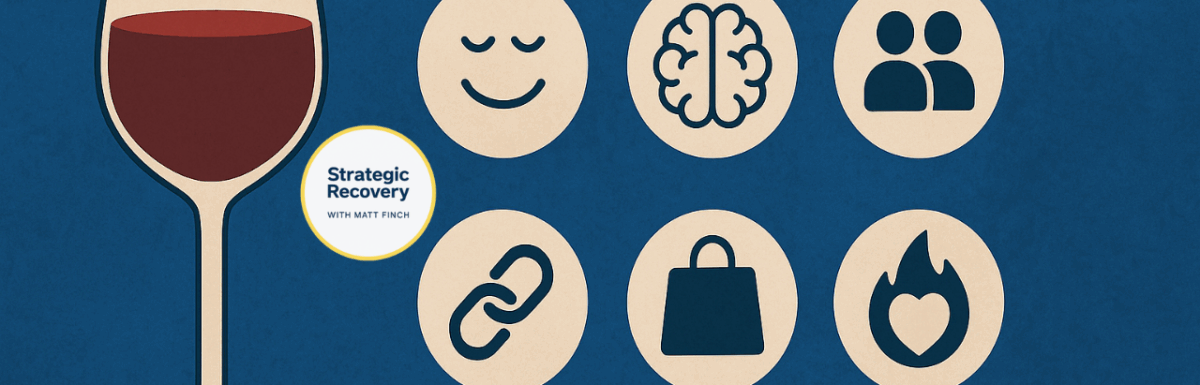
In this article, we’ll reveal the 6 hidden forces that make alcohol uniquely addictive. These insights may forever change the way you see drinking, relapse, cravings, and recovery.
And if you’ve ever asked yourself:
“Why can’t I stop drinking even when I want to?”
This article will answer that.
1. 🔮 The Breadth of Pharmacological Effects
Alcohol isn’t just one drug. It’s a “broad-spectrum neurochemical blaster.” Because it’s a small molecule, alcohol interacts with multiple neurotransmitter systems:
- Dopamine: motivation, pleasure, reward
- GABA: tranquility, sedation, anxiety reduction
- Serotonin: mood stabilization, emotional safety
- Norepinephrine & Adrenaline: stimulation, focus, alertness
- Endorphins: natural opioids, euphoria, pain relief
- Glutamate: excitatory activity, memory disruption
This is what makes alcohol so seductive:
It’s simultaneously an upper, downer, painkiller, and emotional anesthetic. Few drugs offer such total mind-body impact.
“Alcohol works like a cocktail of antidepressants, tranquilizers, stimulants, and opioids — all in one glass.”
For someone in emotional pain, that makes alcohol an easy, fast-acting solution. And that’s a big part of the trap.
2. ⚖️ The Neuro-Associations of Pain and Pleasure
Every human behavior is governed by a core principle:
We do things to seek pleasure and avoid pain.
Alcohol can temporarily:
- Ease loneliness
- Soothe anxiety
- Provide confidence
- Turn off reactive hypoglycemia symptoms
- Help you sleep
Even if it comes at a cost.
In the beginning, it might rate like this:
- Pleasure: 10/10
- Pain: 2/10
But over time?
- Pleasure: 3/10
- Pain: 9/10
When the scales tip, you’re in what we call “exhausted resource syndrome”: it once worked, but now it steals more than it gives.
And yet, because of brain conditioning, the compulsion can remain.
3. 🧬 The Six Human Needs
Tony Robbins identified six core needs that drive all human behavior:
- Certainty: comfort, control, safety
- Variety: stimulation, surprise, novelty
- Significance: feeling important, unique, validated
- Connection: love, bonding, belonging
- Growth: personal expansion
- Contribution: giving beyond the self
Alcohol can meet the first four at a very high level:
- Certainty: “I know it will numb the pain.”
- Variety: Every drinking experience is different.
- Significance: “I’m wild, edgy, tragic, or rebellious.”
- Connection: You bond over drinks with others.
Any behavior that meets 3+ needs at a high level can become an addiction.
Alcohol becomes a fast track to meet needs in a world where people lack the skills or tools to meet them healthily.
4. 👥 The Social Contagion Effect
We are wired for tribal belonging. From childhood, we’re conditioned to mirror those around us to avoid rejection or shame.
If your friends, family, or coworkers drink frequently, the pressure to conform is massive.
“You become the average of the five people you spend the most time with.” — Jim Rohn
In most social settings, not drinking can feel like you’re violating a social contract.
Combine that with alcohol’s omnipresence in media, celebrations, grief rituals, and stress relief, and it becomes almost unavoidable.
5. 🚗 Physical Proximity & Accessibility
The #1 predictor of relapse? Ease of access.
Alcohol is:
- Everywhere (gas stations, grocery stores, events, airports)
- Easy to get (home delivery in 20 minutes)
- Cheap (cheaper than supplements or therapy)
In cities and suburbs, alcohol is as accessible as water — and sometimes more so. No prescription. No screening. No barriers.
We don’t just become addicted to substances. We become addicted to their availability.
6. 🚫 Alcohol and the Multi-Dimensional Pain Relief Effect
Dr. Gabor Maté says:
“The question is not why the addiction, but why the pain?”
Alcohol addresses four layers of pain:
- Physical pain (inflammation, neurotransmitter deficiency)
- Psychological pain (trauma, anxiety, depression)
- Social pain (rejection, isolation, abandonment)
- Spiritual pain (loss of purpose, disconnection, inner void)
In other words, alcohol is not just a chemical escape. It’s an attempt to adapt to a world of overwhelming, multidimensional pain.
And in that light, alcohol addiction makes perfect sense.
🔄 Recap: The 6 Hidden Forces
Here’s why alcohol hooks so deeply:
- Neurochemical Hijack — 7 major neurotransmitters impacted
- Pain/Pleasure Imbalance — It starts as relief and ends as suffering
- Human Needs Met — Alcohol fulfills core needs, temporarily
- Social Influence — Drinking is normalized and rewarded
- Ease of Access — Availability is nearly frictionless
- Pain Adaptation — It numbs what hurts, across every dimension
🔗 Your Next Step
If alcohol has been filling emotional, biochemical, or social gaps in your life — now is the time to start repairing the root.
📊 Take the Mood Type Assessment to understand your brain chemistry
📅 Download the Free Strategic Recovery Worksheets.
🙏 Get support, not shame. You don’t have to fight this alone. Check out my Alcohol Recovery Bundle (3-Course) that everyone is raving about.
🌟 Final Thoughts
You’re not broken.
You’re not weak.
You’re not destined to struggle forever.
You’re a sensitive, intelligent being doing your best to regulate your experience in a world that never taught you how.
Understanding these six forces doesn’t just explain addiction — it unlocks a new path to freedom.
Because when you stop blaming yourself… and start healing strategically?
That’s when everything begins to change.




Leave a Reply