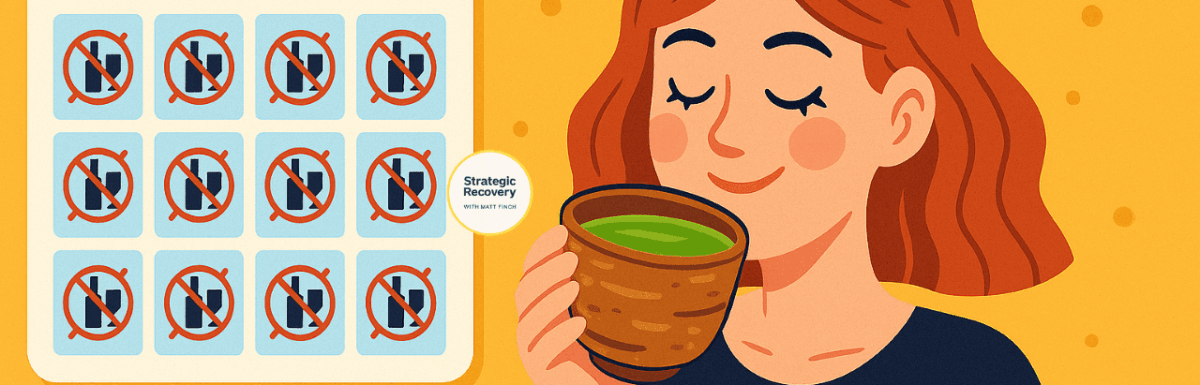
The ancient Japanese practice that’s quietly becoming one of the most powerful modern tools for overcoming addiction.
In addiction recovery, we talk endlessly about supplements, therapy, accountability, cravings, dopamine, trauma, willpower…
But almost no one talks about matcha.
Not the Starbucks kind.
Not the sugary latte kind.
Not the cheap culinary-grade stuff dumped into smoothies.
We’re not talking about any old green tea latte. This protocol is built around a very specific kind of matcha and a very specific way of using it.
Premium organic ceremonial-grade Japanese matcha — shade-grown, stone-ground, and vibrantly electric green.
Prepared with reverence — sifted, whisked by hand, and sipped slowly instead of slammed back.
Rich in L-Theanine, antioxidants, and tradition — supporting calm focus, neurorepair, and nervous-system safety.
A replacement ritual powerful enough to override alcohol cravings — creating a new “evening state change” that heals instead of harms.
This is the world’s first comprehensive guide to Matcha-Assisted Addiction Recovery — a fusion of neuroscience, ritual psychology, and the lived experience of one of my students, “Lanae” (name changed), who used ceremonial matcha to stop drinking alcohol in Japan.
Her results were simple and profound:
Freedom. Consistency. Calm focus. Emotional stability. A complete identity shift.
And it all began by replacing one ritual — red wine — with another: matcha prepared the traditional Japanese way.
Let’s begin.
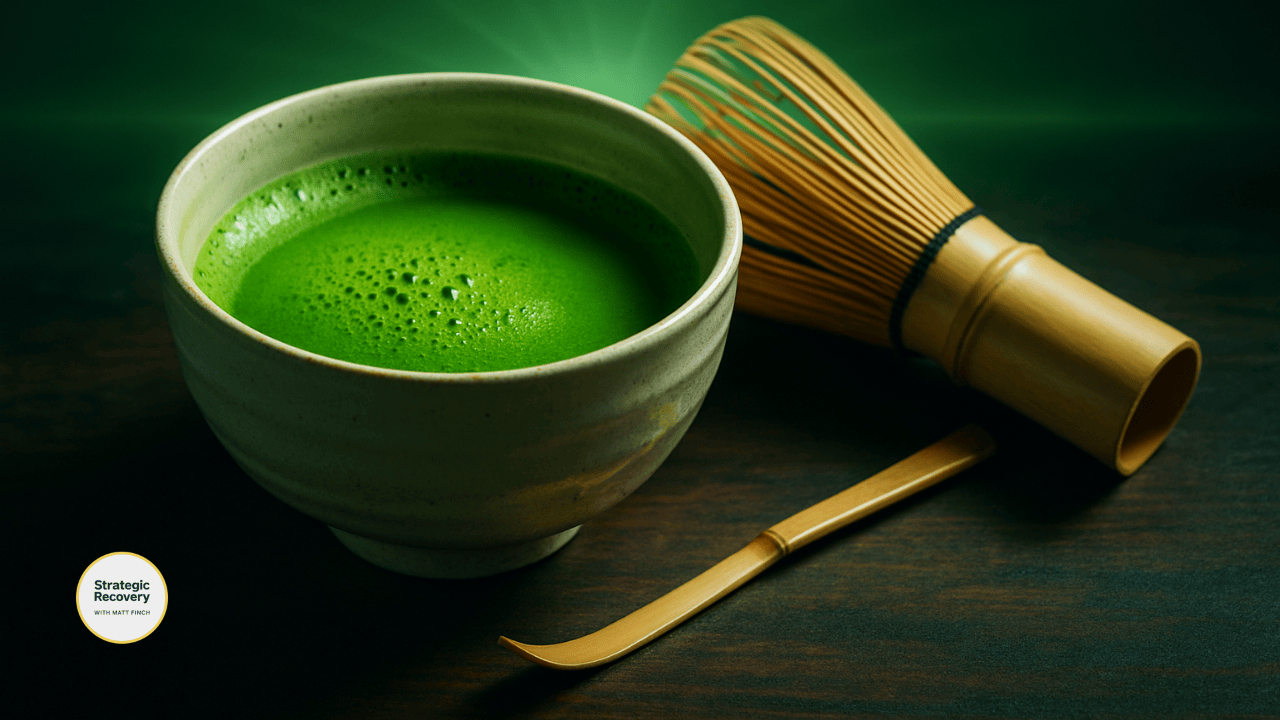
MATCHA-ASSISTED ADDICTION RECOVERY (MAAR) Introducing a simple ceremonial cup that can rewrite the story your brain tells about evening, comfort, and freedom.
🧘♀️ Part I — What Is Matcha-Assisted Addiction Recovery?
Matcha-assisted recovery is a therapeutic framework that blends:
- Ceremonial-grade organic matcha
- Mindful ritual replacement
- Neurochemical balancing
- State shifting (calm energy → no cravings)
- Consistency over time
It works because matcha is not just a drink — it’s a nervous system intervention.
Where alcohol sedates, matcha clarifies.
Where stimulants agitate, matcha smooths.
Where withdrawal depletes neurotransmitters, matcha replenishes them.
It delivers
Matcha benefits for calm energy + recovery ritual replacement
Calm Focus (the L-Theanine effect)
Smooth Energy (low-jitter caffeine)
Reduced Anxiety
Improved Dopamine & Serotonin Balance
Alpha Brain Waves (the meditation-state brainwaves)
A soothing ritual to replace the alcohol ritual
A positive behavioral cue that rewires cravings

📖 Part II — The Story of “Lanae”: From Red Wine to Ritual Mastery
“Lanae” was living in Japan — thriving professionally, deeply intelligent, culturally aware — but caught in a cycle:
💗 Breakthrough Moment:
Stress ➝ 🍷 Red wine delivery ➝ 😔 Shame ➝ 🍷 More wine ➝ 🔁 Repeat
Then she joined my six-week group coaching program on supplements + nutrition + fitness + biohacking for recovery — and discovered something truly life-changing.
You don’t break a ritual — you replace it.
You don’t remove the evening “state shift” — you upgrade it.
So instead of uncorking a bottle…
She began practicing authentic Japanese matcha preparation:
- Opening a tin of organic ceremonial-grade matcha
- Sifting it gently
- Heating water precisely
- Whisking until frothy with a bamboo chasen
- Pouring into her chawan (matcha bowl)
- Sitting with it in gratitude
- Sipping slowly
- Feeling her nervous system exhale

From bottle to bowl: a precise ceremonial matcha ritual that upgrades the evening state shift and teaches the nervous system a new way to exhale.
And then something extraordinary happened.
The combination of:
- Calm, grounded focus
- Elevated, stable mood
- Balanced neurotransmitters and steady energy
- Sharp but peaceful mental clarity
- A beautiful ritual that actually felt meaningful
…became stronger than the craving for wine.
When she traveled, she adapted the ritual.
When she had a stressful day, she leaned into it.
When she experienced a “learning episode,” she came back wiser — and more committed.
Today, she’s thriving.
She still drinks matcha multiple times per day — morning ignition, afternoon reset, evening ritual.
The ritual is flexible.
The results are stable.
The transformation is real.
🧠 Part III — Why Matcha Works for Addiction Recovery (The Neuroscience)
Ceremonial-grade matcha is a biochemical miracle for a brain healing from addiction.
Here’s why it hits every axis of recovery.
🔥 1. L-Theanine: Nature’s Meditative Molecule
Matcha contains one of the highest natural concentrations of L-Theanine on earth.
As shown in the Strategic Recovery L-Theanine Guide:
- ↑ Alpha brain waves — the same calm-focus patterns seen in meditation and flow states
- ↑ GABA, serotonin, dopamine — the neurotransmitters that stabilize mood and motivation
- ↓ Anxiety signaling — softening the body’s stress alarm
- ↓ Stress-driven cravings — reducing the urge to reach for alcohol “just to take the edge off”
This is exactly what a post-addiction brain needs to begin repairing neurotransmitter burnout and to feel safe, clear, and grounded again.
⚡️ 2. Caffeine + L-Theanine = Calm Energy
Unlike coffee, matcha provides a precision-balanced stimulant profile:
- Lower total caffeine
- Slow-release absorption
- L-Theanine to smooth the stimulation
Coffee → spikes, jitters, crashes
Matcha → calm energy, steady focus, clean drive
This creates a state of energized calm — no crash, no jitters, no anxiety spike.
This is ideal for people in recovery whose nervous systems are already overstimulated and exhausted.
😌 3. Anxiety Reduction — Without Numbing Out
Alcohol pushes anxiety down by sedating the brain — then rebounds into even higher anxiety as levels drop and stress chemistry surges.
Matcha works differently. L-Theanine and gentle caffeine help the nervous system reorganize itself, creating calm focus without sedation — no blackout, no lost time, no next-day dread.
Alcohol → volatility, spikes, crashes
Matcha → stability, clarity, steady ground
For a recovering brain, this kind of awake calm is gold — you feel safe *and* present enough to keep doing the inner work.
🌙 4. PAWS Support (Post-Acute Withdrawal Syndrome)
PAWS commonly includes:
- Brain fog
- Low mood
- Low dopamine
- Irritability
- Stress sensitivity
- Low energy
- Insomnia
Matcha directly supports:
- Dopamine → motivation
- Serotonin → mood
- Alpha waves → calm focus
- Polyphenols → neurorepair
- GABA → sleep quality
This is foundational recovery support.
🌞 5. UV Protection, Antioxidants & Stress Benefits
Ceremonial matcha contains:
- EGCG — a powerful, neuroprotective antioxidant
- Polyphenols that help reduce inflammation
- Compounds that soften stress hormones
- Catechins that help protect skin from UV damage
And yes — matcha actually helps many people sunburn less easily. Real science, real solar shield.
⚖️ 6. Weight Management Benefits
Matcha gently boosts metabolic output, stabilizes appetite cues, and supports fat oxidation — powerful for anyone who gained weight during drinking or the emotional turbulence of early sobriety.
🔁 7. Breaking the Ritual Loop
Alcohol used to carry the whole evening experience for her:
- A ritual
- A state change
- A reward
- A grounding moment
- A mood modifier
- A coping tool
Matcha becomes all of these — without destruction.
Matcha rewrites it into a healing ritual.

🎎 Part IV — Why Japan Gets It… and the U.S. Doesn’t
🇯🇵 In Japan, Matcha Is… Culture · Ritual · Daily Life
- Cultural
- Revered
- Spiritual
- High quality
- Affordable
- Widely available
🌱 Matcha in the U.S. vs. True Japanese Ceremonial Matcha
❌ What “Matcha” Usually Means in the U.S.
- Sugary lattes
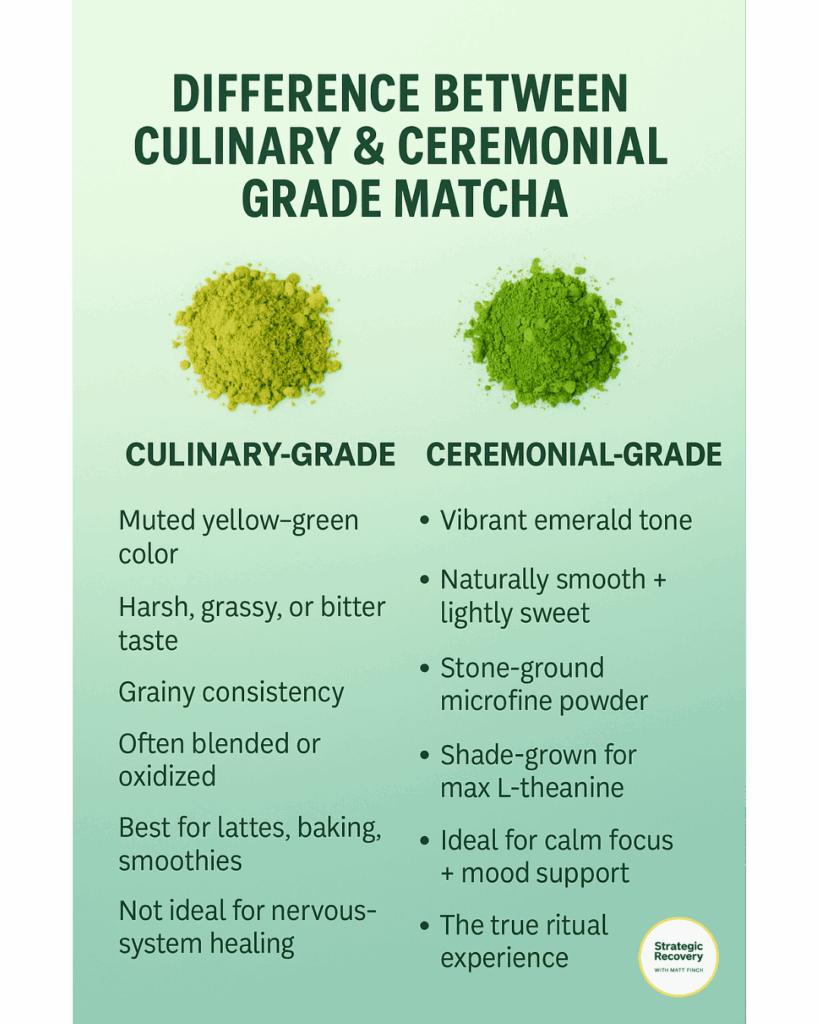
- Cheap culinary-grade powder
- Fake “matcha” blends
- Oxidized, brownish, bitter powder
- $25 for a tiny tin due to inflation
- People not knowing the difference between ceremonial and culinary
✅ What True Ceremonial Matcha Actually Is
- A biochemical upgrade
- A nervous-system reset
- A clean ritual substitute for alcohol
- A soothing focus enhancer
- A premium, vibrant-green, fresh-ground tea
- An experience — not a drink
- Matcha “does nothing”
- Matcha “tastes grassy”
- Matcha “isn’t worth the hype”
- Coffee is better
💸 Part V — The Matcha Problem: Inflation, Scarcity, Expense
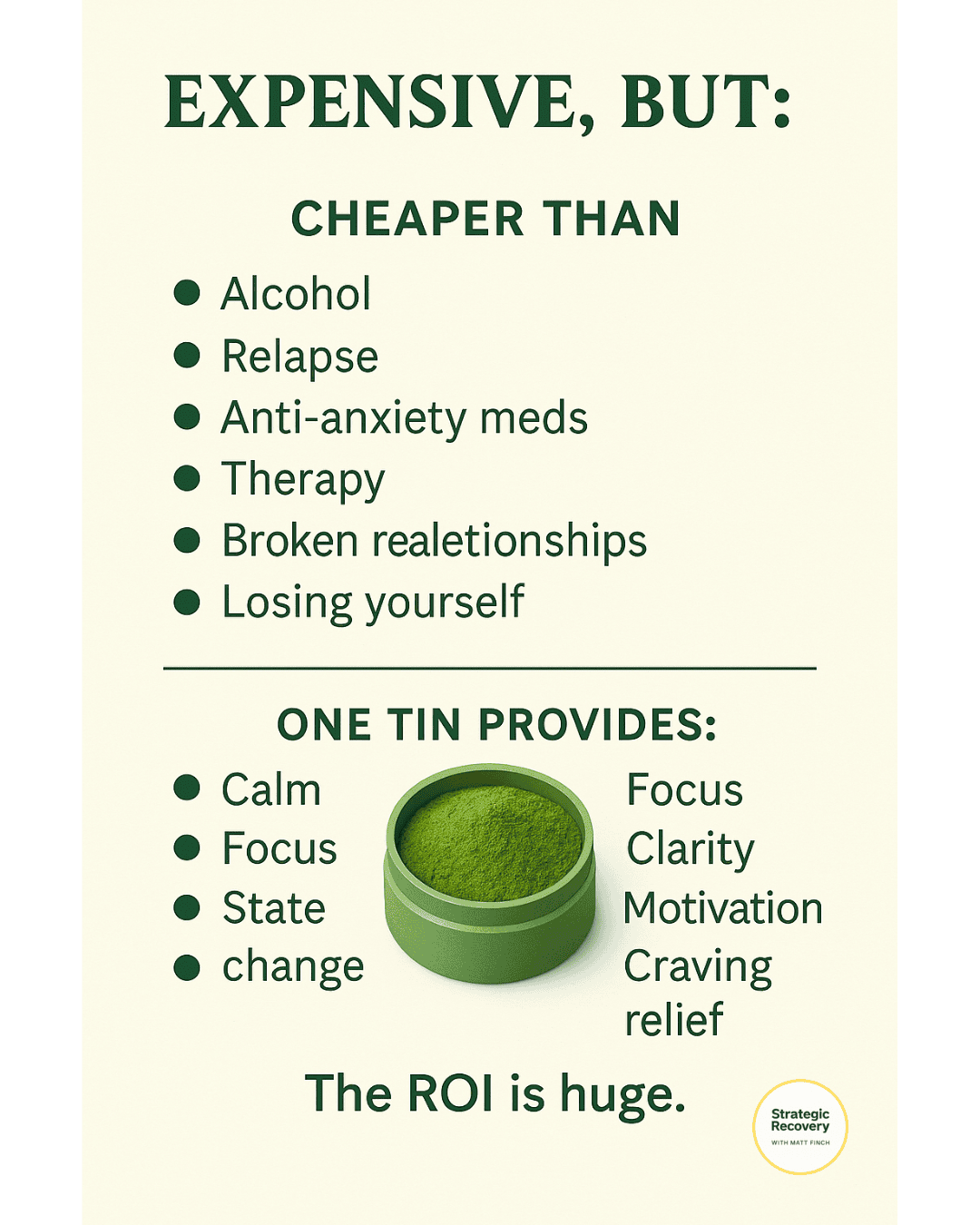
Ceremonial-grade matcha isn’t cheap.
The brand I use, Aiya matcha , is a perfect example:
Same amount of powder — radically higher cost
Higher global demand for ceremonial matcha
Inflation crushing imports and shipping
Farmers charging what the craft is worth
Quality matcha becoming a luxury item
This is one reason matcha-assisted recovery hasn’t taken off in the West — the very thing that heals the brain is now priced like a boutique luxury.
🍃 Part VI — How to Practice Matcha-Assisted Recovery (The Protocol)
Here’s the Strategic Recovery™ Matcha Ritual Method, based on what worked for Lanae and dozens of others.
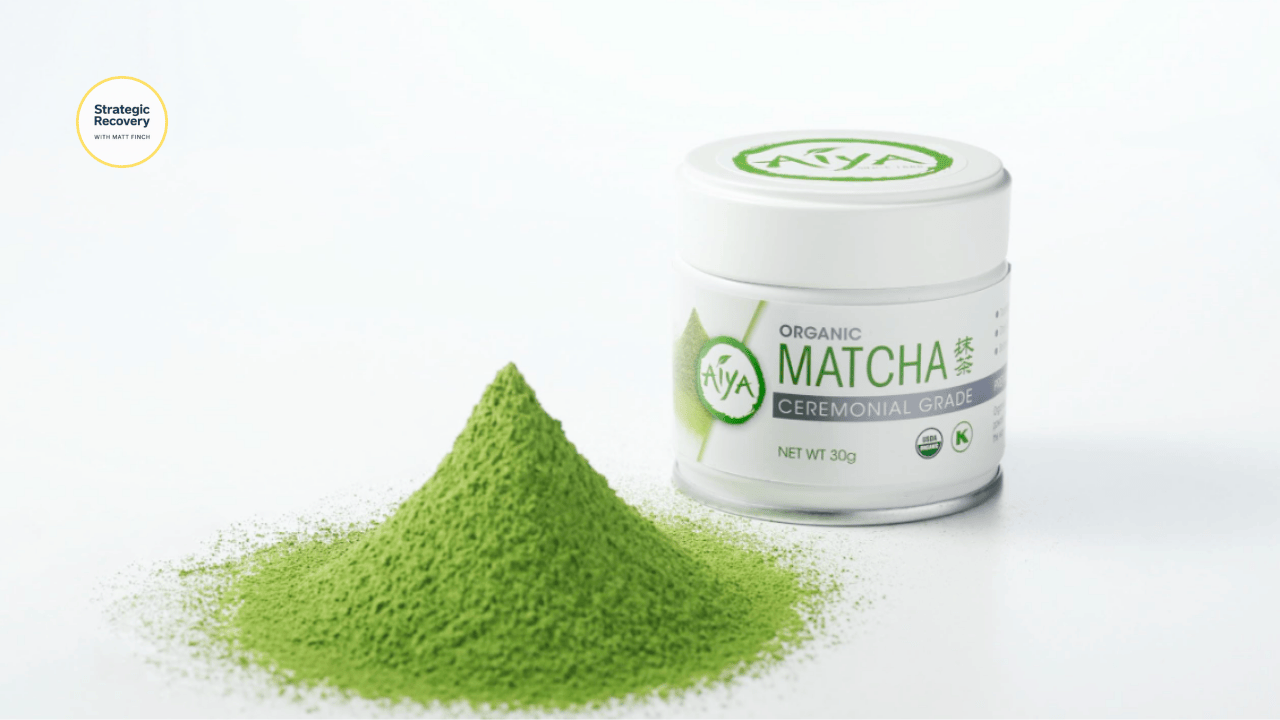
🍵 1. Buy Real Ceremonial-Grade Organic Matcha


A ceremony that calms your nervous system and brings you back to yourself.

Matcha = safety, clarity, power, groundedness.
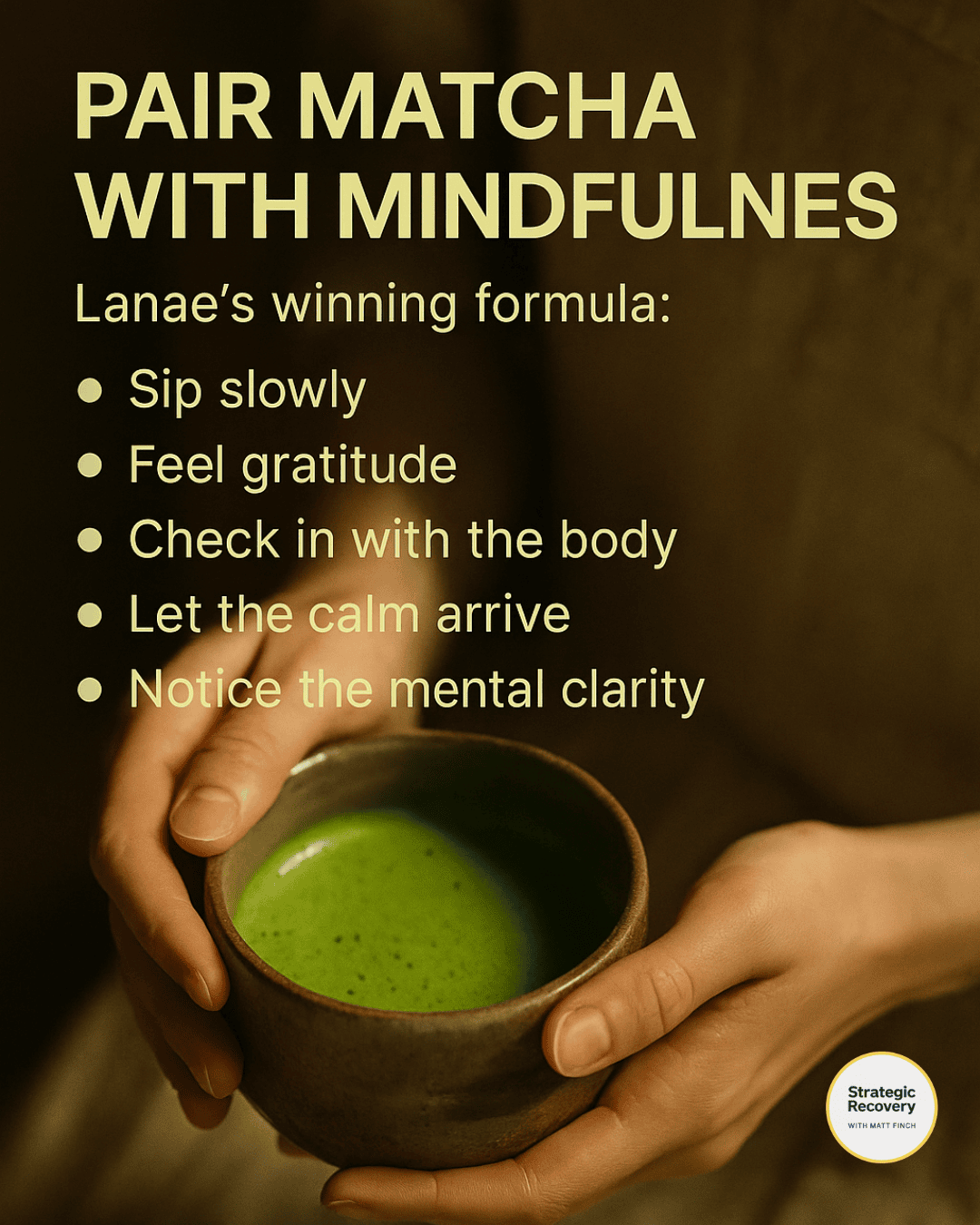
Consistency is essential.

💚 Part VII — Why This Works When Everything Else Has Failed
Because matcha-assisted recovery:
- 🍵Replaces rituals
- 🧠Repairs neurotransmitters
- 😌Reduces anxiety
- 🔄Reduces cravings
- 🌞Improves mood
- 🌙Supports sleep
- 🎯Sharpens focus
- ⚡️Boosts energy
- 🦋Creates identity change
- 💛Is pleasurable
- ♻️Is sustainable
- 🙏Is culturally rooted in mindfulness
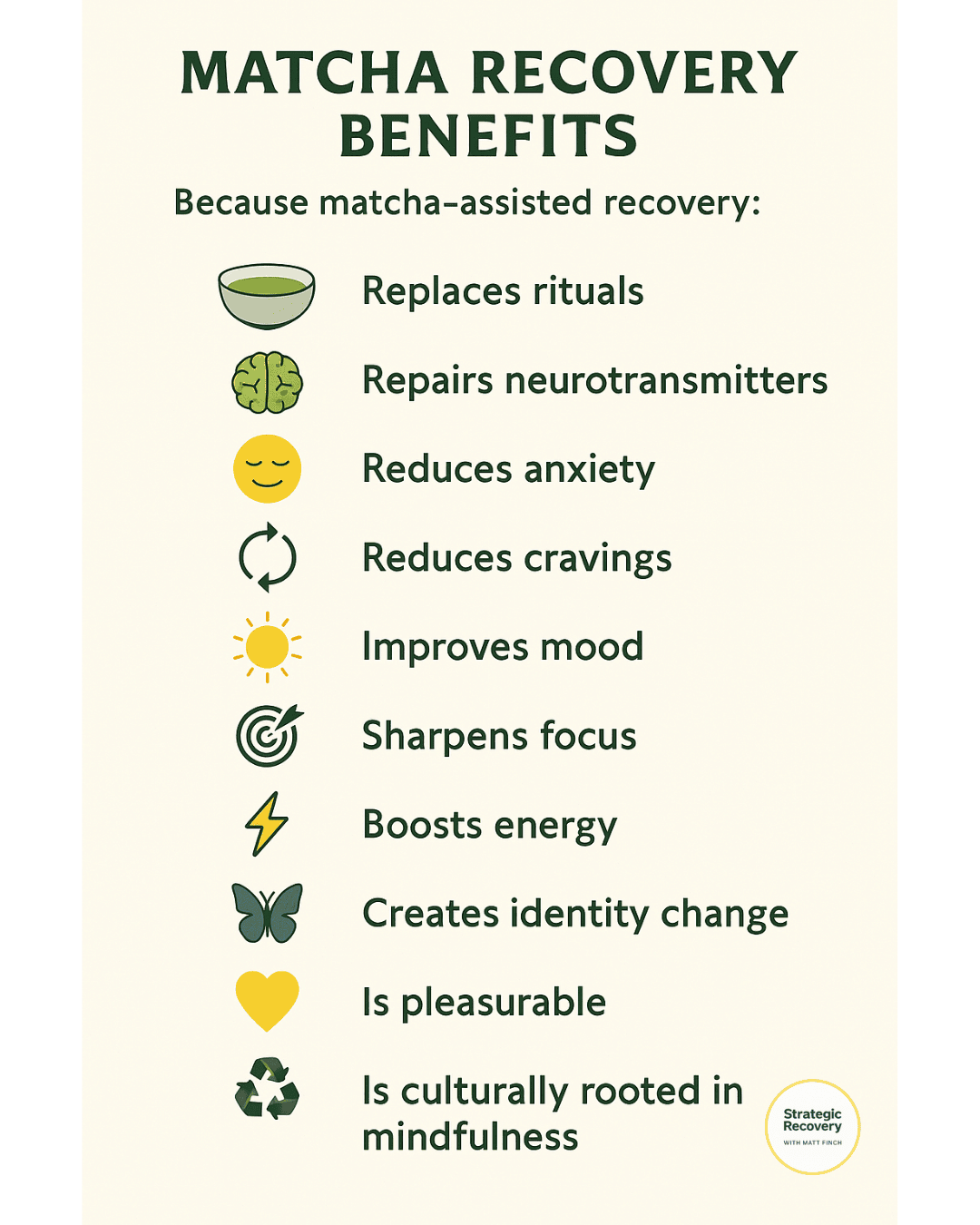
Matcha is one of the only natural interventions that hits every major pillar of recovery simultaneously.
This is why it has transformed people who were stuck for years.

✨ Final Thoughts: The Ceremonial Cup That Saves Lives
Addiction recovery isn’t just about stopping the substance or behavior — it’s about finding a ritual that brings you home to yourself.
Ceremonial matcha does exactly that.
What this one ceremonial cup quietly does for your nervous system:

One quiet bowl. Steam rising, light on the rim, and a nervous system that finally remembers what safety feels like.
For Lanae, matcha wasn’t a drink —
It was a doorway.
A shift in consciousness.
A replacement for the thing that once ruled her life.
A way to come back to center, over and over again.
And now?
She isn’t just alcohol-free.
She’s radiant.
Ceremonial matcha didn’t just help her stop drinking —
it helped her start living.
And now the world finally has a guide to this hidden path.
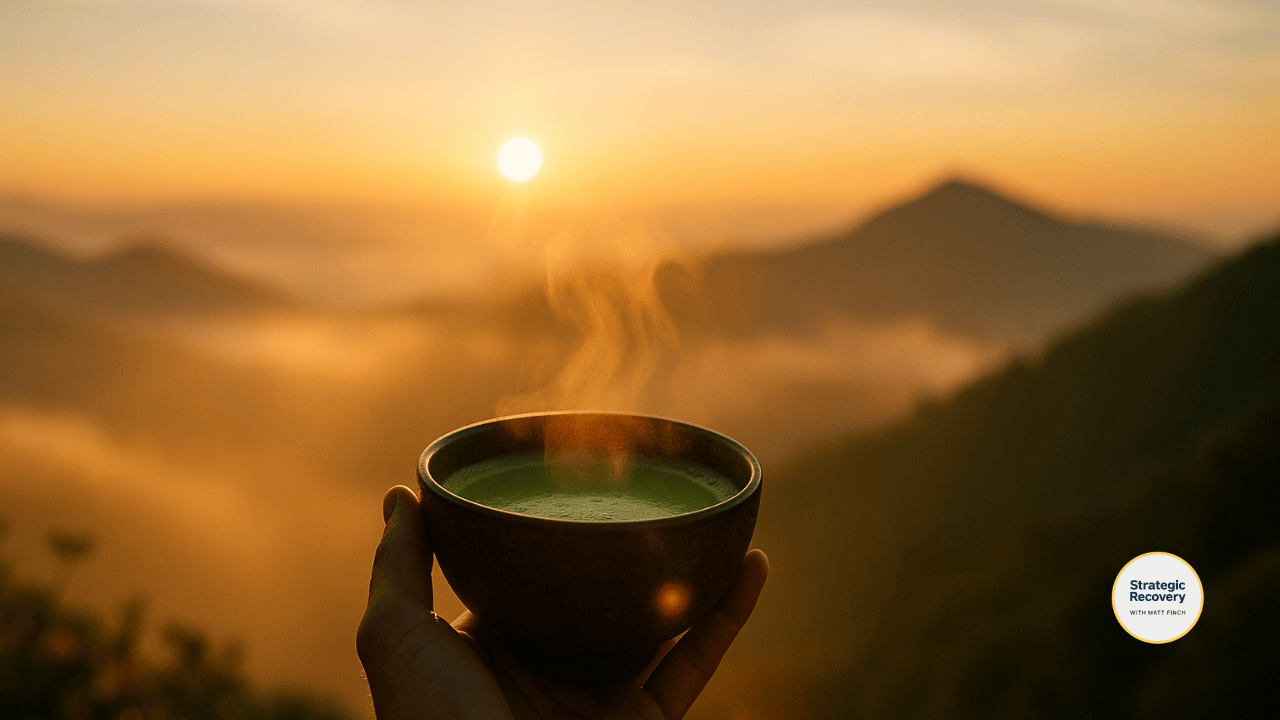
A quiet ceremonial moment — matcha, breath, sunrise, and the knowing that a new life begins with a single grounded ritual.
🍃 Matcha-Assisted Recovery Resources
Trusted guides, ceremonial matcha brands, ritual tools, and peer-reviewed research to support and deepen the practice of matcha-assisted addiction recovery.

Matcha, the Nervous System & Recovery — Your Questions Answered
Think of this as a gentle companion to your ceremonial cup — the science, nuance, and practical “how” behind using matcha to heal the brain, soothe the nervous system, and transform your evening ritual.
-
1.What makes matcha different from coffee for recovery?
Coffee delivers a fast spike of caffeine and adrenaline — great for short bursts, but rough on a nervous system that’s already recovering from alcohol or other substances.
Ceremonial matcha combines gentle caffeine with high levels of L-Theanine, an amino acid that boosts alpha brain waves and calms anxiety. It’s a built-in brake and accelerator in the same cup. You get focused calm instead of jitters and crashes.
For more on this, see the Strategic Recovery L-Theanine Guide.
-
2.Will matcha make my anxiety worse because of the caffeine?
It can if you over-do it — but for most people, the L-Theanine + gentle caffeine combo actually reduces anxiety over time.
L-Theanine raises GABA, serotonin, and dopamine while dampening stress signals. In recovery, that means fewer wild swings between “wired” and “wiped out,” and more of a steady, grounded baseline.
If you’re highly sensitive, start with a ¼ teaspoon ceremonial matcha in more water, sip slowly, and only increase if your body feels safe and supported.
-
3.Is matcha safe in early recovery or during PAWS?
For many people, yes — in fact, it can be a lifeline. Post-acute withdrawal (PAWS) often comes with low mood, brain fog, fatigue, and cravings.
Matcha supports dopamine, serotonin, alpha waves, and neurorepair, which directly target those symptoms. It’s not a cure, but it’s a powerful ally when used alongside nutrition, sleep, and the broader Strategic Recovery framework.
If you’re still tapering, detoxing, or have a complex medical picture, check in with your clinician before adding anything new.
-
4.How much matcha per day is okay for recovery?
A common sweet spot is ½ teaspoon, 1–3 times per day, spread out as morning ignition, afternoon reset, and/or evening ritual.
You can think of it like this:
• ¼ tsp — microdose: gentle calm & clarity
• ½ tsp — standard ceremonial serving
• ¾–1 tsp — deeper focus & craving override (for some people)Always let your nervous system, sleep, and digestion be the final judge — not the label.
-
5.Does it have to be ceremonial-grade? Which brands do you like?
For deep nervous-system healing, yes — ceremonial-grade matters. It’s shade-grown, stone-ground from the tender leaves, and far richer in L-Theanine and chlorophyll than cheap culinary matcha.
A few options to explore:
• Aiya (my go-to brand, long-standing Japanese producer) — see their Aiya Organic Ceremonial Matcha on Amazon
• Ippodo
• Kettl
• Encha
• Matcha.com ceremonial reserveLook for color that is vibrant electric green, not dull or brown. If it looks tired, your nervous system will feel that too.
-
6.What if I’m sensitive to caffeine or taking medication?
If caffeine has historically triggered panic, heart-racing, or insomnia, approach matcha respectfully and slowly.
Start with ¼ teaspoon in plenty of water or milk, earlier in the day, and track: your heart rate, anxiety level, and sleep that night. If you feel wired, back down or pause.
If you’re on medications (SSRIs, benzodiazepines, stimulants, mood stabilizers, naltrexone, etc.), it’s always wise to run new supplements by your prescriber. Most people tolerate matcha well, but your body and your chemistry are unique.
-
7.Can I drink matcha in the evening and still sleep?
Many people in recovery can, especially when they’ve built up a ritual where matcha equals safety, calm, and closure of the day.
A few tips:
• Use a smaller dose (¼–½ tsp).
• Pair it with slow breathing, gratitude, journaling, or prayer.
• Stop other caffeine earlier in the day so your total load stays moderate.If sleep gets worse, shift your matcha earlier and use other calming supports at night instead.
-
8.How fast will I notice a difference in cravings or mood?
Acutely, many people feel a shift in 10–30 minutes: calmer, clearer, more anchored in their body.
Over days to weeks of consistent use, the deeper benefits compound: more stable mood, fewer “white-knuckle” evenings, and a nervous system that doesn’t swing as violently between highs and lows.
The key is pairing matcha with ritual and intention — not just chugging it like an energy drink. Consistency matters here just like it does with every other part of recovery.
-
9.What if I don’t like the taste of matcha?
Two things are usually happening: either the matcha is low quality, or the preparation is off.
Try this:
• Use ceremonial-grade only.
• Sift the powder so it’s silky, not clumpy.
• Use hot, not boiling water (around 160–175°F / 70–80°C).
• Whisk until frothy with a bamboo chasen.
• Add a splash of oat, coconut, or dairy milk if you like it creamier.When prepared well, real matcha tastes like sweet, umami forest, not bitter grass.
-
10.Can matcha alone fix my addiction?
No single tool can — and anyone who promises that isn’t being honest.
Matcha is a powerful ally inside a larger Strategic Recovery™ system : biochemical repair, emotional healing, community, environment redesign, spiritual work, and consistent action.
What it can do is make all of that work easier: fewer crashes, fewer panic spikes, fewer nights where cravings scream louder than your values. It’s a ritual bridge between who you were and who you’re becoming.
This FAQ is educational and not medical advice. Always work with a qualified professional when making changes to your recovery plan, and listen closely to your own body — it’s the wisest guide of all.


Leave a Reply