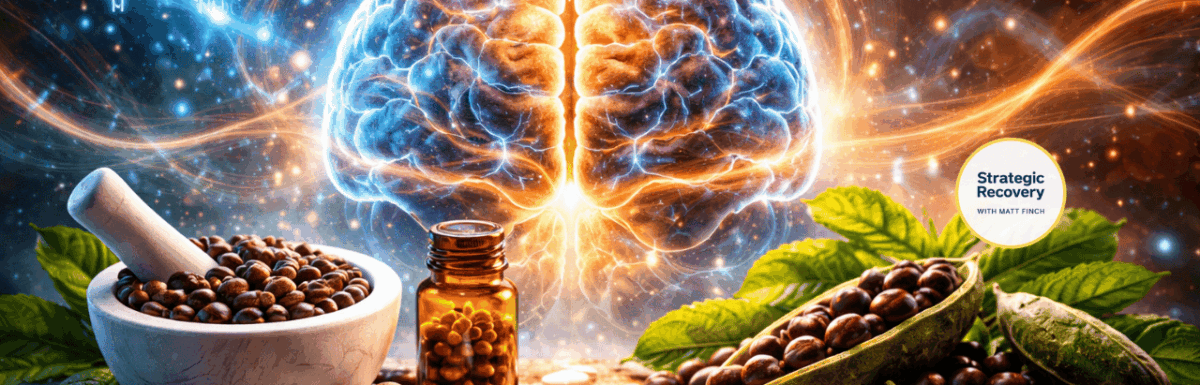
🧠 Low Catecholamines & Addiction
Why Motivation Collapses, Focus Turns Into Escape — and How to Restore Catecholamines Naturally 🔁
Addiction is often described as a problem of craving pleasure.
But for many people, addiction is actually a response to mental fatigue, low drive, poor focus, and diminished reward signaling.
At the center of this issue is a powerful — and frequently misunderstood — group of neurochemicals:
🧠 Catecholamines — primarily dopamine, norepinephrine, and epinephrine.
These chemicals regulate:
- ⚡ Motivation and drive
- 🎯 Focus and attention
- 🏆 Reward and reinforcement
- 🔋 Energy and alertness
- 🧭 Goal-directed behavior
- 🧠 Executive function
When catecholamines are low, life doesn’t necessarily feel painful.
It feels flat, effortful, foggy, and unrewarding.
Tasks feel heavy.
Focus feels impossible.
Motivation feels absent.
And the nervous system begins searching for something that can generate energy, clarity, or reward — fast.
👉 This article explores the low-catecholamines–addiction relationship, how it forms, why it becomes self-reinforcing, and how to restore catecholamine balance naturally — without turning stimulation into dependency.
🧭 By the end, you’ll understand not just what catecholamines do — but how to support them strategically, sustainably, and safely in addiction recovery.
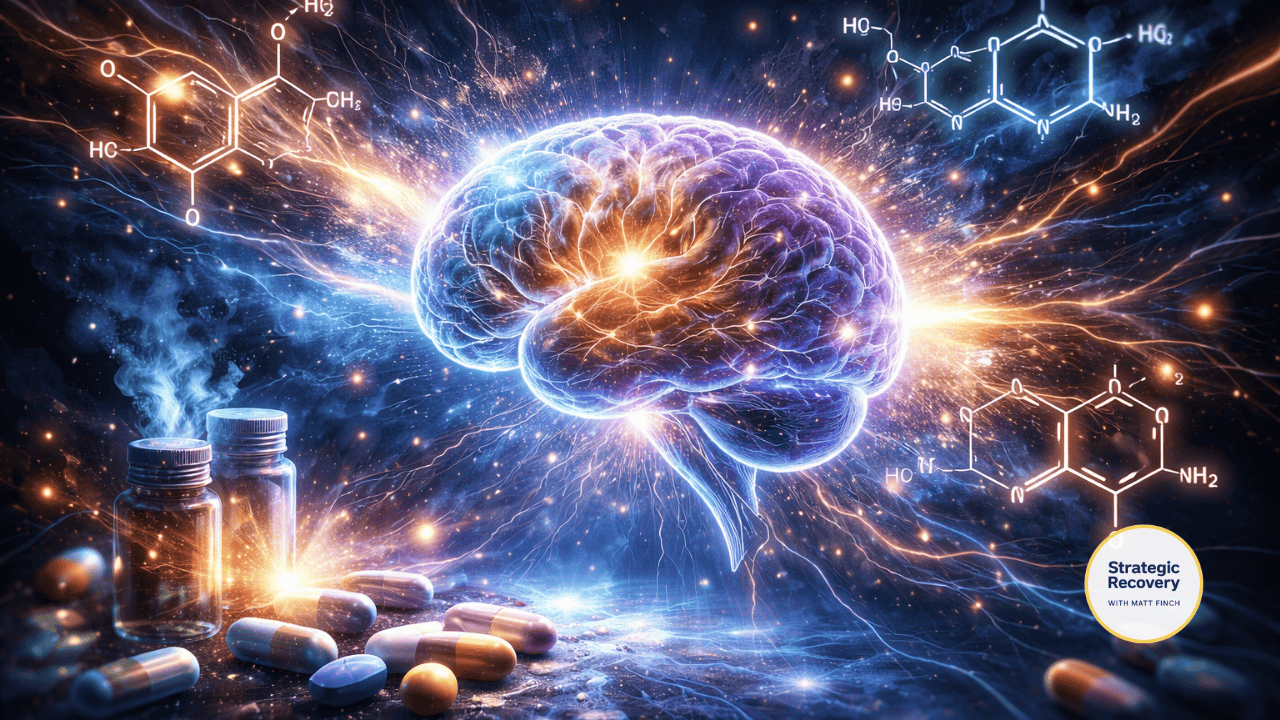
A visual metaphor for restoring drive, focus, and reward in Strategic Recovery™.
What Are Catecholamines? 🧠⚡
Catecholamines are a family of neurotransmitters and hormones derived from the amino acid tyrosine.
I like to think of them as natural stimulants — because that’s exactly what they are.
More on catecholamines:
The primary catecholamines are the brain’s engagement and execution chemicals — responsible for translating intention into action.
👉 Catecholamines are the nervous system’s “let’s engage with life” chemicals.
They don’t create comfort. They create momentum.
When catecholamines are healthy, people often experience:
Catecholamines don’t make life peaceful.
They make life engaging.
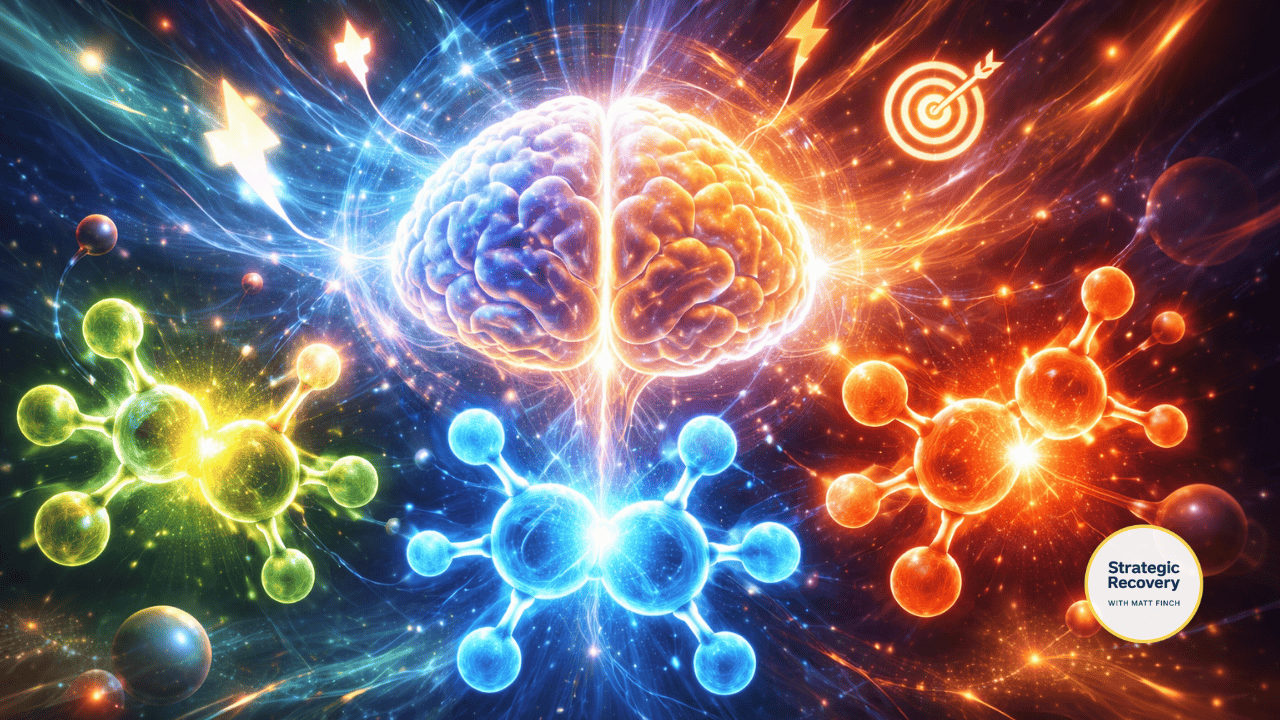
What Happens When Catecholamines Are Low? ⚠️
Low catecholamines create a state of mental depletion and motivational collapse.
Here are the most common symptoms of catecholamine deficiency disorder.
🔎 Common Signs of Low Catecholamines
Low catecholamines often feel less like “sadness” and more like mental depletion — the sense that your brain can’t generate enough drive, focus, or reward to meet life.
They feel unmotivated, unfocused, and under-stimulated.

The Low-Catecholamines–Addiction Loop 🔁
Catecholamine deficiency and addiction form a powerful feedback loop.
There are two primary entry points.
1️⃣ Low Catecholamines → Stimulant-Seeking Behavior 🧲
Some individuals begin with lower baseline catecholamines — meaning the brain has a harder time generating drive, focus, and reward on its own.
Common contributors include:
🏃♂️ Common Catecholamine-Boosting Escapes
When drive is low and life feels flat, the brain naturally searches for something that can generate energy, focus, or reward quickly.
“This makes me feel awake, focused, or driven — for a moment.”

2️⃣ Stimulation → Catecholamine Depletion 🪫
Others begin using stimulants or stimulating behaviors without an initial deficiency. But repeated artificial stimulation causes the brain to adapt by:
🧠 A system that requires stimulation to function — and crashes without it. That crash isn’t weakness. It’s the predictable result of a brain that has been trained to run on borrowed fuel.
Why Stimulation Feels Helpful — Then Becomes Punishing ⚡
Modern neuroscience has found that pain and pleasure are colocated in the brain.
For every artificial increase of catecholamines (euphoria / pleasure), the brain creates a decrease of catecholamines (dysphoria / pain) to maintain homeostasis.
The more this happens, the more the brain adapts.
⚖️ Stimulants: Short-Term Lift, Long-Term Cost
Stimulants temporarily increase catecholamines — which can feel like the brain finally has access to momentum.
They use them to feel functional.
That’s a catecholamine story.

Burnout, Overwork & “Productivity Addiction” 🧠
Low catecholamines don’t always lead to substance addiction.
Sometimes they lead to compulsive overworking or even work addiction.
“Workaholism” 🔥 → Exhaustion 🪫 → Relapse Risk ⬆️
Sometimes low catecholamines lead to a different kind of stimulation cycle — pressure-driven productivity.
Burnout is often dopamine depletion in disguise.

Root Causes of Low Catecholamines 🌱
According to my mentor, Dr. Charles Gant, poor nutrition, toxins, stress, and genetic predisposition are the four root causes of addiction.
More context is added below.
What Causes Low Catecholamines? 🤔
Low catecholamines rarely occur alone. They’re usually the downstream result of stress load, depletion, and repeated overstimulation.
Common contributors include:
Can You Supplement Catecholamines? 🤔
(Yes — But Precision Matters)
Catecholamines can be supported — but overstimulation is the biggest risk.
The guiding principle in recovery is:
👉 Restore motivation — don’t force intensity.
Below are the most relevant tools.
1️⃣ L-Tyrosine: Foundational Catecholamine Support 🧬
L-Tyrosine is the amino acid precursor that helps your brain rebuild catecholamines in the order the body prefers — supporting endogenous production rather than forcing release.
Core benefits:
Best suited for people who:
Position: Tyrosine is a foundational rebuild tool — not a stimulant replacement.

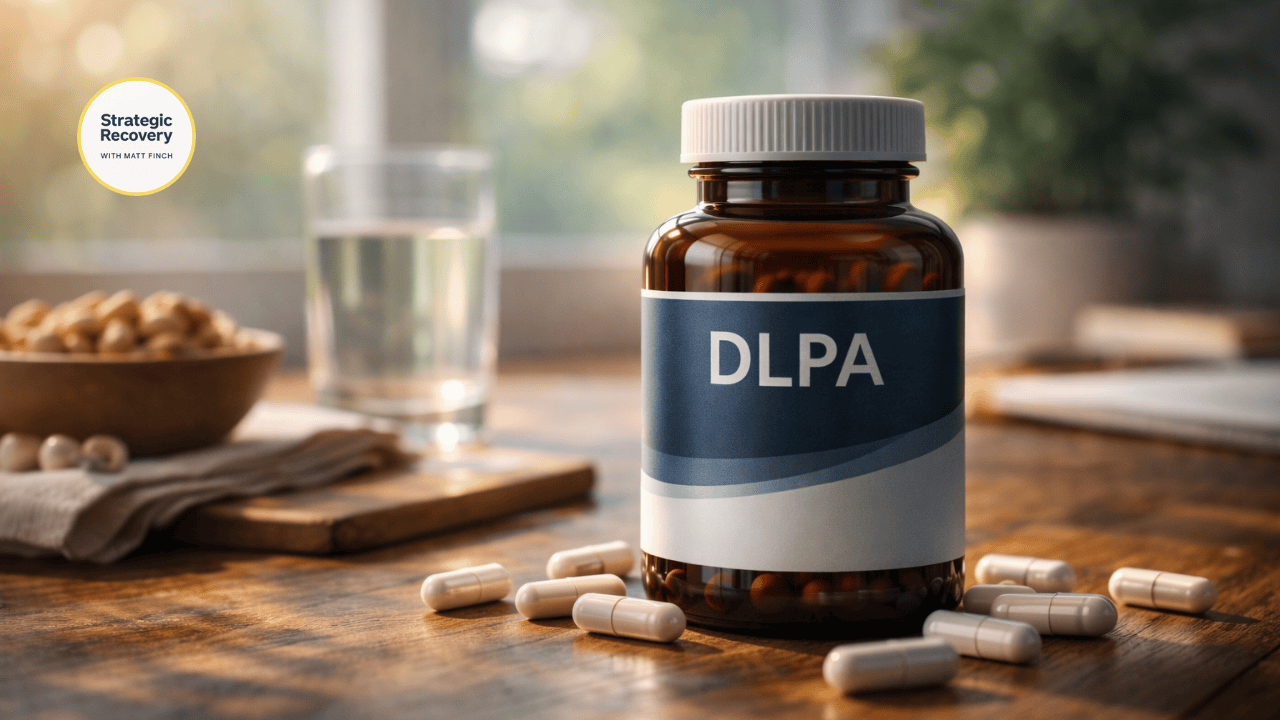
2️⃣ DLPA (DL-Phenylalanine): Motivation + Emotional Resilience 🧠
DLPA supports both catecholamines and endorphins — which is why it can feel uniquely helpful when low motivation is paired with emotional pain or reward deficiency.
Position: Best used after stability — not during acute nervous system stress.
3️⃣ Mucuna Pruriens: Direct Dopamine Restoration Without Stimulant Chaos 🌿
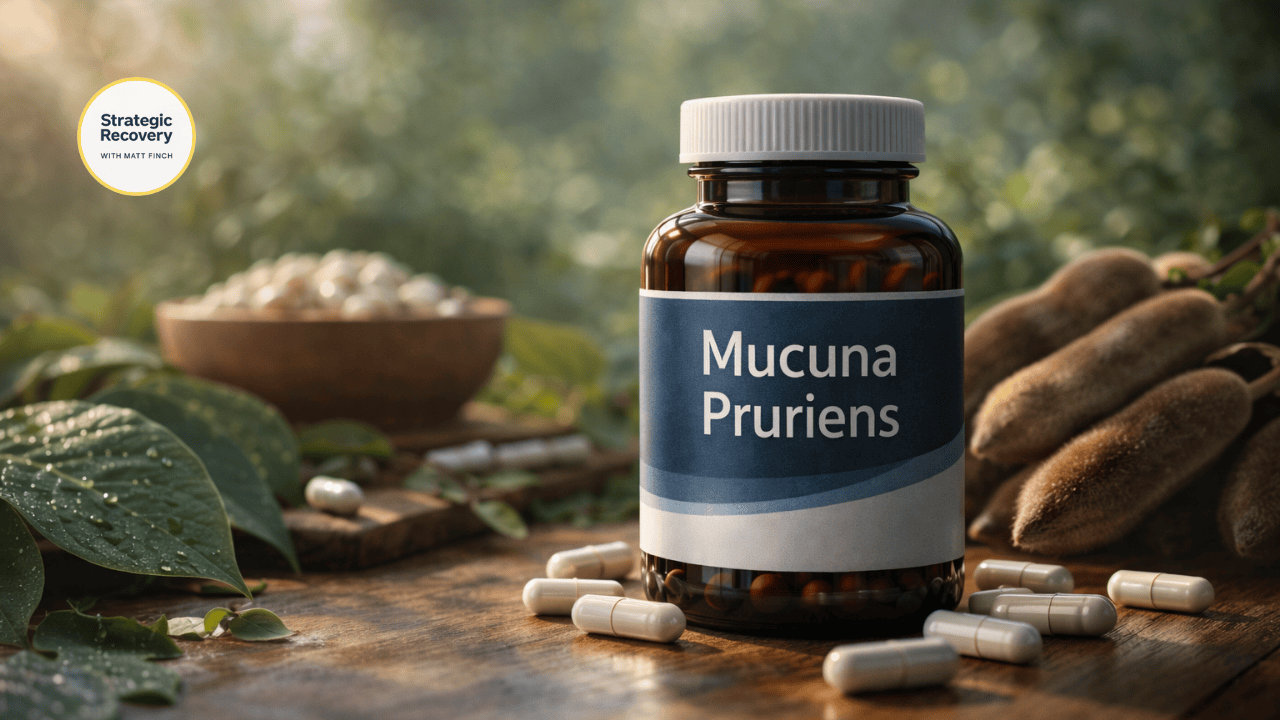
Mucuna pruriens (also known as Velvet Bean) is one of the most powerful — and most misunderstood — dopamine-supporting plants used in recovery.
Used for centuries in Ayurvedic medicine, Mucuna is unique because it contains naturally occurring L-Dopa, the direct precursor to dopamine.
It can restore access to motivation, reward, and mental energy in systems that feel chronically depleted.
What Mucuna Supports 🧠⚡
When dopamine has been suppressed by repeated depletion and overstimulation, the system can start operating in a low-reward, low-drive state.
For many people in recovery, the effect isn’t euphoria — it’s finally feeling alive and capable again. “I don’t feel high — I feel human.” That distinction matters.
🎯 Why Mucuna Feels Different Than Tyrosine or DLPA
L-Tyrosine and DL-Phenylalanine can be powerful, but they’re upstream — they rely on multiple conversion steps. Mucuna is different because it supports dopamine closer to the source.

📌 Strategic Recovery™ Position on Mucuna
Mucuna is not a casual supplement. Because it directly influences dopamine, it must be used:
From a Strategic Recovery™ perspective, Mucuna is best suited when:
Used correctly
Helps reverse dopamine exhaustion — not mask it.
Used incorrectly
Can become another form of stimulation.
The difference is intention, dosage, and rhythm.
Start low, go slow, and treat dopamine support like a rebuild strategy — not a performance hack.
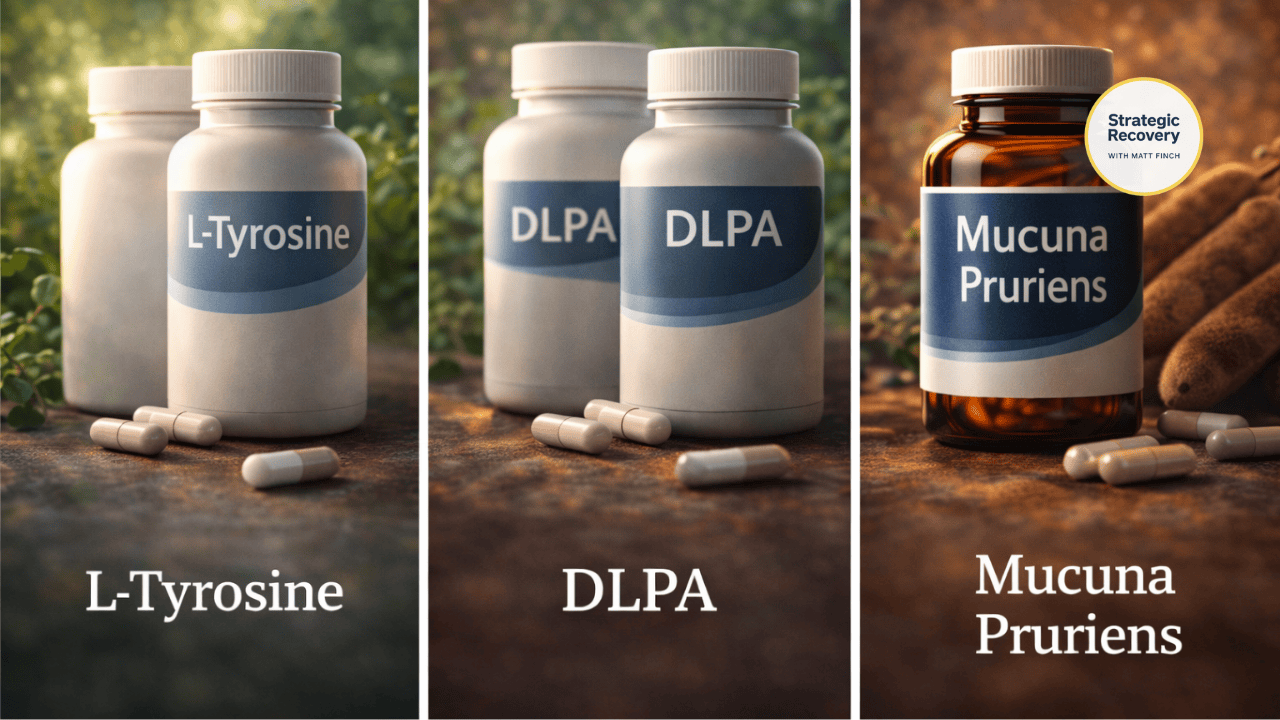
Catecholamine Precursors Comparison Chart 🧠⚖️
This visual chart breaks down the similarities and differences of L-Tyrosine, DLPA, and Mucuna Pruriens.
Please note that due to biochemical individuality, each person’s experience will differ.
🧬 L-Tyrosine VS. DLPA VS. Mucuna Pruriens
Think of this as a brain-chemistry fit test: foundation (tyrosine), reward + resilience (DLPA), and direct dopamine restoration (mucuna). In recovery: restoration over overstimulation.
| Feature |
🧱 L-Tyrosine
Foundational
|
⚡ DLPA
Reward support
|
🌿 Mucuna Pruriens
More direct
|
|---|---|---|---|
| Primary Action | Catecholamine precursor | Dopamine + endorphin support | Direct dopamine precursor (L-Dopa) |
| Mechanism | Tyrosine → dopamine → norepinephrine | Dopamine support + endorphin preservation | L-Dopa → dopamine |
| Effect Profile | Clean, subtle, foundational | Motivating, mood-lifting | Restorative, energizing, “alive again” |
| Onset | Gradual (days–weeks) | Moderate (days) | Often noticeable within days |
| Best For | Mental fatigue, low drive | Reward deficiency, cravings | Dopamine depletion, anhedonia, burnout |
| Nervous System Sensitivity Fit | ✅ High | ⚠️ Moderate | ⚠️ Moderate |
| Overactivation Risk | Low–Moderate | Moderate | Moderate |
| Recovery Phase Fit | Early → late | Mid → late | Mid → late |
| Strategic Recovery™ Role | “Rebuild the base” | “Enhance reward & resilience” | “Restore dopamine capacity” |
Important Safety Notes ⚠️
🧩 Why Mucuna Belongs in This Framework
Catecholamine recovery isn’t about chasing motivation. It’s about restoring the brain’s ability to feel reward from effort again — so you can move forward without forcing yourself.
When used with respect, Mucuna isn’t here to “amp” you up. It’s here to help re-open a closed dopamine loop — so life feels engaging again without chemical force.
That’s restoration.
🧠 Catecholamines Are Not About Chasing Motivation
If a tool makes you feel any of the following, it’s not restoring catecholamines — it’s overstimulating a depleted system.
Natural Ways to Restore Catecholamines 🌿
(Without Creating Dependency)
Catecholamines rise when the nervous system receives signals of:
- 🧭 Challenge (not overwhelm)
- 🎯 Reward
- 📈 Progress
- 🌱 Meaning
- 🧘♂️ Recovery
1️⃣ Effort–Reward Balance 🧠
Dopamine rises when effort is matched by reward. In recovery, this means designing wins that are small enough to complete — and meaningful enough to matter.
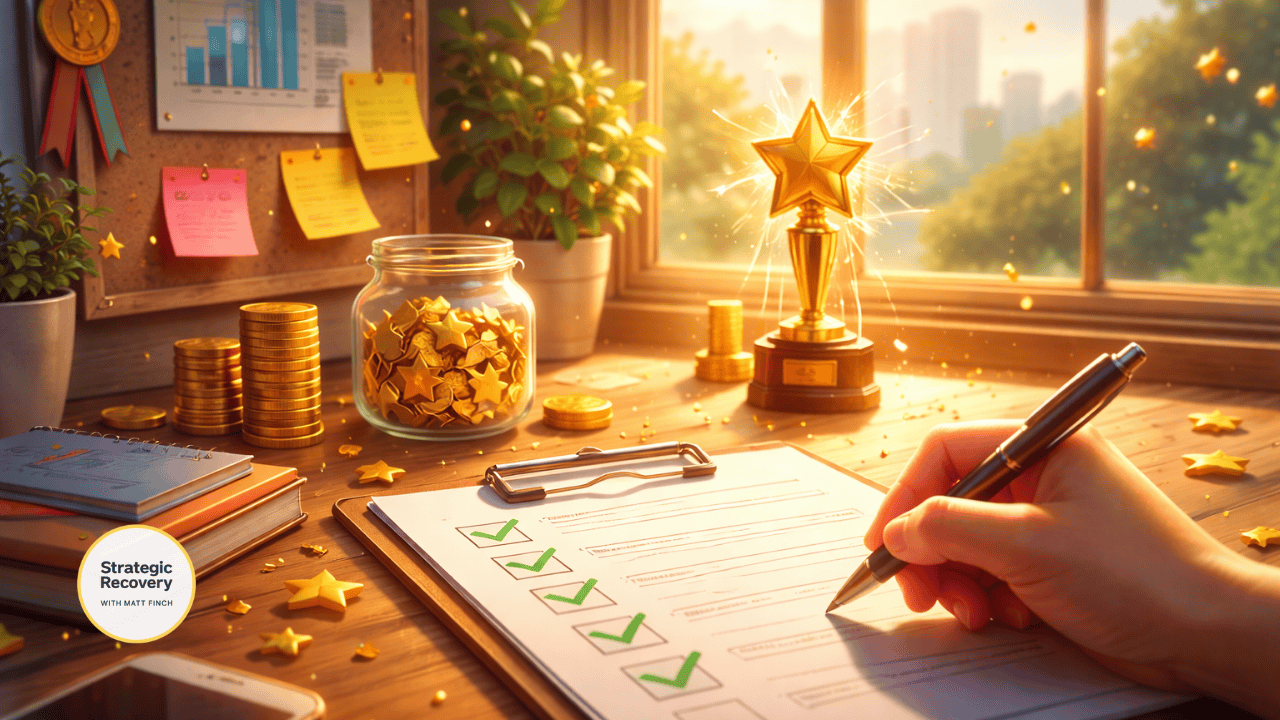
A visual metaphor for progress, completion, and restoring motivation through effort-reward balance in Strategic Recovery™.
2️⃣ Deep Work + Deep Rest ⚖️
Catecholamines require recovery. The goal isn’t to stay “on” all day — it’s to build clean focus… then actually refill the tank.

A visual metaphor for deep work followed by deep rest — restoring focus, energy, and motivation in Strategic Recovery™.
3️⃣ Protein & Micronutrients 🍽️
Catecholamines are built from raw materials. If you’re running on fumes nutritionally, motivation will feel like a missing “character trait” — when it’s really a missing foundation.
Catecholamines require:

A visual metaphor for protein and micronutrients supporting dopamine, motivation, and mental energy in Strategic Recovery™.
4️⃣ Meaningful Challenge 🧭
Dopamine thrives on purposeful effort, not chaos or constant urgency. The nervous system lights up when effort leads somewhere that matters.

A visual metaphor for meaningful challenge, learning, creativity, and contribution in Strategic Recovery™.
🧬 Strategic Recovery™ Catecholamine Restoration Framework
Here is an example protocol that was created for strategic and safe restoration and repair of the endogenous catecholamine system.
This a map for repairing natural catecholamine production from the root.
🧠⚡ 5-Phase Catecholamine Rebalancing
Catecholamines return when the system stops living in forced activation and starts rebuilding energy, reward, and engagement from the inside out — steadily, safely, and sustainably.
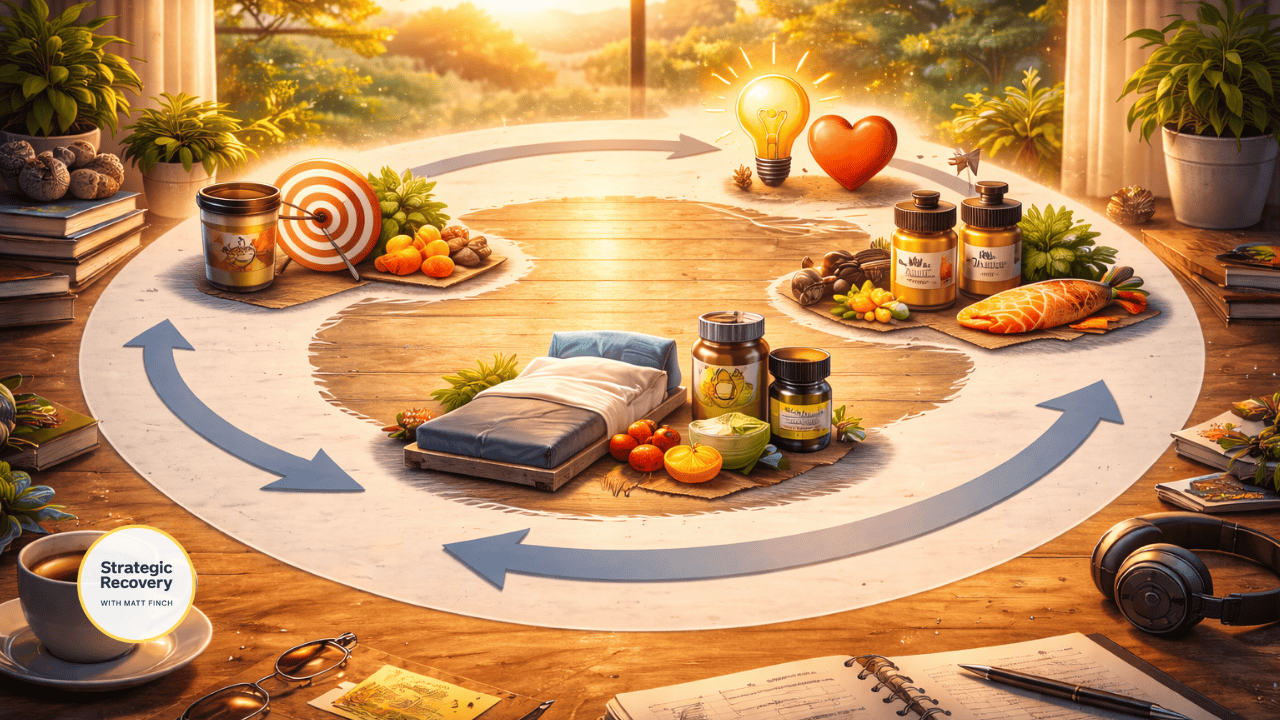
A visual metaphor for the Strategic Recovery™ Catecholamine Restoration Framework — reducing stimulation, restoring foundations, supporting chemistry, rebuilding reward, and creating sustainable engagement.
🧠 Low-Catecholamine Self-Assessment
This is a useful starting point to see if you’re likely low in endogenous catecholamines.
This is not a diagnostic tool — but a simple and fast way to assess where you’re currently at.
🧠 Are Your Catecholamines Low?
Answer yes or no:
Key Takeaways 🔑
Here are six of the primary concepts from this article. Print this out or take a screen shot and review it daily for 30 days if that sounds useful.
Once the loop is known well in your conscious mind, the trap loses it’s grip.
The Core Concepts 🧩
Disclaimer
This article is for educational purposes only and is not medical advice. Always consult a qualified healthcare professional before starting any new supplement, especially if you have existing medical conditions or take prescription medications.



Leave a Reply