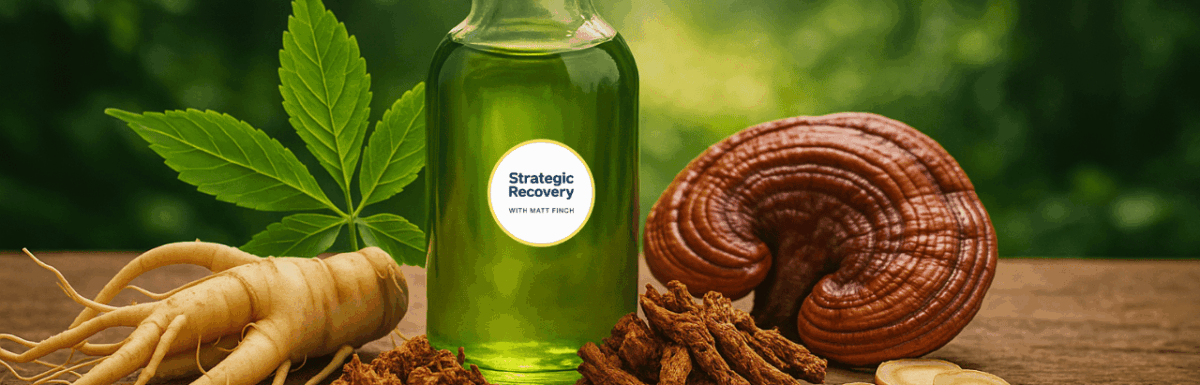
Discover how adaptogens like Ashwagandha, Rhodiola, Ginseng, and Reishi can reduce stress 🛡️, balance mood 🌙, restore sleep 😴, and boost resilience 💪 in addiction recovery.
Addiction recovery is more than cutting ties with a substance. It’s about rebuilding your nervous system, re-igniting your energy, and rediscovering your natural state of balance.
Too often, recovery feels like a battle ⚔️ against stress 🌀, fatigue 😮💨, and emotional storms 🌊.
But imagine if you had ancient allies by your side — plants that for centuries have been trusted to calm the body 🧘, sharpen the mind 🧠, restore stamina ⚡, and build resilience like an inner shield 🛡️.
That’s what adaptogens are. Adaptogens are not stimulants. They’re not sedatives. They’re not quick fixes.
They are plant teachers — gentle yet powerful regulators that help your body adapt to stress and recover equilibrium.
For thousands of years, cultures from Siberia to India, China to South America, have honored these herbs and mushrooms as sacred tools for longevity, vitality, and clarity.
Today, science is catching up, confirming what shamans, monks, and herbalists knew long ago: adaptogens are stress shields for the human spirit. ✨
In this guide, we’ll explore:
- 🌿 What adaptogens actually are (and what makes them unique)
- ⚖️ How they balance stress hormones, brain chemistry, and energy
- 🧘 Why they’re so valuable in addiction recovery
- 🔬 What modern research says about their benefits
- 🌍 The difference between adaptogens and regular herbs
- 💎 Why only premium sources deliver true results
- ✅ Strategic Recovery–approved brands & products
This isn’t just another “herbal remedies” article. It’s a roadmap 🗺️ to resilience — showing you how adaptogens can help you heal from the inside out, rebuild recovery capital, and step into the next chapter of your life with strength and clarity.
“The greatest wealth is health.” — Virgil
🌱 What Are Adaptogens?
Adaptogens are a special category of herbs, roots, and mushrooms that help your body adapt to stress — physical, emotional, or environmental.
They don’t force your body in one direction (like stimulants or sedatives). Instead, they balance and normalize, nudging you back toward homeostasis ⚖️.
Think of adaptogens as your body’s thermostat herbs:
- If you’re running too hot (anxious, wired, overstressed), they cool things down. ❄️
- If you’re running too cold (fatigued, foggy, unmotivated), they turn up the heat. 🔥
This dual action is what makes them unique. While a cup of coffee might give you a temporary jolt ⚡, it often leads to a crash. While a sleeping pill might knock you out 😴, it can leave you groggy the next day. Adaptogens, by contrast, help you find your center — energized yet calm, alert yet relaxed.
🌍 Examples of Adaptogens
- Ashwagandha – deeply calming, lowers cortisol, supports sleep.
- Rhodiola – uplifting, energizing, anti-fatigue.
- Reishi mushroom – immune-modulating, deeply restorative.
- Panax ginseng – stamina, vitality, mental clarity.
- Maca root – hormone balance, energy, libido.
- Holy Basil (Tulsi) – soothing for mind and spirit, balances stress response.
- Schisandra berry – sharpens focus, supports liver, enhances endurance.
🧠 How They’re Different From Drugs or Stimulants
- Drugs often work like sledgehammers — forcing the brain or body into a state, often with side effects.
- Stimulants & sedatives work in one direction only (up or down).
- Adaptogens are more like wise elders 🌿 — they listen to what your body needs, then support it back into balance.
✨ Why They’re Special in Recovery
Addiction often leaves your nervous system swinging wildly between highs and crashes. Adaptogens help smooth the ride.
They regulate cortisol, support neurotransmitters like dopamine and serotonin, and help rebuild the resilience addiction stripped away.
They are not magic bullets. But they are gentle daily allies, offering balance where chaos once lived.
🛡️ Adaptogens: Nature’s Stress Shield
Addiction and recovery both revolve around one word: stress.
- Stress is what drives people toward substances for quick relief.
- Stress hormones like cortisol get stuck in overdrive during active addiction.
- And even in recovery, stress is one of the biggest relapse triggers.
That’s where adaptogens step in. They are nature’s stress shield, helping you respond to challenges with resilience instead of collapse.
“It is not stress that kills us, it is our reaction to it.” — Hans Selye, father of stress research
🔄 The Stress Response: Fight, Flight, Freeze… and Fray
When you face stress, your body activates the HPA axis — hypothalamus, pituitary, adrenal glands. This system pumps out cortisol and adrenaline, priming you for action.
That’s useful short-term — but long-term, it’s toxic. Chronic stress shrinks the hippocampus, disrupts sleep, drains neurotransmitters, and fries your adrenal system.
For people in addiction recovery, this is amplified: your stress system is already dysregulated. Everyday stress feels like a tidal wave 🌊.
🌱 Adaptogens Balance the HPA Axis
Adaptogens help normalize this stress system:
- If cortisol is too high → they bring it down.
- If cortisol is too low → they gently raise it.
Think of it like noise-canceling headphones 🎧 for your stress system — smoothing the highs and lifting the lows.
🧠 Stress Meets Brain Chemistry
Chronic stress depletes dopamine, serotonin, and GABA — the exact neurotransmitters that addiction scrambles. This creates cravings, anxiety, depression, and poor sleep.
Adaptogens support these pathways:
- Ashwagandha → boosts GABA, calming anxiety 🧘
- Rhodiola → modulates serotonin & dopamine, lifting mood ✨
- Reishi → promotes parasympathetic “rest and digest” mode 🌙
- Ginseng → supports dopamine and norepinephrine for energy ⚡
Together, they act as a buffer so life’s stress doesn’t hijack your recovery.
🪞 Metaphor: The Warrior’s Shield
Picture yourself as a warrior walking into battle ⚔️. Without protection, every arrow of stress hits you directly. Adaptogens are your shield 🛡️ — not removing the arrows, but deflecting them so you can stay standing strong.
That’s what makes them invaluable for recovery: they don’t erase stress, but they change your relationship to it.
🌅 Why This Matters for Recovery
Stress is one of the top relapse triggers. If you can shield yourself, calm your body, and steady your mind, you dramatically increase your odds of lasting freedom.
Adaptogens are not escape. They’re fortification.
📜 Who Discovered Adaptogens and When?
While the term adaptogen is modern, the plants themselves have been revered for thousands of years. Long before Western science gave them a category, indigenous healers, monks, shamans, and herbalists understood their power.
“In every walk with nature, one receives far more than he seeks.” — John Muir 🌿
🕉️ Ancient Traditions
- Ayurveda (India) – Ashwagandha, Tulsi, and Shatavari were prized as rasayanas — rejuvenating herbs that restore balance and extend life.
- Traditional Chinese Medicine (China) – Ginseng, Schisandra, and Reishi were considered “superior herbs” in the Taoist pharmacopeia, used not only for health but for spiritual cultivation.
- Siberian Shamanism – Rhodiola was chewed by hunters to endure harsh climates, fatigue, and cold.
- Andean Culture (Peru) – Maca root was consumed for stamina, fertility, and resilience at high altitudes.
These traditions saw adaptogens as sacred allies, not just medicine. They believed these plants carried the wisdom of nature — a bridge between human beings and the life force of the Earth itself 🌍✨.
🔬 Soviet Discovery
The modern term adaptogen was coined in the late 1940s by Russian scientist Dr. Nikolai Lazarev. His student, Dr. Israel Brekhman, went on to pioneer decades of research on herbs like Eleuthero (Siberian Ginseng), Rhodiola, and Schisandra.
Their definition of an adaptogen was strict:
- It must help the body adapt to stress.
- It must restore balance (homeostasis).
- It must be safe and non-toxic with long-term use.
Soviet scientists tested adaptogens on soldiers, athletes, and even cosmonauts 🚀 — looking for ways to boost resilience, stamina, and performance under extreme conditions.
🌍 Modern Recognition
Today, adaptogens are recognized globally. They appear in:
- Peer-reviewed journals (hundreds of studies on PubMed).
- Integrative medicine practices around the world.
- Mainstream wellness culture — from yoga studios to Silicon Valley startups.
- Even military research programs exploring stress resilience.
What was once ancient wisdom → validated by Soviet science → is now embraced by modern wellness and recovery communities.
✨ Adaptogens have traveled from sacred firesides to space capsules. And now, they stand ready as allies in something just as demanding: your recovery journey.
“What is old becomes new again.” — Proverb 🌱
📚 Academia and Clinical Research
- Hundreds of studies now exist in PubMed and other databases on Ashwagandha, Rhodiola, Ginseng, Reishi, and Schisandra.
- Clinical trials show Ashwagandha lowers cortisol and reduces anxiety.
- Rhodiola has been studied for fatigue, depression, and resilience.
- Ginseng is widely recognized for enhancing mental and physical stamina.
Adaptogens are now being taught in many naturopathic and integrative medical schools — shifting from “alternative” to “complementary” to, in some cases, “evidence-informed standard of care.”
🧘 Wellness Culture
Adaptogens have become part of the mainstream wellness movement:
- Ashwagandha in stress-relief gummies 🧸
- Reishi in mushroom lattes ☕
- Maca in smoothie powders 🍓
- Rhodiola in performance blends 💪
From yoga studios to juice bars to Silicon Valley biohackers, adaptogens are seen as plant-based upgrades for resilience.
🛡️ Military and Performance Settings
Even the U.S. military and NASA have funded adaptogen research for stress resilience, endurance, and recovery under pressure. What began as an experiment for Soviet cosmonauts 🚀 has become a cross-cultural tool for humans facing extreme conditions.
🌊 Recovery Communities
And now, adaptogens are flowing into addiction recovery spaces. Holistic recovery programs, functional medicine doctors, and even sober coaches are exploring them as tools for:
- Calming the nervous system in early recovery 🧘♂️
- Supporting energy and focus in PAWS ⚡
- Offering alternatives to alcohol in social rituals 🍹→🌿
What was once fringe is now becoming recognized as an accessible, natural option for people rebuilding their lives.
✨ Adaptogens are no longer niche. They’re mainstream — and that means more access, more awareness, and more opportunities for people in recovery to benefit from them.
“He who has health has hope; and he who has hope has everything.” — Arabian Proverb ✨
🌟 What Are Adaptogens Used For? (aka Benefits)
Adaptogens aren’t quick fixes. They’re steady allies that build you back from the inside out. Their benefits touch nearly every system of the body — from your stress response, to your brain chemistry, to your immune defenses, to your mood and energy.
Let’s break down the major benefits:
🛡️ 1. Stress & Anxiety Relief
Addiction and recovery both leave your stress system frayed. Cortisol is often out of balance, leaving you wired, anxious, or flat.
- Ashwagandha lowers cortisol, calms the nervous system, and supports restful sleep.
- Tulsi (Holy Basil) has been called the “Elixir of Life” in Ayurveda for its power to soothe worry and calm the heart.
- Reishi mushroom promotes parasympathetic “rest and digest” mode.
Imagine stress as static noise 📻 that never shuts off. Adaptogens turn down the static so you can hear your own inner voice again.
🧠 2. Mood Balance & Neurotransmitter Support
Adaptogens interact with key brain chemicals like dopamine, serotonin, and GABA — the very neurotransmitters disrupted by alcohol and drugs.
- Rhodiola boosts serotonin and dopamine for brighter mood.
- Schisandra sharpens focus while calming anxiety.
- Ginseng modulates dopamine for energy and motivation.
This makes adaptogens powerful tools for post-acute withdrawal syndrome (PAWS), where mood swings, depression, and cravings are common.
“Happiness depends upon ourselves.” — Aristotle 🌞
Adaptogens give your brain the biochemical support it needs to re-find happiness naturally.
⚡ 3. Energy & Fatigue Recovery
Addiction often leaves people chronically fatigued. Adaptogens boost energy without the crash of caffeine.
- Rhodiola fights fatigue and improves endurance.
- Maca root restores vitality and hormone balance.
- Eleuthero increases stamina and physical resilience.
Think of adaptogens as upgrading your internal battery pack 🔋 — giving you more charge, more staying power, and less burnout.
🌙 4. Sleep & Circadian Balance
Sleep is the foundation of recovery, yet many struggle with insomnia and restless nights.
- Ashwagandha promotes deep sleep.
- Reishi supports relaxation before bed.
- Schisandra improves circadian rhythm regulation.
When your nights are restorative 🌌, your days are easier to handle. Adaptogens help reset that cycle.
🦠 5. Immune Support & Inflammation Control
Addiction weakens the immune system and drives hidden inflammation. Adaptogens strengthen immunity and reduce systemic stress.
- Reishi & Astragalus → immune modulation
- Schisandra → liver protection
- Ginseng → anti-inflammatory effects
It’s like installing a stronger firewall 🛡️ in your body’s defense system, so you’re less vulnerable to illness and fatigue.
⚖️ 6. Hormone & Adrenal Balance
Substance use disorders often leave the adrenal glands drained and the endocrine system off-kilter. Adaptogens help rebuild balance.
- Ashwagandha → thyroid + cortisol support
- Maca → sexual health + hormone balance
- Eleuthero → adrenal resilience
They help you move from survival mode to balanced energy — no more “wired and tired.”
⏳ 7. Longevity & Brain Protection
Many adaptogens are also neuroprotective and anti-aging.
- Rhodiola & Schisandra protect against oxidative stress.
- Reishi is revered as the “mushroom of immortality” in Taoist tradition.
- Ginseng supports neuroplasticity and memory.
In recovery, this matters because addiction accelerates wear and tear. Adaptogens help you reverse the clock ⏳, protecting brain cells and boosting long-term health.
🧘 8. Emotional & Spiritual Benefits
Beyond science, adaptogens carry mystical resonance.
- Tulsi is considered sacred in Hindu households, a plant that purifies both body and soul.
- Reishi was called Lingzhi in China, the “Herb of Spiritual Potency.”
- Ginseng was so prized it was traded like gold, believed to harmonize Heaven and Earth within the body.
In recovery, where shame and disconnection often weigh heavy, adaptogens help restore not just physiology, but a sense of wholeness and spiritual grounding. 🌌
“The part can never be well unless the whole is well.” — Plato
✨ In short: Adaptogens are not just supplements. They are stress shields, brain balancers, energy restorers, immune protectors, and spiritual allies. For people in addiction recovery, they can smooth the road, repair the damage, and help you rediscover resilience.
🧘 Why Adaptogens Help with Addiction Recovery
Recovery is more than abstinence. It’s the ongoing journey of repairing brain chemistry, calming emotional storms, and building resilience so that everyday life feels manageable — and even joyful.
This is exactly where adaptogens shine.
“Addiction is not about the drug itself, but the pain and disconnection beneath it.” — Dr. Gabor Maté 🌱
🌀 Post-Acute Withdrawal (PAWS) Relief
After detox, many people face weeks or months of PAWS: anxiety, depression, fatigue, irritability, and insomnia. These symptoms can feel unbearable and are a major relapse trigger.
Adaptogens provide a smoother landing:
- Ashwagandha calms anxiety and improves sleep.
- Rhodiola lifts mood and reduces brain fog.
- Reishi softens tension and supports deep rest.
Think of them as shock absorbers 🚗 for the bumpy road of early recovery.
🧠 Neurotransmitter Reset
Addiction depletes dopamine, serotonin, and GABA — the “feel-good” and “calm-down” chemicals. Adaptogens gently support these pathways:
- Dopamine (motivation, reward): Ginseng and Rhodiola
- Serotonin (mood, satisfaction): Rhodiola, Schisandra
- GABA (calm, relaxation): Ashwagandha, Reishi
This means cravings decrease, motivation rises, and moods stabilize 🌤️.
⚡ Stress & Craving Management
Stress is one of the top relapse triggers. Adaptogens help regulate the HPA axis (stress system) so that everyday challenges don’t hit like tidal waves.
When stress is buffered 🛡️, cravings lose their power. Recovery stops being a fight against triggers, and starts being a state of balance.
💤 Energy, Sleep & Rhythm
Early recovery often brings disrupted sleep and chronic fatigue. Adaptogens restore rhythm:
- Energy by day ☀️ (Rhodiola, Ginseng, Maca)
- Rest at night 🌙 (Reishi, Ashwagandha, Schisandra)
This circadian balance is vital. When sleep and energy are restored, relapse risk plummets.
🌌 Spiritual & Emotional Healing
Addiction fractures connection — with self, with others, with meaning. Adaptogens, especially Reishi and Tulsi, carry deep spiritual traditions. They aren’t just chemistry; they’re plants of presence.
They remind us that healing isn’t just about neurotransmitters, but about restoring the wholeness of body, mind, and spirit.
“Healing may not be so much about getting better, as about letting go of everything that isn’t you.” — Ram Dass ✨
🗝️ Why Adaptogens Belong in Strategic Recovery
- They address stress, cravings, and emotional imbalance — the “big three” of relapse risk.
- They rebuild physical resilience — energy, hormones, immunity.
- They strengthen mental clarity and motivation.
- They nurture spiritual grounding and emotional wholeness.
Adaptogens aren’t a replacement for therapy, nutrition, or community. But they are powerful allies — nature’s way of helping you steady the ship 🚢 as you sail into your new life.
🌿 The Difference Between Regular Medicinal Herbs and Adaptogens
Not all herbs are created equal. In fact, while many medicinal plants can be helpful, adaptogens stand apart because of their unique, system-wide balancing effects.
“All that man needs for health and healing has been provided by God in nature.” — Paracelsus 🌱✨
🌼 Regular Herbs
- Often target one system or symptom.
- Peppermint → soothes digestion.
- Valerian → promotes sleep.
- Milk Thistle → supports the liver.
- They’re like specialists 👩⚕️ — precise, focused, single-mission.
🌿 Adaptogens
- Work across multiple systems simultaneously.
- Balance stress hormones, neurotransmitters, energy, and immunity.
- Adapt in both directions: calming when you’re overstimulated, energizing when you’re depleted ⚖️.
- They’re like generalists or wise elders — they see the whole picture and respond where balance is needed most.
🧘 Why This Matters in Recovery
Addiction doesn’t damage just one system. It touches everything:
- Brain chemistry 🧠
- Hormones ⚡
- Sleep 🌙
- Immunity 🛡️
- Emotional health 💔
- Spiritual connection 🌌
This is why adaptogens are uniquely suited for recovery. They don’t just patch one hole in the boat — they strengthen the entire vessel so you can sail forward. 🚢
“The part can never be well unless the whole is well.” — Plato
🔬 What Does the Research Say About Adaptogens’ Benefits?
Adaptogens aren’t just folklore or wellness buzzwords. They’ve been studied for decades in clinical and laboratory settings, with growing evidence for their role in stress relief, mood balance, energy, and resilience.
“Science and everyday life cannot and should not be separated.” — Rosalind Franklin 🧬
Here’s what the science says ⬇️
🧘 Stress & Anxiety Relief
- A 2012 randomized controlled trial published in the Indian Journal of Psychological Medicine found that Ashwagandha reduced cortisol by up to 28% in stressed adults while improving anxiety scores.
- A 2020 review in Cureus concluded that Ashwagandha “significantly reduces stress and anxiety, improves sleep, and enhances overall well-being.”
⚡ Energy, Fatigue & Endurance
- Rhodiola rosea has been shown in multiple studies to improve mental performance, reduce fatigue, and increase exercise endurance.
- A 2009 study in Planta Medica found Rhodiola reduced fatigue and improved attention in night-shift physicians.
- Eleuthero (Siberian Ginseng) was studied in Soviet athletes and cosmonauts for its ability to enhance stamina under extreme stress.
🌙 Sleep & Recovery
- A 2020 trial in Sleep Medicine found Ashwagandha significantly improved sleep quality and reduced insomnia severity in adults after 8 weeks of use.
- Reishi mushroom has been studied for its ability to increase deep, restorative sleep stages while calming the nervous system.
🧠 Cognitive Benefits
- Schisandra has been shown to enhance concentration, memory, and mental performance.
- A 2010 review in Phytomedicine concluded that adaptogens “increase mental work capacity against a background of stress and fatigue, particularly in tolerance to mental exhaustion and enhanced attention.”
🛡️ Immune & Anti-Inflammatory Effects
- Reishi mushroom contains beta-glucans that modulate immunity, making the immune system more balanced (not overactive or underactive).
- Ginseng has documented anti-inflammatory effects and supports healthy immune function in chronic stress states.
🧬 Brain Protection & Neuroplasticity
- Animal studies suggest Rhodiola and Ginseng protect neurons from oxidative stress and support neuroplasticity — the brain’s ability to rewire and heal.
- This is especially relevant in recovery, where neuroplasticity is the foundation for rewiring habits and emotional patterns.
✨ Emotional & Psychological Resilience
- A 2017 systematic review in Current Clinical Pharmacology noted adaptogens improve “attention, cognitive function, and mental endurance” while reducing depression and anxiety.
- Dr. Israel Brekhman, one of the pioneers of adaptogen science, described them as “agents which increase the state of nonspecific resistance to stress.”
🧘 Why This Matters for Recovery
For someone rebuilding life after addiction, these findings mean:
- Less anxiety during early withdrawal 🌙
- More energy to face life without substances ⚡
- Better sleep for healing and mood stability 🌌
- Protection for a brain that’s been through years of stress and damage 🧠
- A stronger immune system to prevent setbacks 🛡️
- Greater emotional resilience to stay the course 🧘
“Health is a state of complete harmony of the body, mind, and spirit.” — B.K.S. Iyengar
Science confirms what ancient traditions always knew: adaptogens are not just medicine — they are balance-bringers, allies that strengthen the whole person. 🌿
⏳ How Long to Use Adaptogens For?
One of the biggest mistakes people make with adaptogens is treating them like a quick fix. Unlike caffeine, alcohol, or pharmaceuticals that hit you fast (and crash you later), adaptogens are more like planting a tree 🌳: the longer they grow, the stronger and more resilient you become.
“Patience is bitter, but its fruit is sweet.” — Aristotle 🌱
🕰️ The Timeline of Benefits
- Day 1–7 → Subtle effects: slight relaxation, gentle energy, less edge from stress. Some people feel this sooner, especially with potent extracts.
- Week 2–4 → Noticeable changes: better sleep, smoother mood, improved focus, steadier energy.
- Month 2–3 → Deeper transformation: lower baseline stress, stronger resilience, fewer crashes, greater recovery momentum.
- Month 4+ → Integration: adaptogens become part of your nervous system’s “new normal.” The effects feel less like “something you take” and more like “who you are becoming.” ✨
🔄 Cycling for Best Results
Most herbalists recommend cycling adaptogens to keep sensitivity high and prevent plateau:
- 5 days on / 2 days off 🗓️
- Or 6–8 weeks on / 1–2 weeks off
Rotating adaptogens (e.g., ashwagandha for a month, then rhodiola, then reishi) can also keep the effects fresh and broaden the benefits.
⚖️ Consistency Over Intensity
It’s better to take a moderate dose daily than to mega-dose once in a while. Adaptogens build resilience layer by layer. Skipping days or bouncing around won’t give the same results.
Think of it like working out 🏋️: one intense session won’t change your body, but steady training transforms you over time.
🌌 Why This Matters in Recovery
Addiction trains the brain to expect instant gratification. Recovery requires retraining the brain for consistency, patience, and long-term rewards.
Adaptogens reinforce this lesson. They reward steady commitment. They mirror the recovery journey itself: small, daily steps that create profound transformation over time.
“It does not matter how slowly you go as long as you do not stop.” — Confucius
✨ Bottom line: For adaptogens to truly work, think in terms of months, not days. Stay consistent, cycle wisely, and allow time for your body and brain to rebuild.
💎 Why to ONLY Use PREMIUM Sources!
Not all adaptogens are created equal. In fact, the supplement industry is full of cheap, watered-down, and sometimes dangerous products. If you want the benefits we’ve been talking about, quality is non-negotiable.
“Quality is never an accident; it is always the result of intelligent effort.” — John Ruskin ✨
🧪 The Problem with Low-Grade Adaptogens
- Weak Potency: Grocery-store kava tea bags or ashwagandha capsules with dust-level concentrations won’t give you therapeutic effects.
- Adulteration: Some powders are cut with fillers, starches, or even the wrong species of plant.
- Contamination: Low-cost herbs from unregulated sources may contain heavy metals, pesticides, or mold. 😬
- False Labeling: Studies have found that many adaptogen supplements don’t actually contain the active compounds listed on the label.
🌿 What Premium Really Means
Premium adaptogens are:
- Noble lineage: Traditional sourcing (root-only, fruiting body, specific species).
- Standardized extracts: Clear kavalactone %, withanolide %, or ginsenoside % listed.
- Organic or wildcrafted: Grown in clean soil, without chemical fertilizers or pesticides.
- Third-party tested: Verified for potency, purity, and safety.
- Trusted brands: Companies with integrity and transparency.
🔥 Why This Matters in Recovery
When you’re healing your brain, your nervous system, and your spirit, you can’t afford half-measures. Recovery deserves the best inputs. Low-quality herbs won’t just waste your money — they’ll waste your time, your hope, and your momentum.
Using premium adaptogens means:
- You feel the effects (calm, energy, clarity).
- You know you’re safe from contaminants.
- You can trust the process and build consistency.
“The bitterness of poor quality remains long after the sweetness of low price is forgotten.” — Benjamin Franklin ⚖️
✨ Bottom line: If you want adaptogens to be allies in your recovery, only premium will do.
✅ Strategic Recovery–Approved Adaptogen Brands
When it comes to adaptogens, brand choice matters as much as the herb itself. Over the years, I’ve researched, tested, and experienced a wide range of companies — and only a handful meet the gold standard of purity, potency, and integrity.
“An investment in health pays the best interest.” — Benjamin Franklin 🌱
Here are the Strategic Recovery–Approved adaptogen brands I trust and recommend:
🌿 Dragon Herbs
- Founded by master herbalist Ron Teeguarden.
- Specializes in premium Traditional Chinese Medicine herbs.
- Known for their Reishi, Ginseng, and Schisandra products.
- Strong focus on “Tonic Herbalism” — herbs for longevity and spiritual cultivation.
- https://www.dragonherbs.com/
🌿 Jing Herbs
- Rooted in the Taoist tradition of jing, qi, and shen — essence, energy, spirit.
- High-quality single herbs and powerful blends.
- Favorites include Peaceful Spirit and Antler Essence.
- Deep alignment with spiritual as well as physical recovery.
- https://jingherbs.com/
🌿 HealthForce Superfoods
- Hardcore focus on purity and potency.
- Transparent labeling and 3rd-party testing.
- Excellent powdered blends like MacaForce and adaptogen combos.
- Ideal for smoothies, shakes, and daily stacking.
- https://healthforce.com/
🌿 Gaia Herbs
- Widely available but still premium quality.
- Transparent sourcing through their “Meet Your Herbs” program.
- Excellent beginner-friendly adaptogens like Peruvian Maca and Ashwagandha Root.
- Great for people new to adaptogens or shopping at natural markets.
- https://www.gaiaherbs.com/
🌿 Banyan Botanicals
- Specialists in Ayurvedic herbs.
- Best for Ashwagandha, Tulsi, and Ayurvedic blends.
- Organic, sustainably sourced, and deeply connected to traditional practice.
- https://www.banyanbotanicals.com/
Why These Brands?
They all share three traits:
- Integrity in sourcing 🌍
- Commitment to potency ⚡
- Transparency in testing 🔬
That’s why they’ve earned a place on the Strategic Recovery “approved” list.
✨ When you’re building recovery capital, you want the real deal. These brands deliver it.
🌟 My Favorite Adaptogen Products for Addiction Recovery
I’ve experimented with dozens of adaptogen products over the years, both personally and with clients. These are the ones I’ve found to be most powerful in addiction recovery, stress resilience, mood balance, and overall vitality.
“Let food be thy medicine and medicine be thy food.” — Hippocrates 🌱
💧 SomaDerm (New U Life)
- A topical gel designed to support natural growth hormone production.
- Promotes deeper sleep 🌙, faster recovery ⚡, better energy, and anti-aging benefits.
- In my experience, this one helps regulate circadian rhythms — a game changer for people in early recovery struggling with insomnia.
- Learn More >>
🌟 Dragon Herbs Supreme Creation
- A legendary blend of elite tonic herbs formulated for ultimate vitality, balance, and spirit ✨.
- Supports energy ⚡, clarity 🧠, immune strength 🛡️, and longevity 🌱 — all in one formula.
- Designed to nourish all three treasures of Taoist tradition: jing (essence), qi (energy), and shen (spirit).
- Ideal for recovery warriors seeking deep restoration and spiritual alignment 🌌.
- This is a premium “all-in-one” adaptogenic formula for those who want the best of the best.
- Learn More >>
🔥 Dragon Herbs Ginseng Sublime Drops
- High-quality ginseng extracts blended for potency.
- Instant vitality ⚡, mental clarity 🧠, and motivation 💪.
- Perfect for those fighting post-acute fatigue or low drive in recovery.
- This is “clean fire” energy — not jittery, just focused and alive.
- Learn More >>
🍄 Dragon Herbs Wild Red Reishi Drops
- Reishi is called the “Mushroom of Immortality” in Taoist tradition.
- Profoundly calming 🧘, immune-boosting 🛡️, and spiritually centering 🌌.
- This is my go-to for winding down, finding emotional balance, and reconnecting with inner peace.
- Learn More >>
🍵 Dragon Herbs Spring Dragon Longevity Tea
- A daily tonic tea infused with Gynostemma (Jiaogulan), often called the “Herb of Immortality.”
- Rich in adaptogenic compounds that support stress balance ⚖️, energy ⚡, and longevity 🌱.
- Smooth, refreshing taste — perfect as an everyday ritual in recovery.
- Provides steady vitality without caffeine jitters ☕❌.
- My recommendation for anyone wanting a gentle, nourishing adaptogen they can sip daily.
- Learn More >>
🌱 Gaia Herbs Maca Root Powder
- Energizing, hormone-balancing, and libido-supporting.
- Especially helpful for rebuilding vitality after years of depletion.
- Maca is earthy, grounding, and steady — a great everyday tonic for recovery.
- Learn More >>
🌿 Jing Herbs Peaceful Spirit
- A soothing blend for stress, anxiety, and restlessness.
- Great for calming the mind when cravings or emotional storms hit.
- Feels like being wrapped in a warm, grounding blanket 🛋️.
- Learn More >>
🦌 Jing Herbs Antler Essence
- A unique tonic for strength, vitality, and deep restoration.
- Traditionally used in Taoist practices to restore jing (life essence).
- For recovery, this can help rebuild the body’s reserves after years of depletion.
- Learn More >>
✨ These aren’t just supplements — they’re rituals. I recommend taking them with intention:
- In a quiet moment 🧘
- With gratitude 🙏
- As part of your recovery lifestyle 🌅
When you align adaptogens with daily practices like meditation, breathwork, journaling, or simply making a mindful cup of tea, they work on a deeper level — supporting both your body and your spirit.
📘 Check Out Our Free Ultimate Guide to Supplements for Addiction Recovery
Adaptogens are a powerful part of the recovery toolkit — but they’re just one piece of the larger puzzle. To truly rebuild your brain, balance your body, and set yourself up for lasting freedom, supplements as a whole can play a major role.
“Knowledge is power. Knowledge shared is power multiplied.” — Robert Noyce ✨
That’s why I created the Ultimate Guide to Supplements for Addiction Recovery 🧠💊.
Inside, you’ll discover:
- The core nutrients that rebuild neurotransmitters
- How to support your adrenals, liver, and gut health
- The top supplements for cravings, anxiety, and sleep
- Strategic Recovery–approved brands and products
- Practical, real-world tips for building your supplement plan
This guide has already helped thousands of people rebuild their recovery capital from the inside out 🌱.
👉 Check it out here: Ultimate Guide to Supplements for Addiction Recovery
🗝️ Key Concepts Recap
✨ Adaptogens are a unique class of herbs that balance stress, energy, mood, and immunity — unlike stimulants or sedatives.
🧘 They calm anxiety (Ashwagandha, Reishi, Tulsi) and lift mood (Rhodiola, Schisandra, Ginseng) by supporting neurotransmitters like dopamine, serotonin, and GABA.
⚡ They restore energy without the crash, helping with fatigue, focus, and motivation.
🌙 They improve sleep and circadian rhythm, giving you deep rest at night and steady energy by day.
🛡️ They strengthen immunity and reduce inflammation, protecting the body during recovery.
⚖️ They balance hormones and rebuild adrenal health, reversing the stress damage from addiction.
🌌 They carry mystical traditions — Taoist Reishi, Ayurvedic Ashwagandha, Andean Maca — linking you back to ancient wisdom.
📚 Science confirms their power: clinical studies show they reduce cortisol, ease anxiety, fight fatigue, and protect the brain.
⏳ They work best with consistent use over weeks to months, not as quick fixes.
💎 Only premium brands deliver real results — Strategic Recovery recommends Dragon Herbs, Jing Herbs, HealthForce Superfoods, Gaia Herbs, and Banyan Botanicals.
🌟 My favorite products: SomaDerm, Ginseng Sublime Drops, Wild Red Reishi Drops, Supreme Creation, Spring Dragon Longevity Tea, Gaia Herbs Maca, Jing Herbs Peaceful Spirit, and Jing Herbs Antler Essence.
🌱 In addiction recovery, adaptogens are stress shields, brain healers, and spiritual allies — helping you not just survive, but thrive.
🌅 Final Thoughts
“The part can never be well unless the whole is well.” — Plato ✨
Addiction fractures the whole self — body, mind, spirit. Recovery is the journey of bringing yourself back into wholeness.
Adaptogens are not magic bullets. They won’t erase the work you need to do — the therapy, the community, the lifestyle changes, the spiritual growth.
But they can be powerful allies on the path:
- 🛡️ Protecting you from stress
- 🧠 Rebalancing your brain chemistry
- 🌙 Restoring your sleep
- ⚡ Fueling your energy
- 💞 Supporting your mood and resilience
- 🌌 Reconnecting you with ancient wisdom and spiritual strength
In a world full of quick fixes and instant highs, adaptogens invite us back to patience, balance, and depth. They ask us to walk in rhythm with nature again — to heal not only the addiction, but the disconnection that caused it.
If you choose to explore adaptogens, do it with intention. Make it a ritual. Give thanks for the plant, for your body, and for your recovery journey. Each dose can be a reminder: you are no longer surviving on depleted reserves — you are building new life.
And when combined with the right supplements, nutrition, practices, and mindset, adaptogens become more than herbs. They become bridges — from pain to peace, from craving to clarity, from survival to fulfillment.
🌱 May you find your balance.
⚖️ May you find your strength.
🌌 May you find yourself, whole again.



Leave a Reply