
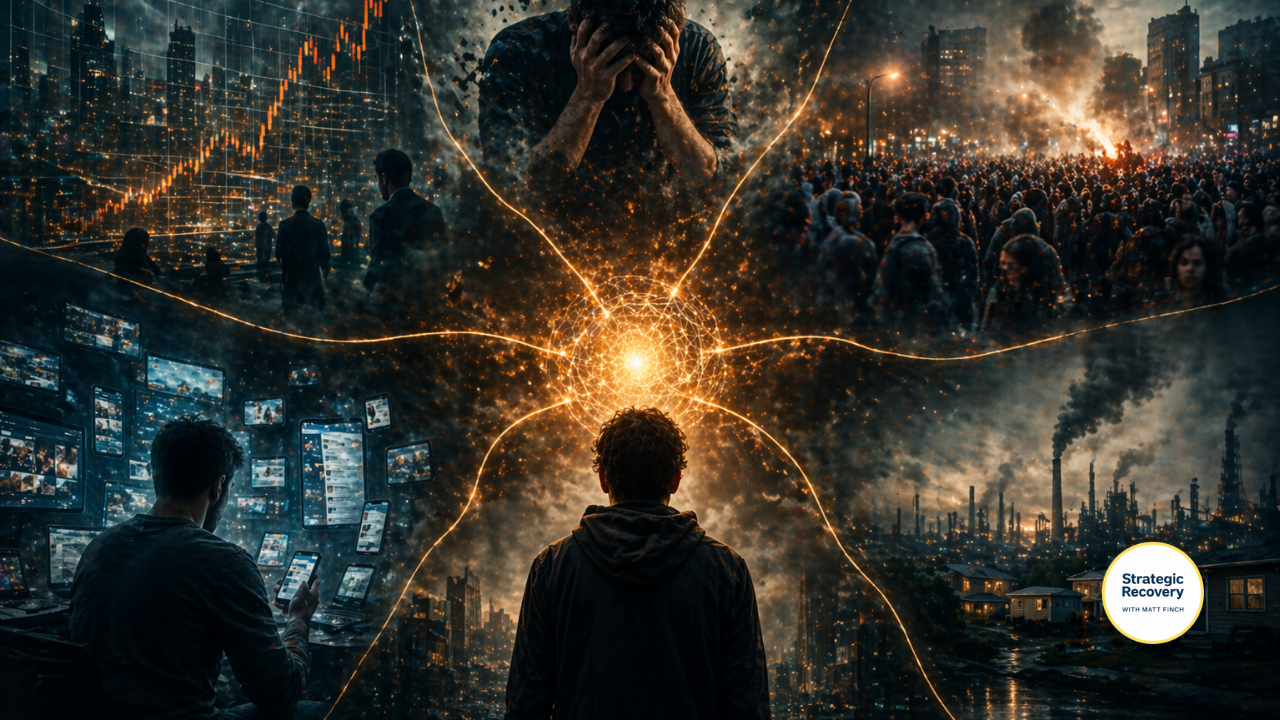
Economic stress. Toxic drugs. Digital overload. Rising trauma. A shifting collective field.
This isn’t just “a tough time.”
This is a system-wide pressure event on the human nervous system.
And if you’ve been feeling it…
This article will show you exactly why —
and exactly what to do about it.

A field guide for modern overload
Something has shifted.
Not just in the economy. Not just in mental health. Not just in the culture.
In the field itself.
People are more reactive. More exhausted. More overstimulated. More emotionally thin.
Public spaces feel heavier. Conversations feel flatter. The nervous system feels like it’s carrying
more input than it was ever designed to process.
And if you’re sensitive, empathic, in recovery, or doing deep inner work… you’re probably feeling it first. Not because something is wrong with you—but because you’re picking up on something real.
This article is here to map what’s happening beneath the surface: the pressure, the pattern, the biology, the spiritual context—and most importantly, how to stay grounded, sober, and clear while the world grows more intense.
Because this isn’t just random chaos.
It’s a transition—and transitions feel unstable from the inside.
You’re Not Crazy — The World Has Actually Shifted
Nothing dramatic was happening.
A few months ago, I was standing in line at a grocery store.
No raised voices.
No chaos.
No visible conflict.
But something was off.
The man in front of me kept checking his phone, then sighing, then rubbing his face like he hadn’t slept in days.
The cashier was polite—but her eyes looked distant, like she was somewhere else entirely.
Two people behind me were quietly irritated with each other over something trivial—but it carried more weight than it should have.
And what stood out most wasn’t any one moment.
It was the shared emotional tone in the room.
A kind of:
- low-grade tension
- subtle exhaustion
- background irritability
- emotional thinning
It felt like everyone was carrying something invisible.
If you’ve been paying attention lately, you’ve felt this too.
Walking into public spaces and sensing:
- agitation under the surface
- people being quicker to snap or withdraw
- conversations feeling shorter, flatter, less connected
- your own system feeling more reactive than usual
And here’s the key:
This isn’t just in your head.
What you’re feeling is real.
But it’s not coming from one place.
It’s coming from multiple overlapping pressures hitting the human system at the same time.
Economic pressure.
Neurochemical depletion.
Digital overstimulation.
Unprocessed trauma.
And a subtle but undeniable shift in how reality itself feels.
Most people don’t have language for this.
So they default to:
- “I’m just stressed”
- “I need to push through”
- “Something’s wrong with me”
But the deeper truth is:
The environment has changed… faster than the human nervous system can adapt.
And when that happens…
People don’t just feel stressed.
They feel disoriented.

The 5 Forces of the Dystopian Shift™
What you’re experiencing isn’t random, and it’s not isolated.
It’s the result of five converging forces that are each powerful on their own—but destabilizing when combined.
1. Economic Pressure → The Biology of Survival Mode
We tend to talk about the economy in abstract terms—markets, inflation, interest rates.
But what actually matters is:
What does it do to the human nervous system?
Because that’s where the real impact shows up.
When people feel financially uncertain—even if they’re technically “getting by”—their brain interprets that as threat.
And the body responds accordingly.
Cortisol increases.
Adrenaline spikes.
Sleep becomes lighter and more fragmented.
The body becomes more vigilant.
Over time, this creates a baseline state of:
“I’m not safe yet.”
Even if nothing is immediately wrong.
And this has downstream effects most people don’t connect:
- reduced dopamine → less motivation, less joy
- increased impulsivity → more reactive decisions
- decreased long-term thinking → focus shifts to short-term relief
This is why people in prolonged financial stress often say:
“I can’t think straight anymore.”
Because biologically, they’re not in a state designed for clarity.
They’re in a state designed for survival.
2. The Drug Landscape → From Escape to Russian Roulette
There was a time when substance use was dangerous—but somewhat predictable.
That time is over.
We are now living in a synthetic drug era, where:
- substances are stronger
- purity is inconsistent
- contamination is common
- and users often have no idea what they’re actually taking
Fentanyl alone has changed the entire landscape.
It’s potent, fast-acting, and increasingly found in substances where it was never expected.
Then add:
- xylazine (a veterinary sedative causing severe tissue damage)
- designer benzodiazepines
- synthetic stimulants
And the result is:
An environment where one miscalculation can be fatal.
And yet…
Use continues.
Not because people don’t care.
But because:
The internal pressure to escape has increased.
When reality feels overwhelming, unpredictable, or emotionally exhausting…
The drive for relief becomes stronger than the fear of risk.
3. Mental Illness → A Nervous System Under Siege
We’re seeing massive increases in mental health challenges across all demographics.
But instead of asking:
“Why are people struggling more?”
We should be asking:
“What has changed in the environment that makes stability harder?”
Because when you look at it that way, the pattern becomes clear.
Humans are now exposed to:
- more information than ever before
- more emotional input than ever before
- more uncertainty than ever before
And they’re doing it with:
- less community
- less stability
- less time for recovery
The nervous system was never designed for this level of sustained stimulation.
So what happens?
It starts to break down.
Not all at once.
But gradually:
- sleep becomes less restorative
- anxiety becomes more frequent
- mood becomes less stable
- resilience decreases
And eventually, people find themselves thinking:
“Why can’t I handle things like I used to?”
The answer isn’t that you’ve become weaker.
It’s that:
The load has increased.
4. Digital Addiction → Dopamine Hijacking at Scale
This is one of the most underestimated forces in modern life.
Because it’s normalized.
Everyone uses their phone.
Everyone scrolls.
Everyone is plugged into some form of digital stimulation.
But what most people don’t realize is:
This is not passive. It’s neurological conditioning.
Every swipe delivers novelty.
Every notification delivers anticipation.
Every short-form video delivers a micro-hit of dopamine.

Over time, this trains the brain to:
- expect constant stimulation
- resist boredom
- avoid stillness
And this has a profound consequence:
Reality starts to feel insufficient.
Things that used to feel normal—reading, walking, sitting quietly—start to feel dull.
And when the brain perceives reality as dull…
It seeks intensity.
That’s when people move toward:
- more scrolling
- more stimulation
- or stronger forms of escape
5. Social Breakdown → Loss of Emotional Regulation
When individuals become dysregulated…
Relationships become strained.
When relationships become strained…
Communities weaken.
And when communities weaken…
Society becomes unstable.
This is not theoretical.
You can see it:
- shorter tempers
- increased conflict
- decreased patience
- reduced empathy
Because empathy requires:
- energy
- emotional bandwidth
- a regulated nervous system
And when people are depleted…
They don’t respond from compassion.
They respond from stress.
The Hidden Layer — The Amplification Effect
Even if you removed all five forces we just covered…
Many people would still say:
“Something feels different.”
That’s because there’s another layer at play.
Not mystical in a vague sense—
but experiential in a very real, embodied way.
The Volume Has Been Turned Up
Think of your internal world like a sound system.
For most of your life, the volume was at a manageable level.
You could:
- tolerate discomfort
- suppress emotions
- ignore intuition
- push through stress
Now?
It’s like the volume has been turned up across the board:
- anxiety feels sharper
- emotional pain feels closer
- stress accumulates faster
- intuition is louder
- avoidance is harder
This is why people are saying things like:
“I can’t do what I used to do anymore.”
That’s not weakness.
That’s amplification without adaptation.
Why You Feel It More Than Others
If you’re:
- in recovery
- emotionally aware
- highly sensitive
- doing inner work
You’re more tuned into internal states.
Which means:
When the volume increases…
You feel it earlier and more intensely.
You might notice:
- tension in rooms before anyone speaks
- emotional undercurrents in conversations
- subtle instability in people
This can feel overwhelming if you don’t understand it.
But once you do, it becomes a form of awareness—not a burden.
Sensitivity becomes useful when it’s paired with regulation.
The Law of One Perspective — The Shift Into Fourth Density
Up to this point, everything we’ve talked about can be explained through psychology, biology, and environment.
But there’s another lens that helps connect the dots in a deeper way.
One that explains not just what is happening…
But why it feels so intense.
According to the Law of One—a body of channeled material focused on the evolution of consciousness—Earth has already undergone a fundamental energetic transition.
In simple terms:
The planet itself has shifted into what’s called fourth-density energy…
while humanity is still largely operating in third-density consciousness.
What Does That Actually Mean?
Third density (where humanity has been operating) is characterized by:
- survival and fear
- identity and ego
- separation and competition
- confusion and polarity
Fourth density, by contrast, is described as:
- heart-centered
- relational
- transparent
- empathic
- unity-oriented
- energetically more sensitive
From 3rd Density Chaos to 4th Density Heart
A quick visual of where we’ve been, where we are, and where consciousness is heading.
Consciousness organized around me vs. you.
Shadow rises, systems shake.
Stabilization in love and service.
You don’t have to take this as literal metaphysics to recognize the pattern.
Because even at a psychological level, you can see it:
People are becoming more:
- emotionally aware
- sensitive to energy
- intolerant of inauthenticity
- reactive to misalignment
At the same time…
They’re also becoming more:
- overwhelmed
- anxious
- dysregulated
- unstable
And that combination creates something very specific:
People are feeling more… but equipped to handle it less.
The Mismatch Is the Key
Here’s the core idea:
The environment has shifted faster than the human system has adapted.
If you want a grounded analogy:
It’s like upgrading the operating system…
Without upgrading the hardware.
The result?
- glitches
- overheating
- system crashes
- unpredictable behavior
In human terms, that looks like:
- emotional volatility
- mental health instability
- addiction spikes
- social tension
This is why people are snapping faster, burning out quicker, and feeling like they can’t hold themselves together the way they used to.
Not because they’re weak…
But because they’re under more pressure than their current system can process.

Why Shadow Is Rising
One of the most important dynamics in this framework is this:
As consciousness evolves, what is unresolved rises to the surface.
That means:
- trauma becomes more visible
- emotional pain becomes harder to suppress
- dysfunctional patterns get exposed
This is why so many people feel like:
“Everything is coming up at once.”
Because in a more sensitive, amplified environment…
Avoidance stops working as well.
And when that pressure builds without relief…
many people turn to substances, screens, or behaviors just to quiet the intensity.
Not because they don’t want to heal—
But because they don’t yet know how to regulate what’s rising.
Why Sensitivity and Empathy Are Increasing
If you’ve felt:
- more aware of other people’s emotions
- more drained in certain environments
- more affected by tension, conflict, or negativity
That’s not random.
In a more open, amplified field:
- perception increases
- emotional data becomes more accessible
- boundaries become more important
This is why people are either:
- becoming more conscious
or
- becoming more overwhelmed
There’s less middle ground.
Why This Feels Like Chaos (But Isn’t Random)
From this perspective, what we’re experiencing isn’t just collapse.
It’s transition under pressure.
Old ways of operating:
- numbing
- avoiding
- controlling
- disconnecting
Are becoming less stable.
New capacities:
- awareness
- regulation
- connection
- emotional honesty
Are being demanded.
And that in-between phase?
Feels like:
- confusion
- intensity
- instability
But it’s not random.
It’s what transition feels like from the inside.
Grounded Takeaway
You don’t have to adopt the Law of One framework as absolute truth to benefit from it.
But it offers a powerful lens for understanding this moment:
We are living in a time where both the internal and external worlds are intensifying—
and anything unstable is being exposed.
Which is exactly why:
- nervous system regulation matters more than ever
- recovery work goes deeper than just stopping a substance
- emotional awareness becomes unavoidable
- and old coping strategies begin to fail
If you take nothing else from this section, take this:
It’s not just that things are getting worse—
it’s that nothing can stay hidden anymore.
And when nothing can stay hidden…
Everything asks to be faced, processed, and integrated.

The Biochemical Breakdown of the Dystopian Nervous System
This is where everything starts to make sense.
Because no matter how philosophical or spiritual this conversation gets…
It always lands in the body.
The “Low Tank” Reality
Your brain runs on chemistry.
And when key systems are depleted, everything feels harder.
Let’s break it down:
Dopamine ↓ (Motivation + Drive)
When dopamine is low:
- nothing feels rewarding
- effort feels heavier
- cravings increase
This is why people say:
“I know what I should do… I just don’t feel like doing it.”
That’s not laziness.
That’s neurochemistry.
Serotonin ↓ (Mood Stability)
Low serotonin creates:
- irritability
- negative thinking
- emotional instability
Small problems feel big.
Neutral situations feel stressful.
GABA ↓ (Calm + Relaxation)
When GABA is low:
- anxiety rises
- restlessness increases
- it becomes hard to “turn off”
This is the “wired but tired” feeling.
Endorphins ↓ (Resilience)
Low endorphins mean:
- emotional pain feels stronger
- stress tolerance drops
- everything feels heavier
Blood Sugar Instability — The Silent Driver
This is one of the most overlooked factors in recovery.
And one of the most powerful.
When blood sugar drops:
- adrenaline spikes
- anxiety increases
- irritability rises
- cravings intensify
When blood sugar spikes and crashes:
- energy fluctuates
- mood swings
- impulse control weakens
This creates a cycle where:
Your body is chemically pushing you toward relief.
Circadian Rhythm Disruption
Your brain runs on a clock.
When that clock is disrupted:
- cortisol releases at the wrong times
- melatonin is delayed
- sleep quality drops
This leads to:
- poorer decision-making
- increased emotional reactivity
- higher relapse vulnerability
This is why so many people struggle in the:
late afternoon / evening window (4pm–9pm)
Energy drops.
Stress accumulates.
Willpower weakens.
Trauma Resurfacing — The Underworld Comes Up
Another layer most people don’t expect:
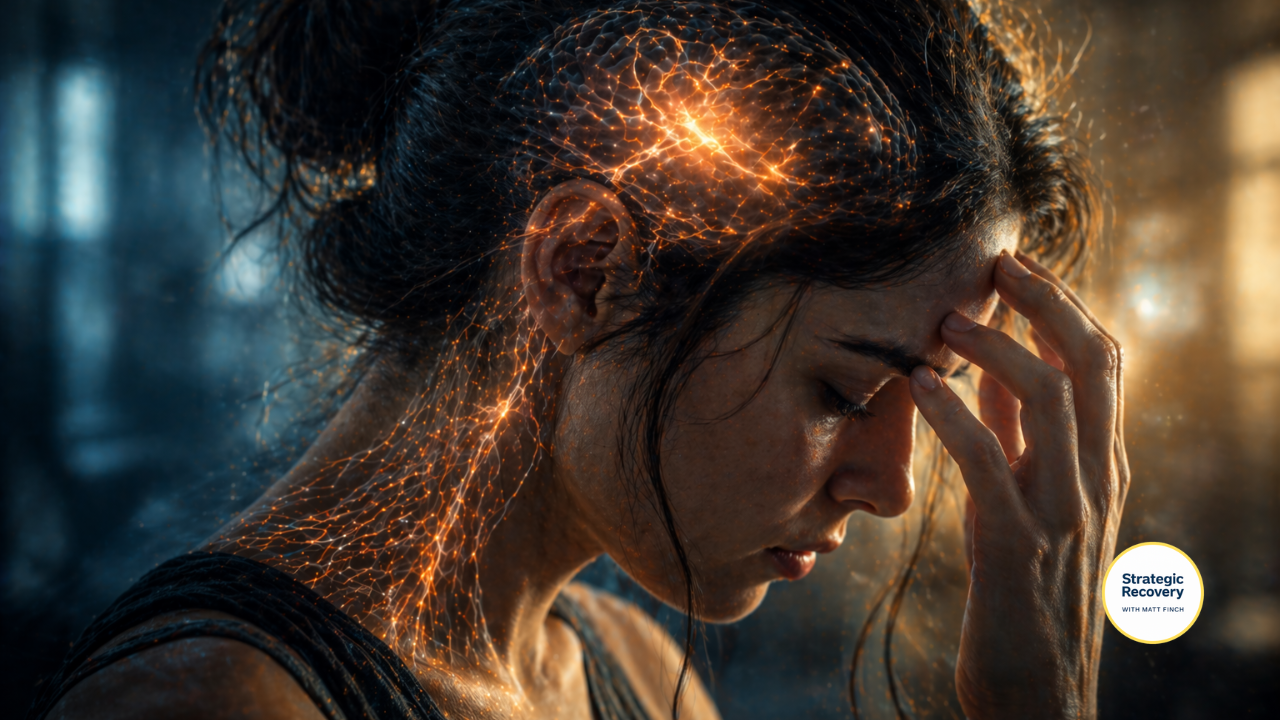
Things you thought you “moved past”… come back.
Why This Happens
When external pressure increases…
The brain looks for unresolved material.
Why?
Because unresolved experiences require energy to suppress.
And when the system is already strained…
Suppression becomes harder.
So what happens?
Old material surfaces:
- memories
- emotional patterns
- identity wounds
Real Example
A client once told me:
“I got sober… and then everything I had been avoiding showed up all at once.”
This is incredibly common.
Recovery removes the buffer.
And increased stress removes the ability to suppress.
So everything rises.
What People Do Instead
Without understanding this process, people assume:
- “I’m getting worse”
- “This isn’t working”
- “Something’s wrong with me”
So they:
- distract
- numb
- escape
Which reinforces the cycle.
The Escalation Ladder — How Relapse Happens Now
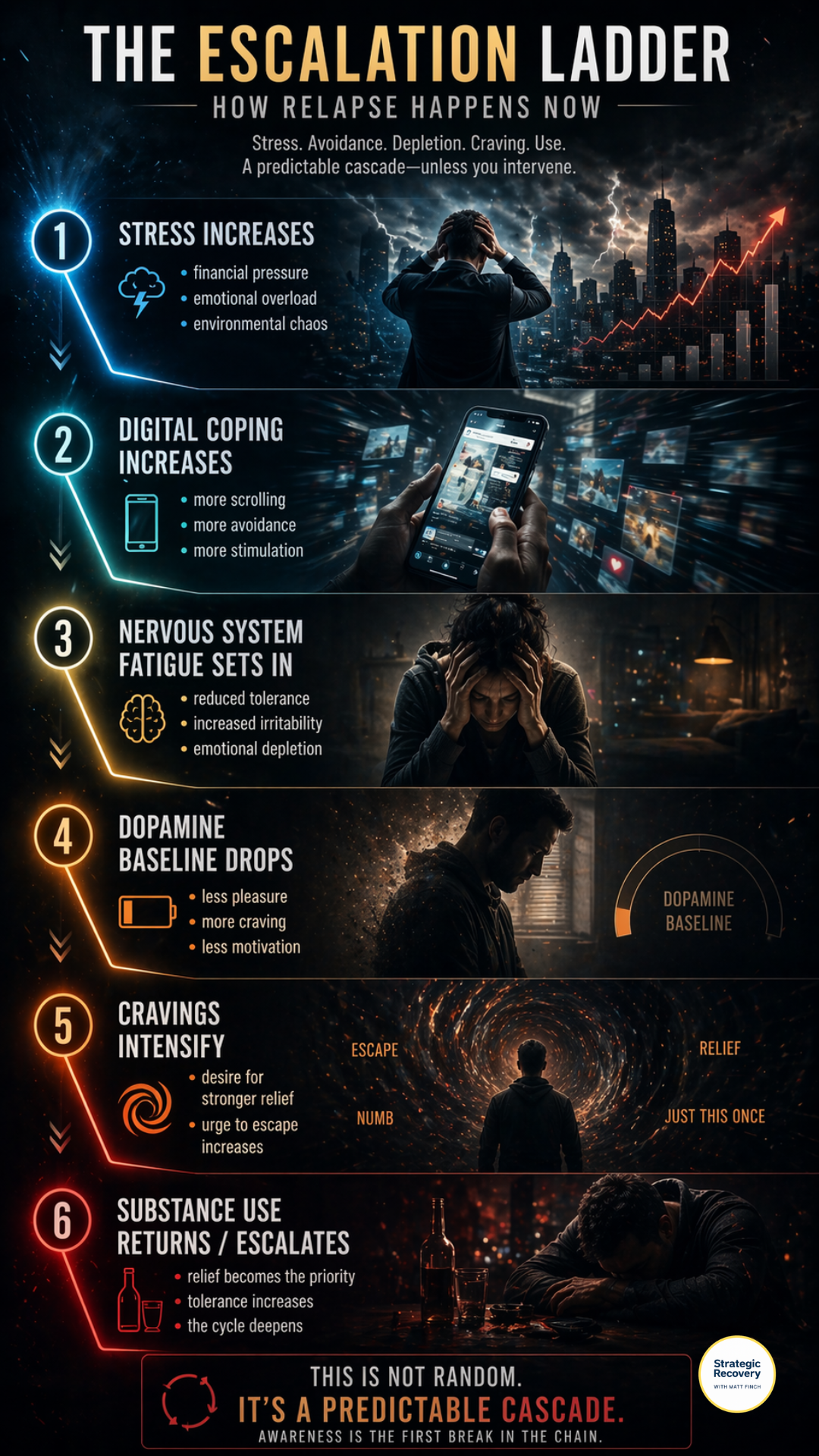
Let’s map what’s actually happening step-by-step:
1. Stress Increases
- financial pressure
- emotional overload
- environmental chaos
2. Digital Coping Increases
- more scrolling
- more avoidance
- more stimulation
3. Nervous System Fatigue Sets In
- reduced tolerance
- increased irritability
- emotional depletion
4. Dopamine Baseline Drops
- less pleasure
- more craving
- less motivation
5. Cravings Intensify
- desire for stronger relief
- urge to escape increases
6. Substance Use Returns (or escalates)
This is not random.
This is a predictable cascade.
The Truth Most People Avoid About Addiction
Let’s say it clearly:
Addiction is not irrational.
It’s not a moral failure.
It’s not a lack of intelligence.
It’s a biological + psychological adaptation to:
“This internal state is not sustainable.”
This doesn’t mean addiction is the solution.
But it does mean:
Shame is not the solution either.
Understanding the mechanism is what creates leverage.
The 24-Hour Stabilization Blueprint
Now we shift from understanding → action.
Because insight without structure doesn’t create change.
Morning — Set the Baseline
What you do in the first hour matters.
- get sunlight exposure
- hydrate immediately
- eat protein early
Why?
Because this stabilizes:
- cortisol rhythm
- dopamine production
- blood sugar
Midday — Maintain Stability
This is where most people drift.
- eat balanced meals
- move your body
- avoid overstimulation
Consistency here prevents the crash later.
Afternoon — Protect the Drop
This is where things start to shift.
- energy declines
- stress accumulates
- decision-making weakens
What helps:
- protein snack
- light movement
- reduced caffeine
Evening — Prevent the Crash
This is the danger window.
- dim lights
- reduce screens
- create calm
You are preparing your nervous system for recovery.
Night — Deep Repair
- consistent sleep time
- minimal stimulation
- true rest
Sleep is where:
- dopamine resets
- emotional processing occurs
- resilience rebuilds

The Spiritual Layer — Patient Endurance in a Chaotic World
At a deeper level, this time is asking something from you.
Stay Open in a Closing World
Stress causes contraction.
People:
- withdraw
- shut down
- protect
But complete shutdown leads to isolation.
The goal is:
Stay open—but with boundaries.
See Clearly Without Absorbing
You don’t need to:
- deny reality
- ignore problems
But you also don’t need to:
- carry everything
- internalize everything
This is a skill.
And it can be trained.
Crisis as Catalyst
Pressure reveals truth.
- what matters
- what doesn’t
- what’s sustainable
- what isn’t
This is where growth happens.
Not in comfort.
But in clarity.
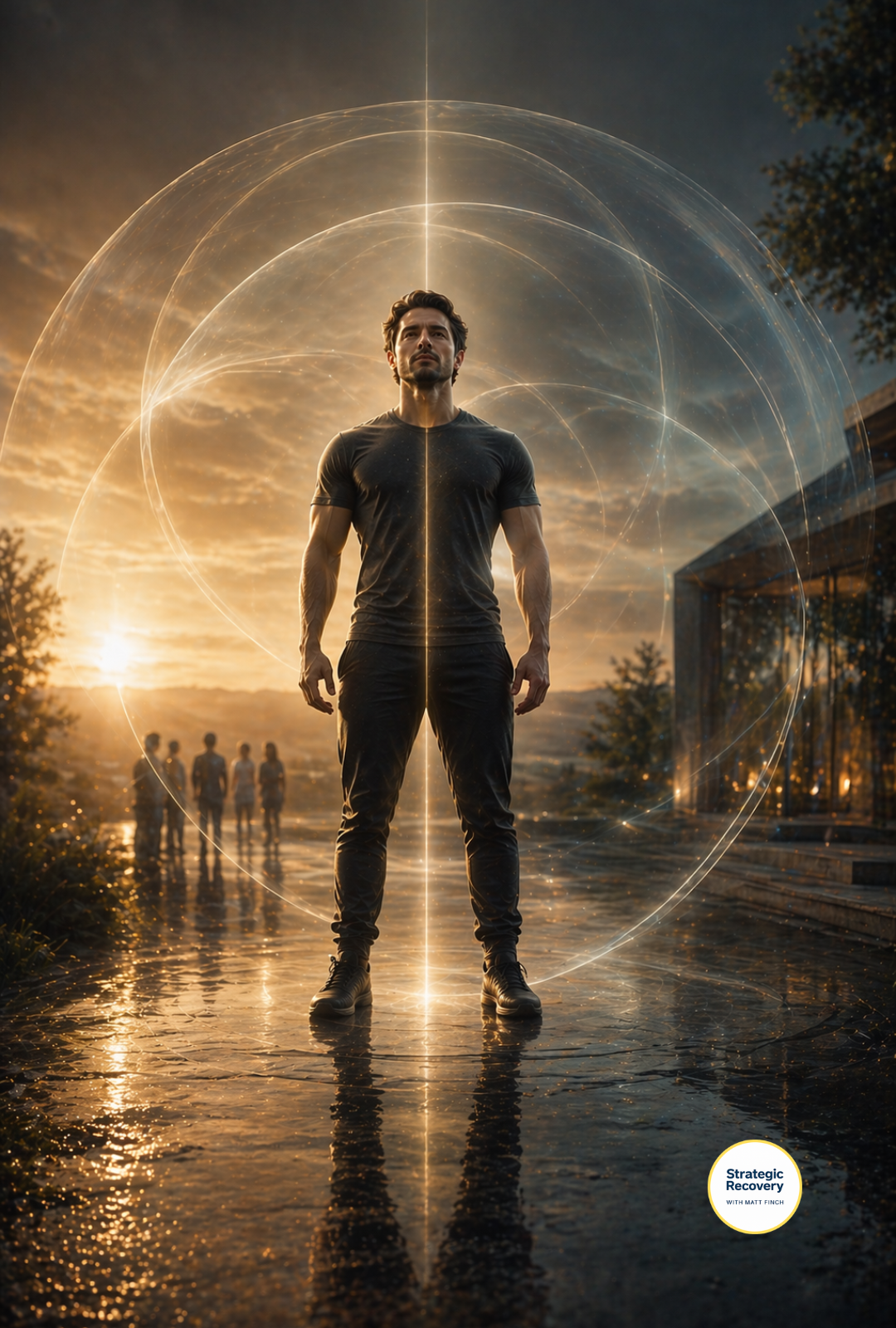
The Strategic Recovery™ 5-Pillar Shield
This is your stabilizing framework.
1. Physical
Support the body.
2. Psychological
Protect the mind.
3. Social
Build connection.
4. Environmental
Create safety.
5. Spiritual
Anchor identity.
When these are aligned…
Stability becomes possible again.
You Were Born for This Time
This part matters.
Because it reframes everything.
If you’re:
- aware
- trying
- working on yourself
You are not failing.
You are responding to a complex environment.
And your stability:
- impacts others
- shifts interactions
- creates ripple effects
This Is Not the End — This Is the Initiation
It feels like collapse.
But structurally…
It behaves like transition.
And transitions feel unstable by nature.
Final Anchor — How to Stay Grounded in an Unstable World
The world may feel dystopian.
But your internal state does not have to match it.
You can:
- stabilize your biology
- regulate your nervous system
- continue on your recovery path
- stay grounded
And when you do that…
You become a stabilizing force in an unstable time.

If This Hit You — Start Here
Start small:
- hydrate
- go outside
- reduce input
- connect with someone safe
- sit in stillness
That’s enough.
Want a Structured Way to Stabilize?
👉 Strategic Recovery Map™
👉 Recovery Guides
👉 Coaching Support
Final Truth — This Will Either Break You or Build You
This moment is intense.
But it’s not meaningless.
And if you meet it with structure…
It won’t break you.
It will build you.
Go deeper
Recommended Resources
These resources deepen the psychological, spiritual, and metaphysical layers explored in this article. Start with the featured episode below, then follow the path that resonates most.
The official archive of the Law of One material, transcripts, and supporting teachings from L/L Research.
A strong entry point for audio-first learners who want to absorb the Law of One through voice and commentary.
The definitive print edition of the Ra sessions for readers who want the full source material in one place.
A compassionate guide for sensitive, spiritually oriented people who feel different, displaced, or deeply called.
A deeper exploration of soul evolution, polarity, and the broader metaphysical architecture of consciousness.
A clear doorway into Hawkins’ model of consciousness, calibration, emotional states, and spiritual development.
A practical manual for empaths and highly sensitive people learning how to regulate, protect, and stay grounded.
A companion episode exploring consciousness, energy mastery, and the inner mechanics of transcending addiction.
Frequently asked questions
The Dystopian Shift — What You’re Feeling (And Why)
If things have felt heavier, faster, or harder to process lately… these questions will help you understand what’s actually happening beneath the surface.
? Why does everything feel slightly “off” lately?
Because the baseline of reality has shifted. You’re not just reacting to isolated stressors—you’re sensing a broader change in pace, pressure, and emotional intensity. The system is carrying more input than it used to.
? Is this just stress… or something deeper?
It’s both. External stress is higher—but more importantly, your sensitivity to it has increased. The combination creates a feedback loop where everything feels amplified.
? Why are people more reactive and emotionally unstable?
Because nervous systems are overloaded. When capacity is exceeded, tolerance drops—and people default to reactivity, avoidance, or shutdown.
? Why does everything feel more intense than it used to?
The environment is delivering more stimulation—digital, emotional, social—while internal resilience hasn’t caught up. It’s an input/output mismatch.
? Why are addictions and cravings getting stronger?
Because people are trying to regulate overwhelm. When the system is dysregulated, it looks for fast relief—and substances or behaviors become shortcuts.
? Why do I feel more sensitive than before?
Sensitivity is increasing across the board. You’re picking up more emotional data, more environmental cues, more subtle signals—which can feel like overload without proper regulation.
? Is this permanent… or just a phase?
It’s a transition. Systems are destabilizing and reorganizing. The instability is real—but it doesn’t last forever. What matters is how you adapt during it.
? What actually helps during this shift?
Stabilization. Nervous system regulation. Reducing inputs. Building structure. Supporting your biology. You don’t fight the chaos—you increase your capacity to handle it.



Leave a Reply