A $50 million decision. A fast-tracked FDA. And a moment that could either transform recovery… or quietly make it more fragile.
It just happened.
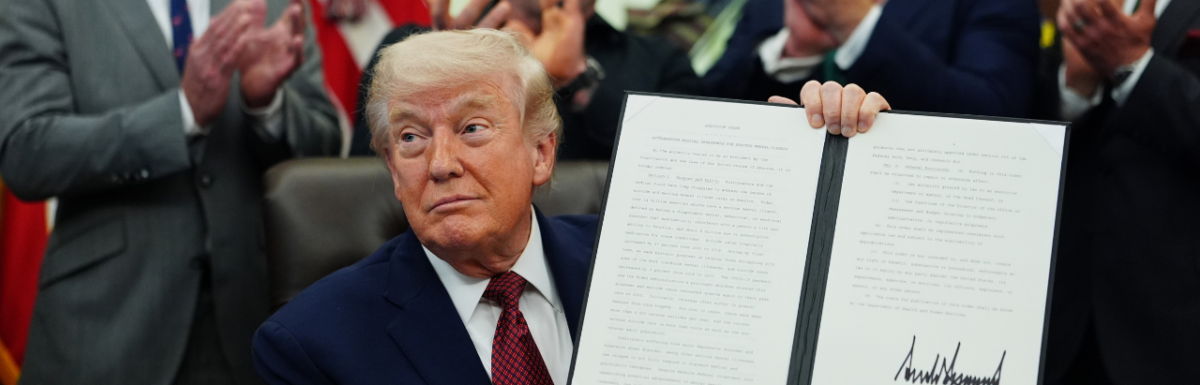
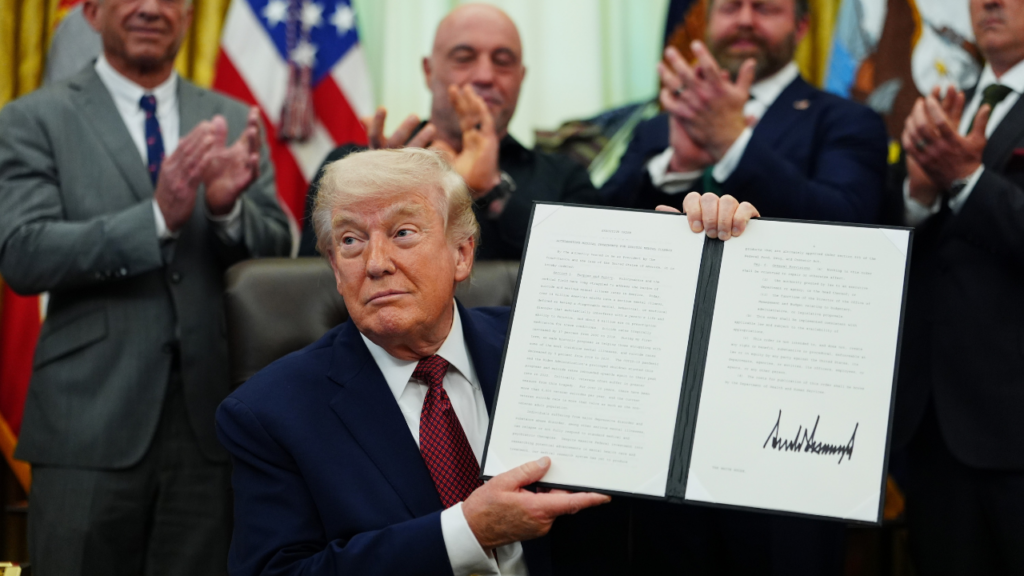
Donald Trump signed an executive order to fast-track psychedelic drugs—allocating $50 million in federal funding and directing the FDA to accelerate approval pathways for substances like psilocybin and ibogaine.
Let that land.
For decades, these compounds lived in the shadows—dismissed, criminalized, misunderstood.
Now?
They’re being pulled into the center of American medicine.
Backed by voices like Robert F. Kennedy Jr., supported by veterans, and amplified by figures like Joe Rogan…
The tone has shifted.
The posture has shifted.
Something just changed—and most people don’t realize how big this is.
The Real Reason This Is Happening
This didn’t come out of nowhere.
This is what happens when pressure builds for too long.
Depression is rising.
Anxiety is everywhere.
PTSD is overwhelming entire populations.
Addiction continues to take lives—quietly, consistently, relentlessly.
And the current tools?
- Medications that numb but don’t resolve
- Therapy that helps some, but not enough
- A treatment system that too often recycles people instead of restoring them
We’ve been trying.
But trying isn’t the same as succeeding.
We’re not lacking effort. We’re lacking effectiveness.
And deep down, people can feel it.
They’re tired of managing symptoms.
They’re tired of white-knuckling life.
They’re tired of doing everything “right”… and still feeling broken.
So when something shows up that looks different—
that feels different—
Of course it gains momentum.
Why Psychedelics Feel Like a Breakthrough
Because when they work…
They don’t feel like treatment.
They feel like truth.
People report:
- Emotional releases they’ve never accessed before
- A sense of connection after years of numbness
- The ability to see their life—clearly—for the first time
At a brain level, these substances may increase neuroplasticity.
But at a human level?
They create something far more compelling:
For the first time, people aren’t just managing symptoms… they’re having experiences that feel like healing.
And that’s powerful.
That’s magnetic.
That spreads fast.
The Part Everyone Is Skipping
But here’s where we need to slow down.
Because this is also where things can go wrong.
Ibogaine carries known cardiac risks.
Some people experience psychological destabilization.
And the long-term data?
We’re still learning.
But the real danger isn’t just medical.
It’s structural.
It’s psychological.
It’s this:
We are very good, as a culture, at turning powerful tools into shortcuts.
And shortcuts—especially in healing—have consequences.
A powerful tool without a system doesn’t create healing—it creates chaos.
The Truth Most People Aren’t Ready For
Let’s make this real.
I’ve seen people come back from profound experiences—ceremonies, breakthroughs, moments where everything made sense.
They felt free.
Clear.
Certain that their struggle was behind them.
And then…
A few days later, the cravings came back.
The anxiety returned.
The same patterns quietly reappeared.
Because here’s the truth:
You can have the most profound psychedelic experience of your life…
and still relapse a week later.
Not because it didn’t “work.”
But because insight alone isn’t enough.
- State change ≠ life change
- Insight ≠ integration
- Breakthrough ≠ stability
Insight without infrastructure is just a beautiful memory.
And memories don’t rebuild lives.
The Strategic Recovery™ Reframe
This is where clarity matters.
Psychedelics are not the solution.
They are a catalyst.
And catalysts only create change when there’s something stable to catalyze.
Without:
- A repaired brain and body
- A regulated nervous system
- A supportive environment
- A rewired identity
…what happens?
The experience fades.
The clarity fades.
The old patterns return—sometimes even stronger, because now there’s confusion layered on top.
You don’t heal because of the experience.
You heal because of what you build after it.
That’s the difference between a moment of relief…
and a life that actually works.
Where Psychedelics Actually Fit
Timing is everything.
And this is where most people get it wrong.
In a true healing process, there are phases:
- Preparation → building safety and readiness
- Detox → stabilizing the system
- Repair → restoring brain and body function
- Rewire → changing patterns, beliefs, identity
- Transcend → meaning, purpose, integration
Psychedelics don’t belong at the beginning.
They don’t belong in chaos.
They don’t belong in instability.
They belong—if used at all—in the Rewire phase.
When the system is strong enough to use the experience instead of being overwhelmed by it.
Because this is the line that matters:
Used at the wrong time, they can destabilize.
Used at the right time, they can accelerate.
The Shift Beneath the Shift
Zoom out.
This isn’t just about psychedelics.
This is about what happens when an old model stops working.
For decades, the dominant approach has been:
- suppress symptoms
- manage behavior
- avoid discomfort
- stay inside rigid systems
Now?
That model is cracking.
Veterans are speaking up.
Policy is shifting.
Even unlikely alliances are forming around the idea that something has to change.
This isn’t just about psychedelics.
It’s about the collapse of an outdated model of healing.
And the search—finally—for something more complete.
Two Futures From Here
This is the fork in the road.
Future 1: The Illusion
- fast access
- minimal structure
- little to no integration
- hype-driven adoption
Result?
False confidence.
Destabilization.
Disappointment.
Backlash.
And another door closes for another generation.
Future 2: The Evolution
- careful screening
- structured protocols
- phase-based healing
- real integration support
Result?
Sustainable change.
Deeper healing.
A new standard of care.
The Question That Actually Matters
So forget the surface-level debate.
This isn’t about whether psychedelics “work.”
The real question is:
Are we finally ready to do healing the right way…
or are we just chasing a more sophisticated form of escape?
Because if we don’t change the system…
The outcome won’t change either.
Final Word
This moment matters.
It could open doors that have been closed for decades.
It could help millions of people who have been stuck, suffering, searching.
Or…
It could quietly reinforce the same pattern we’ve been trapped in:
New tool.
Old model.
Same result.
This could be the beginning of a new era in recovery…
or the same story—just with better tools.
Your Take
What do you see this becoming?
A breakthrough?
A risk?
Both?
Would you try this if it were available to you or someone you care about?
Where do you think this goes from here?
Let’s talk.




Leave a Reply